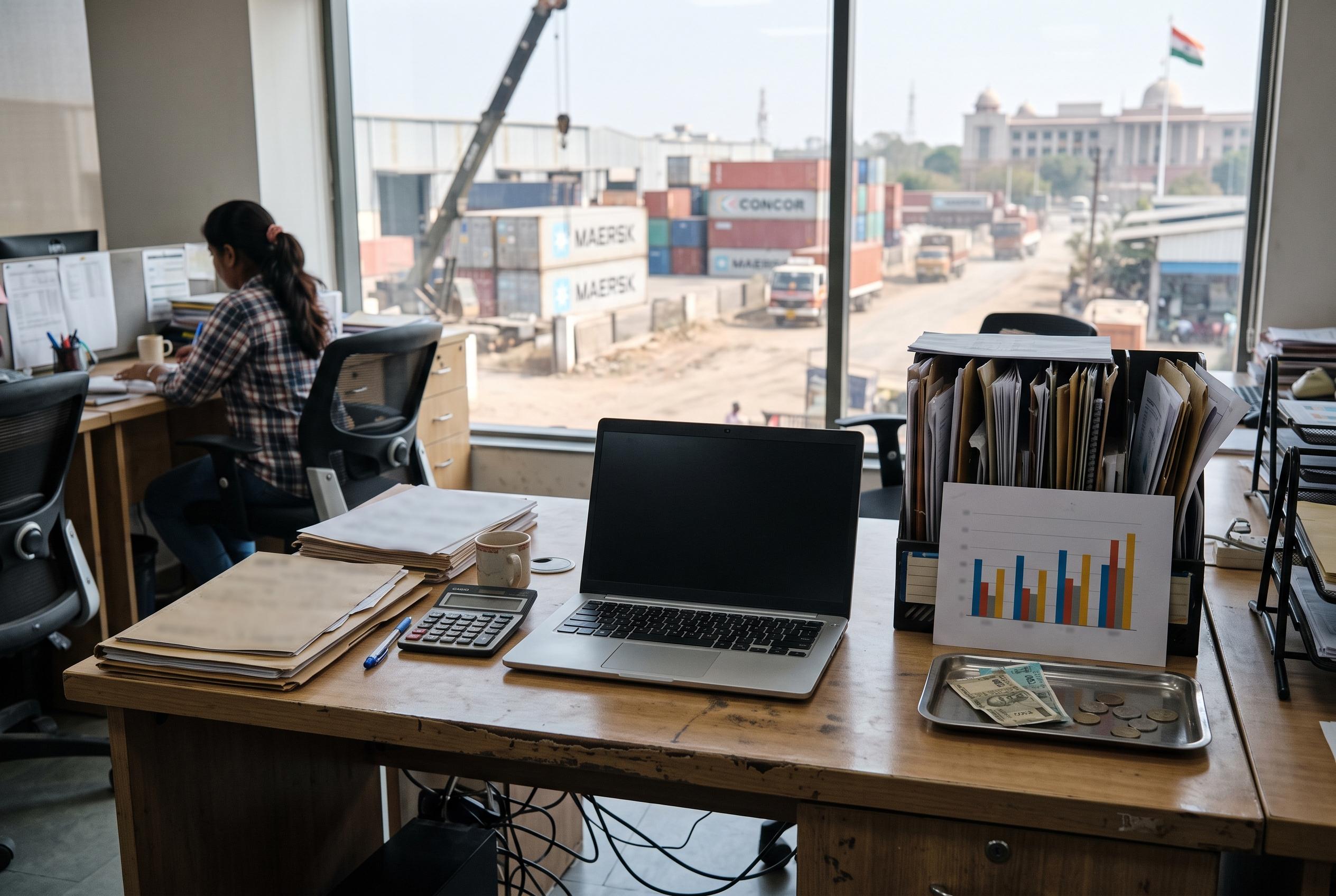

India’s ambition to reach a $5 trillion economy by FY29 faces new optimism amid forecasts of accelerated growth, driven by infrastructure investment and manufacturing reforms, with logistics playing a crucial role in sustaining momentum.
India’s path to a $5 trillion economy appears to be stretching into FY29, according to figures cited by Finance Minister Nirmala Sitharaman in the Rajya Sabha. The estimate, which puts nominal GDP at about $5.1 trillion by 2028-29, suggests that the milestone remains within reach even if it arrives later than some earlier official targets. Reuters has previously reported that the government has repeatedly framed the $5 trillion mark as a key political and economic benchmark.
The latest projection sits alongside a wider debate over how quickly India can move up the global economic rankings. Morgan Stanley has said India could become the world’s third-largest economy by 2028, while former NITI Aayog vice-chairman Arvind Panagariya has argued the country may reach $5 trillion even earlier. Commerce minister Piyush Goyal has also maintained that India is on track to cross the threshold by 2027. The spread of forecasts reflects both the strength of India’s growth momentum and the uncertainty around inflation, exchange rates and nominal GDP calculations.
What is clearer is the set of policy levers driving the expansion. Public investment in roads, rail, ports, airports and industrial infrastructure remains central to the government’s growth strategy. Production-linked incentive schemes are designed to deepen domestic manufacturing, while PM GatiShakti and the National Logistics Policy aim to knit together transport networks and reduce friction in the movement of goods. Analysts at S&P Global say logistics investment is crucial if India is to turn its manufacturing ambitions into sustained competitiveness.
The broader economic case is that higher output in manufacturing, trade and services will increase demand for freight, warehousing and supply-chain technology. That matters not only for large exporters, but also for small and medium-sized firms that depend on reliable transport and faster turnaround times. As India pushes into semiconductors, clean energy and advanced manufacturing, the logistics system will need to evolve with it, because the next phase of growth is likely to depend as much on efficiency as on scale.
Disclaimer: This article is intended to inform and educate, not to recommend or endorse any financial product, investment or strategy. Please consider your own financial circumstances and seek professional advice where appropriate before making financial decisions.