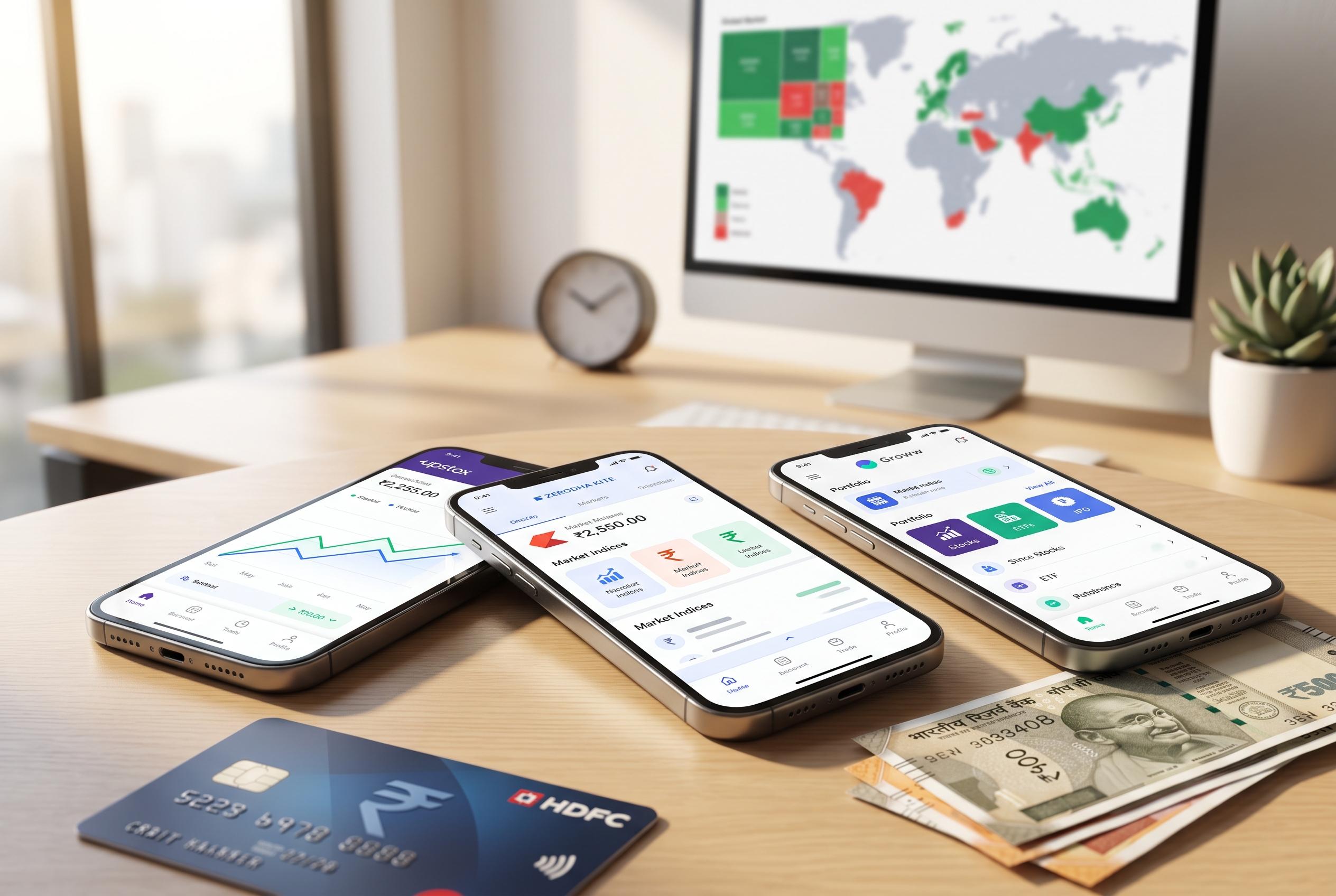

In 2026, India’s trading landscape is increasingly defined by specialised apps that cater to varied investor needs, from beginners and mobile traders to automation enthusiasts and mutual fund switchers, each offering unique features and costs shaping trading choices.
Choosing the right Indian trading app in 2026 comes down less to brand loyalty than to trading style. A beginner buying a first stock, a phone-only trader chasing quick entries, an options speculator and a Python user building an automated strategy all need different tools. The broad picture is simple: Zerodha still looks like the safest all-round choice, Upstox is built around mobile speed, Dhan is the strongest fit for automation and options work, Angel One appeals to those who want research and advice as well as trading, and Groww remains the easiest on-ramp for mutual fund users moving into equities.
On paper, the headline costs are similar. Comparison articles from Downstox and other broker round-ups show that equity delivery is free at Zerodha, Dhan and Upstox, while Angel One and Groww typically charge a flat ₹20 per trade or a small percentage, whichever is lower. For derivatives, the going rate across the major platforms is about ₹20 an order. The real differences are in the extras: Dhan and Groww keep annual maintenance charges at zero, while Zerodha, Upstox and Angel One can add AMC costs. Margin funding also varies, with Dhan generally coming in cheaper than Groww, Angel One and Upstox on published rates.
That is why Zerodha still has the edge for many first-time investors. Its Kite platform is widely regarded as the most polished of the lot, while Console gives users detailed reporting and tax-ready trade summaries. The broker’s learning content also remains a major draw for newcomers who want education alongside execution. Its weakness is cost at the advanced end: Kite Connect is a paid API, so traders who want to automate strategies have to budget for that access.
Dhan has become the favourite of more active traders for a different reason: it is built with automation in mind. The broker offers a free API, TradingView charts, options tools and a mobile app that is designed around fast derivatives trading. Downstox’s comparisons place Dhan ahead of several rivals for options traders and advanced retail users, in part because its funding costs are competitive and its API access is easier than Zerodha’s. For anyone running algorithmic trades, that combination can matter more than a famous brand name.
Upstox, meanwhile, is the obvious mobile-first option. Independent 2026 comparisons describe it as quick, clean and easy to use on a phone, even if its desktop experience and support are less admired than Zerodha’s. That makes it attractive to beginners who want a straightforward app and to active traders who value speed over depth. Groww remains the simplest platform of the group, especially for people who started with mutual funds and want to add stocks without learning a more complex interface. Angel One sits somewhere else again: it is better suited to users who want research, advisory services and branch support, though its sales approach can feel intrusive.
The hidden costs are where many new traders get caught out. Depository charges apply when selling stocks, call-and-trade fees can add up if you rely on a desk instead of placing your own orders and transaction taxes quietly erode returns over time. For options traders, those frictions can become meaningful very quickly. That is why the cheapest broker on the brochure is not always the cheapest broker in practice.
The practical answer, then, is to match the app to the job. Zerodha remains the strongest general-purpose platform for beginners and longer-term investors, Dhan is the clearest winner for options and algo traders, Upstox is best for phone-led trading, Angel One suits those who want advice as well as execution and Groww is still the easiest choice for mutual fund investors who are just starting to trade stocks. There is no single best broker, only the one that fits how you actually trade.
Disclaimer: This article is intended to inform and educate, not to recommend or endorse any financial product, investment or strategy. Please consider your own financial circumstances and seek professional advice where appropriate before making financial decisions.