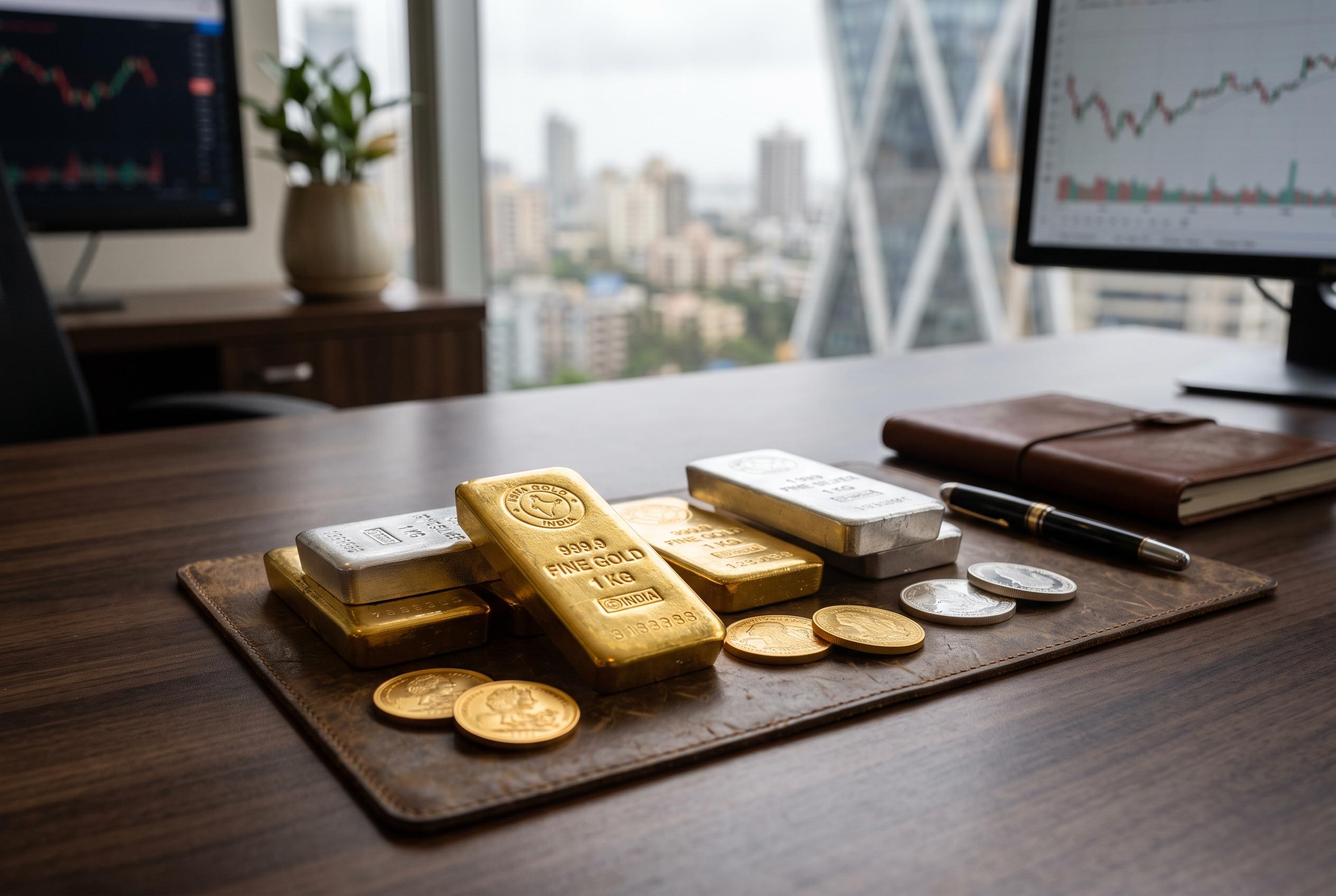

Gold and silver prices in India remained elevated on August 13, 2026, driven by regional demand, brand variations, and macroeconomic factors, despite recent volatility influenced by global and domestic economic trends.
Gold and silver prices in India held near elevated levels on August 13, 2026, with the yellow metal staying above ₹1.5 lakh per 10 grams in retail trade and silver moving beyond ₹2.5 lakh per kilogram in several city markets, according to Business Today. The outlet said the Multi Commodity Exchange showed gold futures near ₹1.54 lakh per 10 grams and silver futures at about ₹2.36 lakh per kilogram, while retail quotes in Delhi placed 24-carat gold at ₹1,55,020 per 10 grams and silver at ₹2,54,900 per kilogram.
Leading jewellers also reflected the firm tone. Business Today reported that Joyalukkas and Malabar Gold & Diamonds were quoting ₹14,195 per gram for 22-carat gold across major states, while Tanishq’s 22-carat rate stood at ₹14,240 per gram. Its 24-carat quote for Malabar was ₹15,485 per gram, compared with Tanishq’s estimated ₹15,535, underscoring how brand pricing, sourcing costs and regional demand can create small gaps even when the broader bullion trend is the same.
The latest figures come after a volatile year for precious metals. The Bimal Institute said in late June that 24-carat gold had fallen to roughly ₹1,44,500 per 10 grams and silver was trading around ₹2,35,000 to ₹2,45,000 per kilogram after earlier record highs, blaming part of the pullback on a stronger dollar and a more hawkish US Federal Reserve. CBS News reported on July 27 that gold and silver had also eased from January peaks, with experts pointing to geopolitics and interest-rate expectations as key drivers.
That backdrop helps explain why traders are still watching macroeconomic data closely. NationPress reported on July 2 that customs duty changes, GST-related costs and geopolitical tensions could keep prices unsettled in the second half of 2026, while StartupTalky said strong US jobs data in June had weighed on bullion by reducing safe-haven demand. GoldPriceTools had also noted earlier in May that a sharp import-duty increase lifted landed costs in India, adding another layer of support to domestic prices.
Disclaimer: This article is intended to inform and educate, not to recommend or endorse any financial product, investment or strategy. Please consider your own financial circumstances and seek professional advice where appropriate before making financial decisions.