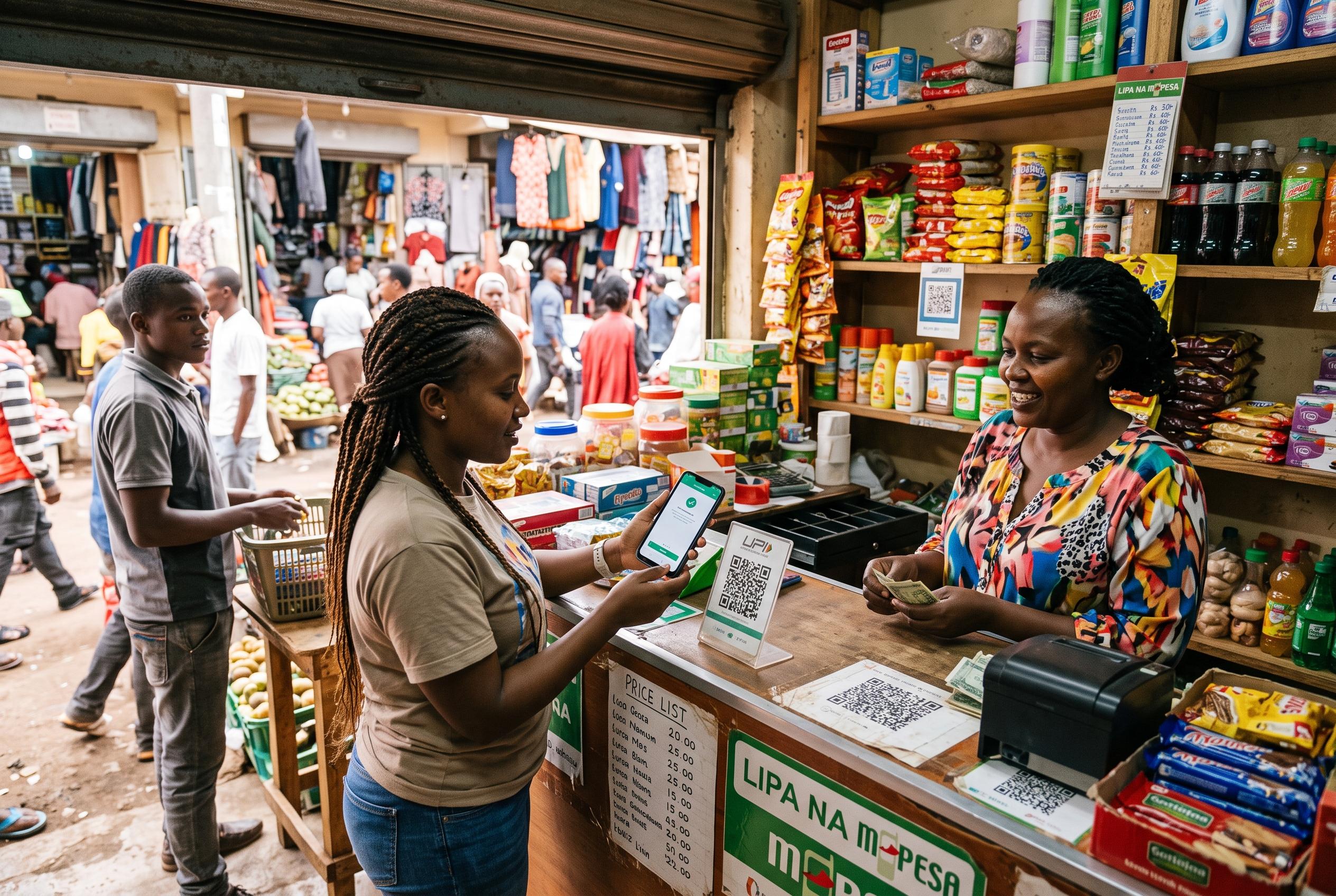

Brazil’s Pix, India’s UPI and Kenya’s M-Pesa are reshaping commerce around local payment rails, forcing international merchants to rethink entities, currencies and reconciliation before launch.
For international merchants, payments are often treated as the final step before a launch. In Brazil, India, Kenya and parts of south-east Asia, that assumption can be costly. Carlos Menendez, chief operating officer at dLocal, argues that businesses expanding into these markets frequently underestimate how different the local payment landscape has become, leaving them with slower launches, lower conversion and avoidable operational problems.
The reason is simple: many of the most active payment networks in emerging markets were designed around instant settlement, mobile usage and low-cost transfers rather than card infrastructure. In Brazil, Pix has become central to everyday commerce. FXC Intelligence said Pix processed 64 billion transactions in 2024, almost twice the combined volume of card transactions in the country, while another analysis put 2025 volume at 79.8 billion transactions, equal to 54.7% of Brazilian retail payments. India’s Unified Payments Interface, better known as UPI, has also reshaped consumer behaviour, with one report saying it handled nearly half of all real-time digital payment transactions globally last year. In Kenya, M-Pesa remains deeply embedded, serving tens of millions of users who may never have relied on a conventional bank account.
Menendez’s central warning is that a card-first approach can make a company look prepared while still leaving it unable to serve local customers properly. Research cited in the original piece suggests 64% of merchants entering emerging markets report operational or technical failures in their payment systems, and 57% run into conversion problems directly tied to payments. That failure rate reflects a wider mismatch: many Western businesses build around the systems they know at home, only to discover that the dominant local rails work in a completely different way.
The practical consequences begin before launch. According to the article, accepting Pix in Brazil can require a local legal entity, not just a cross-border setup. Similar constraints apply across parts of Latin America and south-east Asia, where the legal and commercial structure of a business can determine which payment methods it is able to offer. Pricing is another early decision. Local rails are usually tied to local currency, so showing prices in dollars or other foreign currencies can create friction at checkout and reduce the chance of completion. That issue is not only commercial; in some markets it also carries foreign exchange and regulatory implications.
A third challenge is reconciliation. South-east Asia is not one market but a patchwork of different national systems, from QRIS in Indonesia to PromptPay in Thailand, VietQR in Vietnam and DuitNow in Malaysia. Each has its own rules, infrastructure and settlement processes. Industry analysis from FXC Intelligence and others shows that India’s UPI is also pushing beyond its domestic base, with acceptance and cross-border links now extending into several foreign markets. But the broader lesson for merchants is the same: payment strategy cannot be an afterthought. The businesses most likely to succeed are the ones that address entity structure, currency and finance operations before launch, rather than trying to patch the gaps once customers are already waiting at checkout.
Disclaimer: This article is intended to inform and educate, not to recommend or endorse any financial product, investment or strategy. Please consider your own financial circumstances and seek professional advice where appropriate before making financial decisions.