

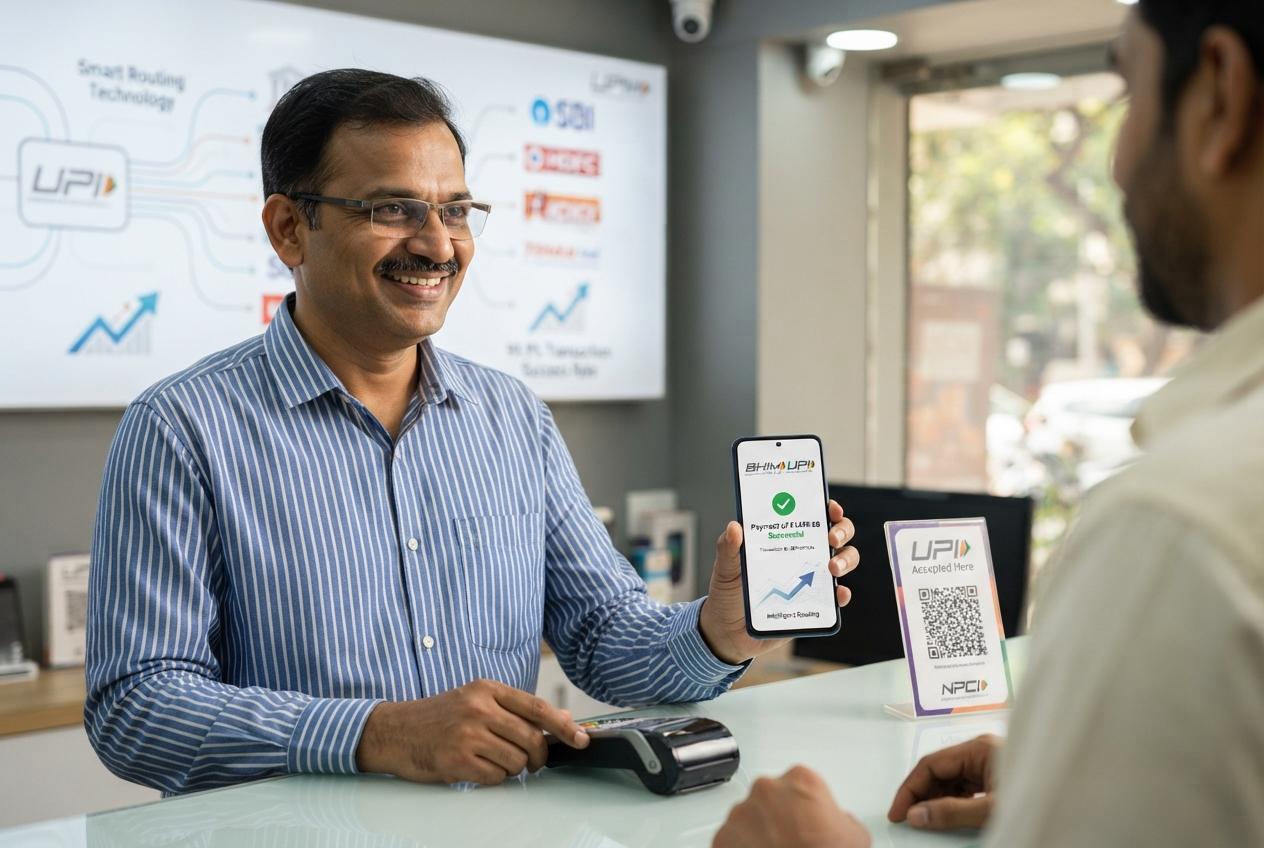

As India processes half of global real-time payments, merchants are adopting automated smart routing to boost approval rates, reduce failures, and capitalise on the country’s rapidly expanding UPI ecosystem.
India’s payments landscape is moving at a speed many merchant stacks have not matched. According to ACI Worldwide, India processed 129.3 billion real-time payments in 2023, the biggest volume anywhere in the world and almost half of all such transactions globally. Yet many businesses still send every payment through a single gateway, leaving approval rates exposed to outages, issuer behaviour and avoidable declines.
That matters because a failed checkout is rarely just a failed transaction. In India, where UPI has become the dominant digital payment rail, approval performance is shaped by the method, the issuer and the context of the payment. Worldline India data reported by Moneycontrol showed UPI transaction volumes rose sharply in the second half of 2023, while the average ticket size fell, underlining how deeply the rail has moved into everyday, lower-value spending. PwC has also projected that UPI will account for 90% of retail digital payments in India by FY2026-27, making rail-specific routing increasingly important.
Smart routing is the answer the article argues for: an automated layer that chooses the processor most likely to accept each transaction, rather than sending everything down one fixed path. In practice, that means factoring in variables such as card type, location, amount, gateway performance and compliance constraints, then directing the payment accordingly. The goal is simple: raise approval rates, reduce friction and avoid losing customers at the point of payment.
The article also stresses that India’s market is too varied for one-size-fits-all routing. UPI, cards, net banking and wallets fail for different reasons, so the best route for one payment may be a poor choice for another. That is why the piece places so much weight on fallback logic, cascading retries and live monitoring of gateway health. In its telling, businesses should treat routing less as a technical afterthought and more as revenue infrastructure.
Razorpay positions its Optimiser product as a practical response to that problem. The company says it lets merchants connect to multiple aggregators through one integration, spread traffic across providers and retry failed payments automatically through alternate paths. For companies handling recurring payments, the promise is especially attractive: fewer involuntary failures, less churn and a better chance of recovering revenue that would otherwise disappear.
The broader message is that India’s payments boom has changed the rules. With real-time payments now central to consumer behaviour and UPI continuing to expand, merchants that cling to a single gateway risk creating their own bottlenecks. Smart routing is no longer just a resilience feature. In a market this large and this fast-moving, it is becoming part of the basic plumbing of growth.
Disclaimer: This article is intended to inform and educate, not to recommend or endorse any financial product, investment or strategy. Please consider your own financial circumstances and seek professional advice where appropriate before making financial decisions.



