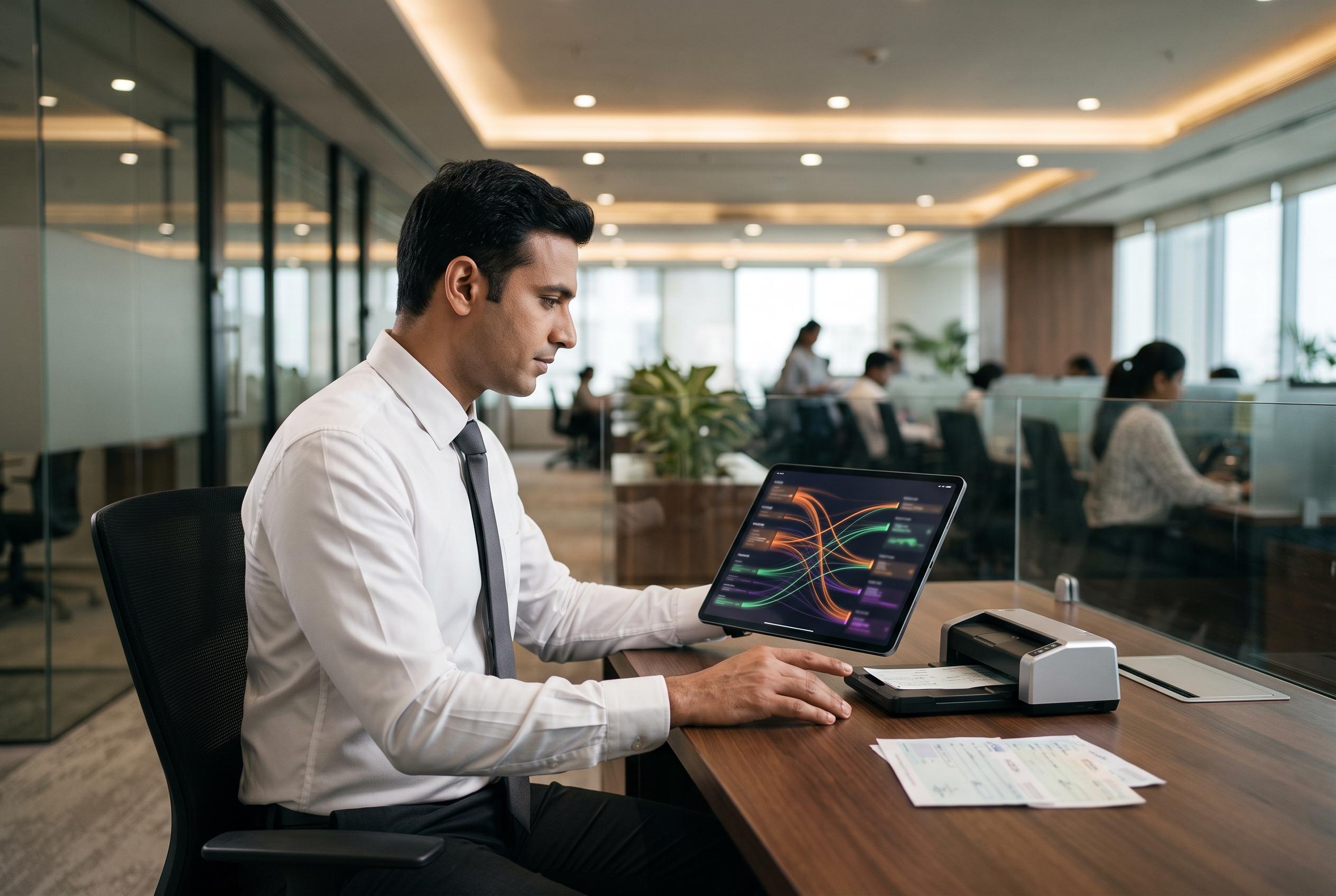

State Bank of India plans to increase its AI-driven cheque processing threshold to ₹1 lakh, integrating advanced models to automate over 50% of cheque volume and leverage AI for faster, smarter SME loan underwriting amid significant infrastructure investments.
State Bank of India is preparing to widen the use of artificial intelligence in cheque clearing, with its chief information officer saying the lender expects to lift the automation threshold to ₹1 lakh from ₹10,000. Abhay Kishore Pandey told ETBFSI that the change could push more than half of SBI’s cheques, by volume, through automated models, reducing processing costs and manual work.
The move builds on a system already in use for lower-value cheques. SBI has been using image-based AI models for cheque truncation, and Managing Director Rama Mohan Rao Amara has said automation currently covers cheques up to ₹10,000, which account for about a quarter of the bank’s total cheque volume. Business Standard and Moneycontrol have reported that the bank is already applying AI and large language models to the process, with human review reserved for samples flagged by its control risk team.
SBI’s AI push extends beyond cheque handling. According to Business Standard, the bank used AI to underwrite nearly ₹1 trillion in MSME loans in financial year 2025-26, with each loan capped at ₹5 crore. The lender has said the technology draws on GST records, credit bureau scores, account data and other structured and unstructured inputs to speed up lending decisions and reduce the time relationship managers spend on preliminary checks.
Pandey said SBI is now making heavier upfront investments in AI infrastructure, with annual technology spending already above $2 billion, in the expectation that longer-term savings will follow. He said the bank wants staff to spend more time with customers and less time on back-office tasks, while also using the technology to deepen relationships with existing borrowers and improve credit decision-making for a growing base of smaller loan applicants.
Disclaimer: This article is intended to inform and educate, not to recommend or endorse any financial product, investment or strategy. Please consider your own financial circumstances and seek professional advice where appropriate before making financial decisions.