

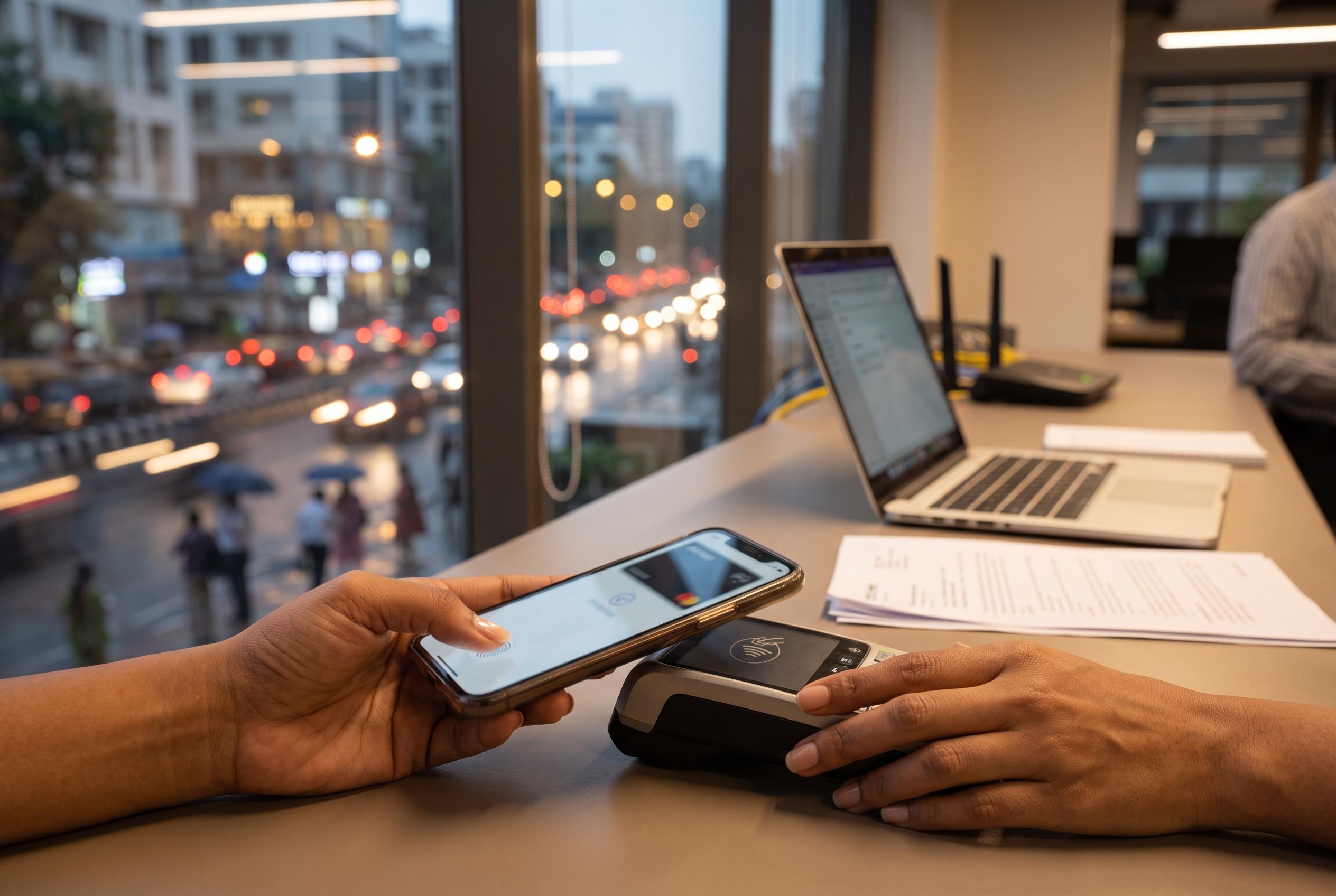

India’s Unified Payments Interface has surpassed 20 billion monthly transactions, illustrating its critical role in the country’s evolving digital economy and setting a new standard for real-time payments worldwide.
India’s Unified Payments Interface has crossed a scale that few payment systems anywhere in the world can match, with monthly transaction volumes now above 20 billion, according to a report cited by The Financial World. The milestone underlines how deeply instant account-to-account payments have become embedded in daily life across India, from consumer shopping to merchant settlements and business payments.
The surge reflects years of expansion in mobile payments, QR-code acceptance and interoperable transfers, which together have turned UPI into a core piece of the country’s digital financial infrastructure. Recent data shows the momentum has not been a one-off spike: in August 2025, the system processed 20.01 billion transactions, according to figures reported by Moneycontrol, up from 19.47 billion in July.
The broader growth profile has been equally striking. Business Standard reported that UPI set a record in December 2024 with 16.73 billion transactions worth Rs 23.25 trillion, and that the platform handled about 172 billion transactions during 2024 as a whole, with annual volume rising 46% from 2023. Transaction value also climbed sharply, reinforcing the view that UPI has moved well beyond a niche digital tool and into the centre of India’s payments landscape.
That scale, however, brings operational demands of its own. As payment traffic expands, even a small share of failed, fraudulent or disputed transactions can translate into very large absolute numbers. That makes system availability, cybersecurity, fraud detection and incident response increasingly important for banks, payment providers and the National Payments Corporation of India, which runs the network.
The latest figures also help explain why UPI is now widely viewed as a benchmark for real-time payments in large, fast-growing economies. For businesses and consumers alike, the appeal lies in speed and convenience; for the financial system, the challenge is to preserve trust while continuing to absorb rising volumes without interruption.
Disclaimer: This article is intended to inform and educate, not to recommend or endorse any financial product, investment or strategy. Please consider your own financial circumstances and seek professional advice where appropriate before making financial decisions.



