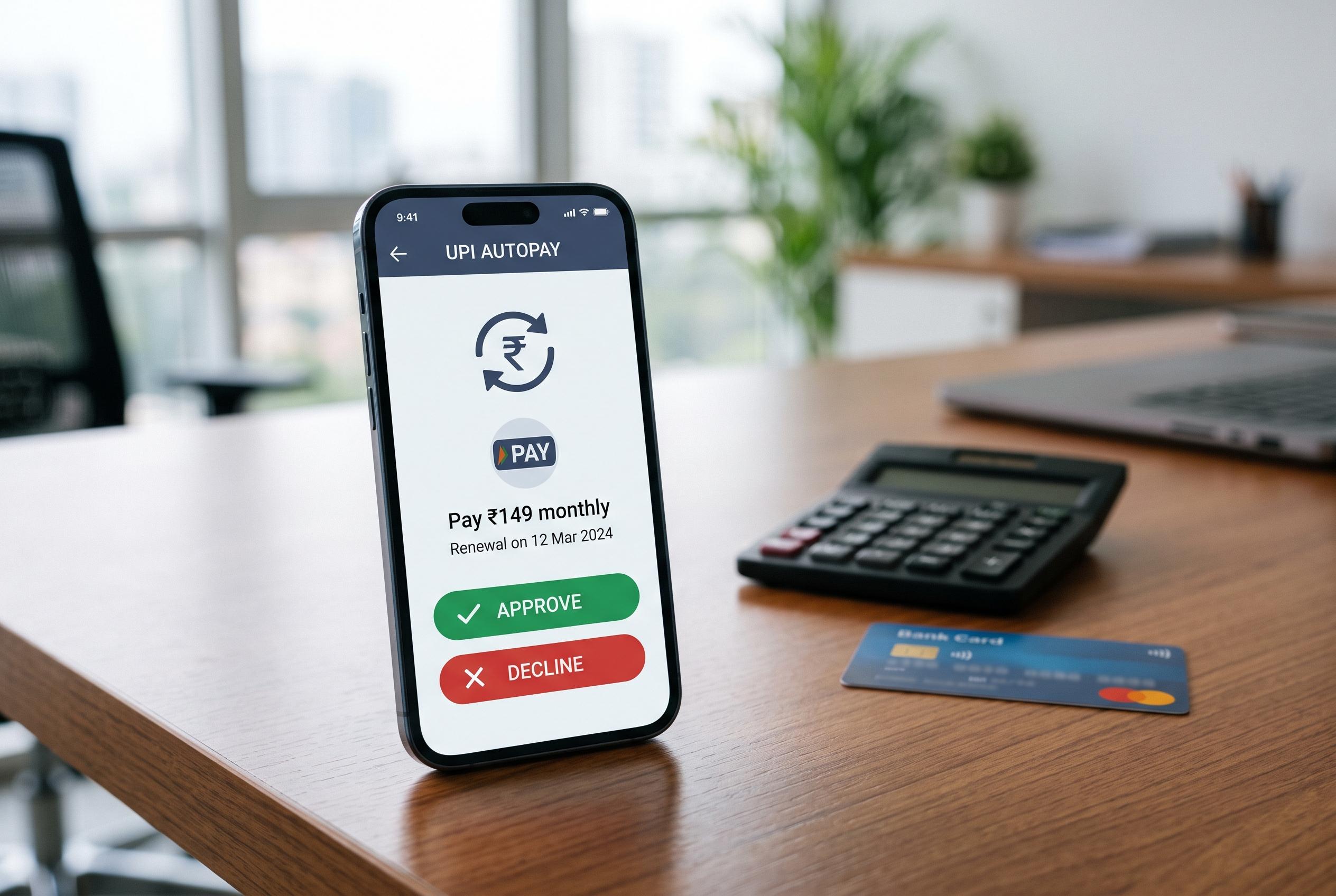

While UPI AutoPay is emerging as a flexible tool for Indian businesses to streamline repeat transactions, its success hinges on expert management of consent, billing accuracy, and customer communication to prevent disputes and failed renewals.
UPI AutoPay is increasingly being positioned as a practical way for Indian merchants to collect repeat payments with less friction, but the real test is not the mandate itself. It is whether the business can manage consent, billing, retries and customer communication cleanly enough to avoid disputes and failed renewals. PayU’s guidance frames the feature as a subscription tool for recurring debits across use cases such as memberships, bills and instalments, while other providers and developer documents describe it as a mandate-based system built around customer approval and scheduled collection. Zoho Payments and Juspay both emphasise that the customer authorises future debits through a UPI app, making clear consent central to the model.
For merchants, the set-up work begins long before the first debit. PayU says businesses should first check eligibility, then align subscription plans, cancellation rules, refund handling, webhook logic and support scripts. Juspay’s technical documentation adds that mandate registration typically requires details such as the order amount, maximum mandate amount, start and end dates and payment frequency, with mandates initiated through UPI Intent, UPI Collect or UPI QR flows. That means recurring payments are as much an operational design project as a payments integration.
Customer communication is a recurring theme across the materials. PayU says merchants should clearly show the plan name, billing amount, billing date or frequency, validity period and cancellation route before the mandate is approved. Juspay also highlights pre-debit notifications, while Google Pay’s help page says users can view, pause or cancel Autopay mandates in the app after authorising them with a UPI PIN. Together, those steps suggest that merchants need to tell customers not only how to start a mandate, but also how to manage or stop it later.
The weakest point in many recurring-payment systems is the failed debit, and PayU devotes much of its guidance to that risk. It says failures can result from insufficient balance, bank downtime, expired mandates or customer action, so businesses need a clear retry policy and grace period. Zoho’s overview similarly notes that merchants should monitor payment status closely to keep operations smooth, while Recurly’s documentation points to webhook-driven lifecycle management for subscription platforms using UPI AutoPay. In practice, that means the payment status and the product status must move together, or support teams end up reconciling them manually.
PayU also argues that merchants should track the full subscription journey rather than just mandate volume. Useful measures include mandate activation rate, first-debit success, renewal success, failed-debit recovery, churn after failure and support ticket volume. It recommends segmenting those numbers by plan, amount, bank, UPI app and customer cohort where possible, so teams can tell whether problems stem from pricing, user education or technical setup. That is consistent with the broader developer guidance from Juspay and Recurly, which both treat mandates as part of a wider subscription lifecycle rather than a standalone payment event.
For customers, the most effective implementation is the one that feels almost invisible after set-up. PayU says the account page should show the next billing date, mandate status and support route in plain language, while Google Pay’s help material shows that users can manage mandates directly from the app. The broader message across the sources is that UPI AutoPay can work well for subscriptions, utility bills and similar repeat payments, but only if merchants treat it as an end-to-end workflow, not just a checkout option.
Disclaimer: This article is intended to inform and educate, not to recommend or endorse any financial product, investment or strategy. Please consider your own financial circumstances and seek professional advice where appropriate before making financial decisions.