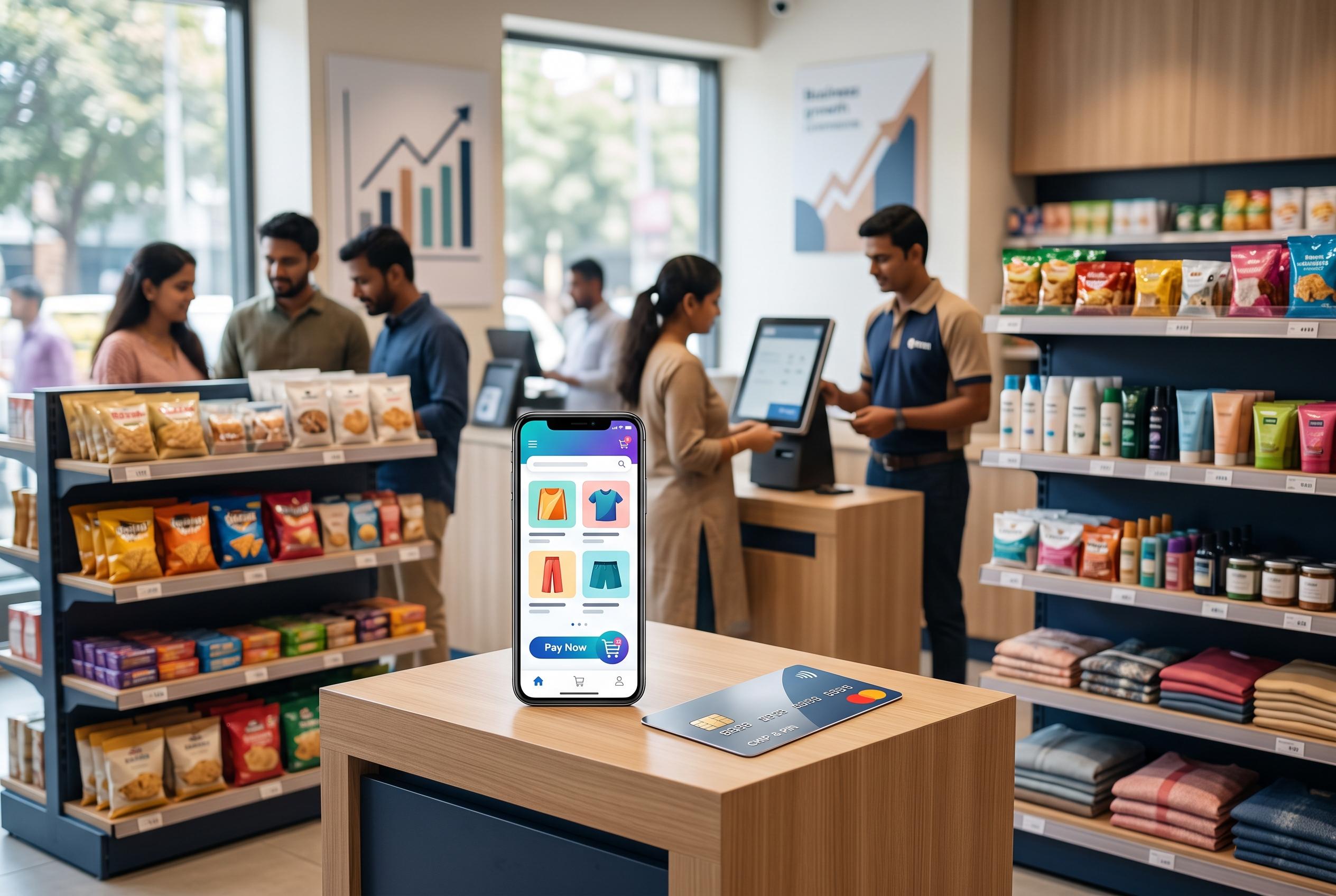

India’s retail landscape is transforming as consumers seamlessly switch between digital and physical shopping, driven by social discovery, flexible payment solutions, and integrated commerce platforms, reshaping small and medium-sized business growth.
Indian retail is moving towards a world where shoppers do not separate digital and physical buying so neatly. Meta and the Retailers Association of India said earlier this year that more than half of consumers research online before buying in store and a similar share do the reverse, while one summary of the white paper said 77% of brand discovery now happens on social media and 96% of that discovery takes place on Meta platforms.
That matters because it changes what growth looks like for small and medium-sized businesses. The report’s findings suggest customers are already moving fluidly between channels, and Meta and RAI said multi-channel shoppers spend 2.5 times more than single-channel buyers. The practical lesson for merchants is that online and offline are increasingly parts of one buying journey, not separate ones.
For many businesses, the answer is not to build a full omnichannel estate from day one. A retailer can begin with a website, a QR code at the counter or a payment link on WhatsApp, while an online brand can test a pop-up, showroom or pickup point. The goal is to let a customer discover a product in one place, pay in another and return through whichever channel is most convenient.
That is the logic behind online-to-offline, or O2O, commerce. In this model, a shopper may see a product on social media, check it in a store and complete the purchase there. Another customer may start in a shop, then place the next order on a website. Businesses that handle both journeys need payment systems, stock records and refund processes that work together rather than separately.
Payments sit at the centre of that shift in India, where UPI has become deeply embedded in daily commerce. Cashfree’s material says its gateway, Payment Links, Payment Forms and softPOS tools are designed to let merchants collect money online, at the counter or through field staff, while its current pricing page also points to additional collection options alongside the gateway. The company says its softPOS setup supports QR-based payments, Tap and Pay and Scan2EMI, which lets customers choose instalments through UPI QR without extra hardware.
Cash flow remains the less visible part of the story. Cashfree says its standard settlement cycle is T+1, with Instant Settlements available for eligible merchants and crediting funds within minutes. For a retailer restocking inventory or a delivery business paying field teams, quicker access to funds can be as important as the customer-facing payment experience itself. The company also says eligible new merchants can access a 0% MDR offer on domestic transactions under its Festive Offer until 31 March 2027, subject to volume and eligibility conditions.
The broader trend is clear enough: India’s retail market is becoming more conversational, more social and more channel-agnostic. Meta has argued that short-form video, creators and messaging are helping drive that change, while the latest retail research suggests that shoppers increasingly expect to move between discovery, purchase and repeat ordering without friction. For small businesses, the challenge is no longer whether to go online or offline, but how to make both work as one commercial system.
Disclaimer: This article is intended to inform and educate, not to recommend or endorse any financial product, investment or strategy. Please consider your own financial circumstances and seek professional advice where appropriate before making financial decisions.