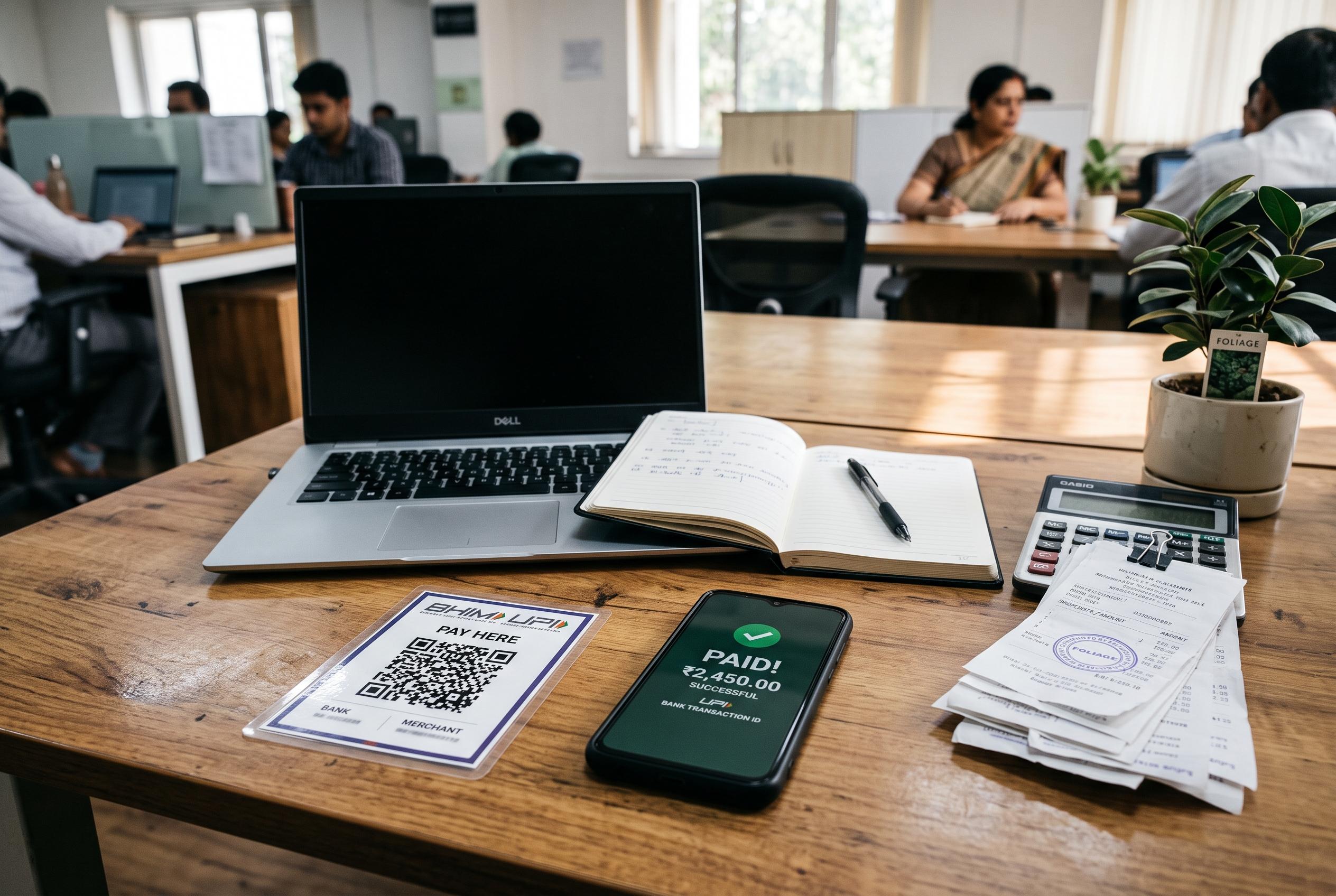

India’s rapid shift to digital payments, led by UPI, is transforming how businesses sell and expand in a booming online market, making transactions faster, safer, and integral to growth strategies.
Digital payments have moved from a convenience to a core business tool in India, helping companies sell beyond their immediate neighbourhoods, collect money faster and manage orders across websites, apps, WhatsApp, social media and physical counters. Industry data from the India Brand Equity Foundation shows how quickly the shift has accelerated: UPI handled 83.4% of transaction volume in FY25, up from 79.4% in FY24, while the system processed 185.8 billion transactions in the year.
That scale matters because India’s online commerce market is still expanding rapidly. The India Brand Equity Foundation estimates the country’s e-commerce market at more than Rs. 10.8 lakh crore in 2024 and expects it to climb to nearly Rs. 29.9 lakh crore by 2030. In that environment, accepting digital payments is no longer just about speed at checkout; it is part of how retailers, direct-to-consumer brands, education providers and service businesses reach more customers and keep sales flowing.
For smaller firms, the practical gains are immediate. Online payment options such as UPI, cards, net banking, wallets, QR codes and payment links reduce dependence on cash, limit manual reconciliation and make it easier to confirm that funds have been received. A payment link can let a home-based seller collect money for an Instagram order, while a QR code can help a local shop speed up billing at the counter. Payment gateways also bring settlement reports, refund tracking and transaction status into one place, cutting down on the back-and-forth that often follows a sale.
UPI is central to that shift. The Reserve Bank of India’s annual reporting, as highlighted by the India Brand Equity Foundation, shows that nearly four in five digital payments in the country were conducted through UPI in FY24, and that the system’s share of total digital payment volume rose again in FY25. Its mobile-first design suits checkout flows on phones, where simplicity can make the difference between a completed order and an abandoned cart. For ecommerce businesses in particular, the ability to offer UPI alongside other methods helps reduce friction at the point of payment.
PayU says its platform is built around that reality, offering merchants a single integration for UPI, cards, net banking, wallets, QR codes and payment links, along with tools for tracking collections, refunds and settlement activity. The company says businesses can begin with basic onboarding and expand into website or app integrations as they grow. For merchants of all sizes, the larger point is the same: digital payments are no longer just a back-office function. They are becoming part of the sales engine.
Disclaimer: This article is intended to inform and educate, not to recommend or endorse any financial product, investment or strategy. Please consider your own financial circumstances and seek professional advice where appropriate before making financial decisions.