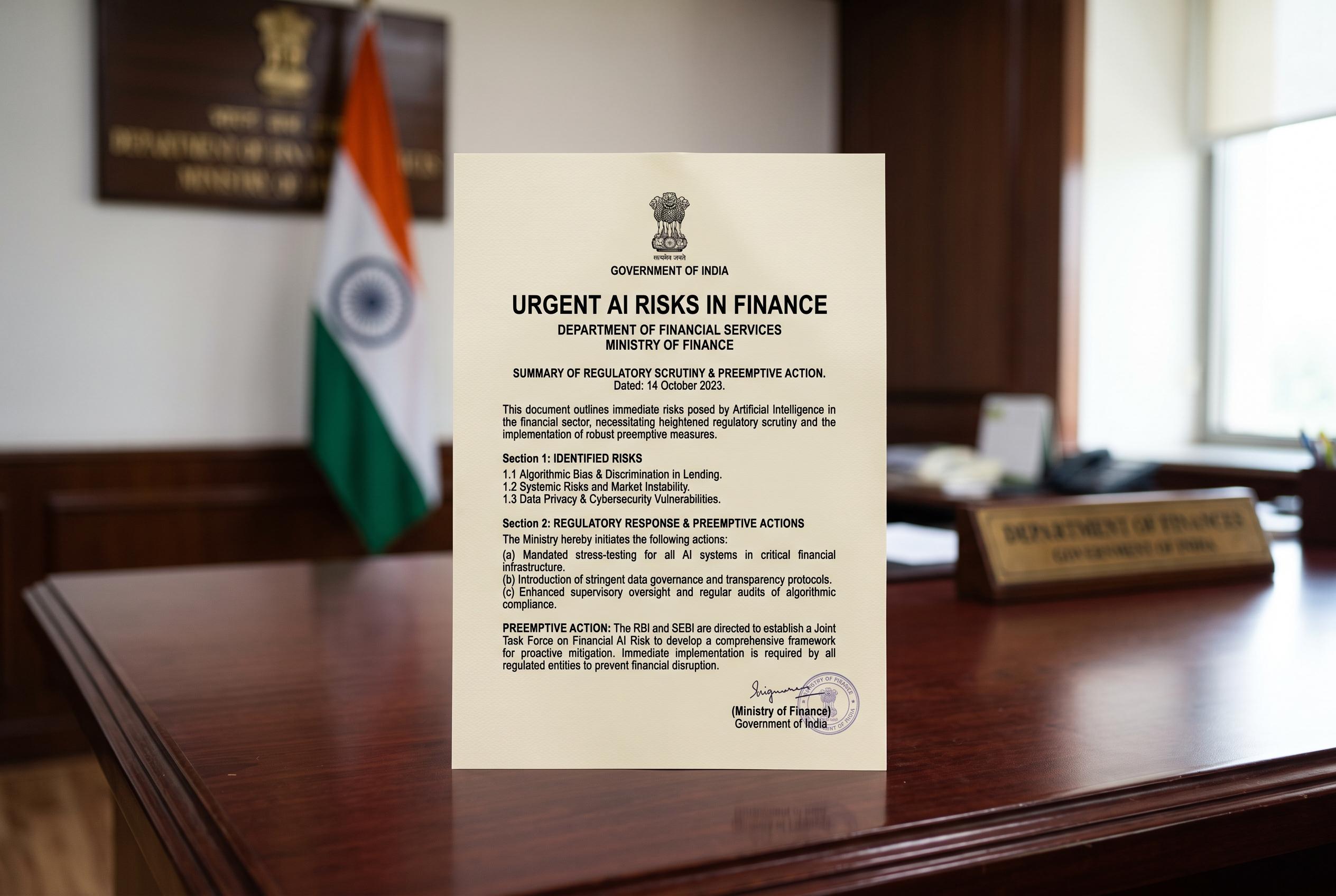

India’s chief economic adviser has called for preemptive action to address the emerging dangers of artificial intelligence in the financial sector, as regulators intensify scrutiny on AI-enabled risks and vulnerabilities.
India should act before artificial intelligence creates damage in finance, the country’s chief economic adviser warned on Friday, arguing that banks and fintech firms cannot wait for a crisis before tightening safeguards. V Anantha Nageswaran said the sector needs to focus on the safety and security of AI at the same time as it pursues faster growth and better decision-making.
Speaking at ASSOCHAM’s India International Fintech Festival, Nageswaran said AI could help lenders and fintech companies judge creditworthiness more accurately and detect stress earlier. But he said the same systems also bring new hazards, particularly as AI agents become more autonomous and harder to supervise.
His remarks come as regulators in India have been drawing sharper attention to AI-related threats in finance. The Reserve Bank of India’s Financial Stability Report for June 2026 identified AI-enabled cyberattacks as the biggest risk cited by banks and non-banking financial companies in a recent survey, overtaking ransomware and phishing. In April, RBI deputy governor Swaminathan J. also warned that opaque systems, bias and data misuse could deepen systemic vulnerabilities if AI adoption outpaces oversight.
Nageswaran also urged caution about the current enthusiasm around the technology, saying a proper assessment of its economic value may only be possible once the market hype surrounding AI eases. That view echoes broader concerns among policymakers and market watchers that AI could amplify herd behaviour in trading, increase volatility and force regulators to update rules quickly as the technology spreads through capital markets.
Disclaimer: This article is intended to inform and educate, not to recommend or endorse any financial product, investment or strategy. Please consider your own financial circumstances and seek professional advice where appropriate before making financial decisions.