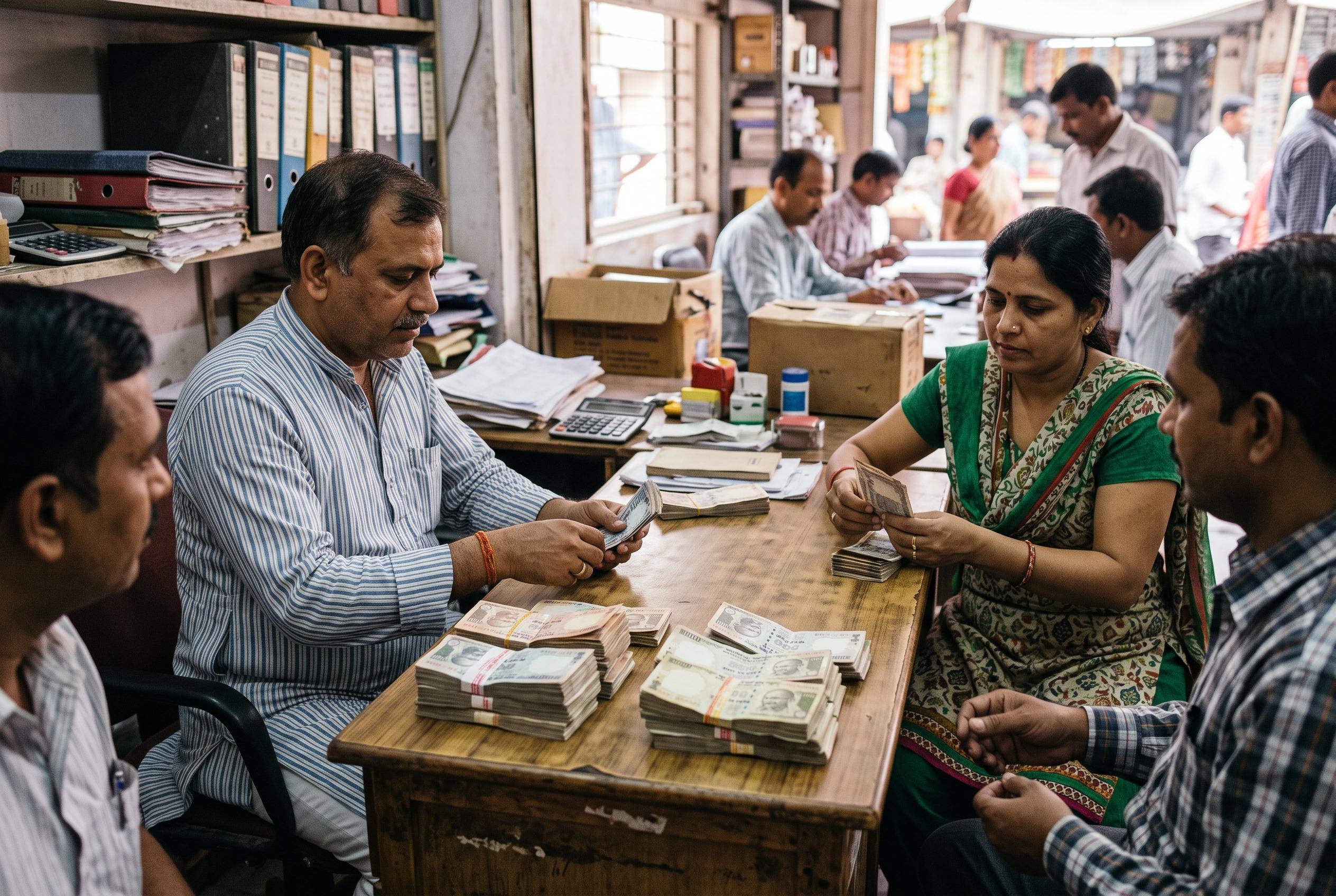

India’s physical currency circulation remains significantly larger than that of the US and euro area, driven by an expanding cash economy despite digital payment growth, raising questions about sustainability and future policies.
India’s cash economy continues to operate on a far larger physical scale than those of the United States and the euro area, with Reserve Bank of India deputy governor Shirish Chandra Murmu saying the country has about three times as many rupee banknotes in circulation as US dollar bills and nearly six times as many as euro notes. He said India had 176 billion banknotes in circulation, versus roughly 56 billion dollar bills and 30 billion euro banknotes at the end of last year, highlighting how India’s denomination mix pushes up the number of notes needed for everyday payments.
Murmu made the remarks in Jakarta on 13 August at a cash management conference organised by Bank Indonesia, where he said the RBI produces between 28 billion and 30 billion banknotes a year and withdraws about 21 billion worn-out notes from circulation. The central bank’s challenge, he said, is not only to meet demand but to keep currency clean, durable and secure while limiting the cost of replacing damaged notes.
That task has become more complicated even as digital payments expand. The RBI has described the rise in currency use as a “cash paradox”: the share of individual transactions made in cash is falling, yet the total volume of notes in circulation continues to grow at double-digit rates. According to the RBI’s annual report, the value of banknotes in circulation rose 6% in fiscal 2025 to ₹36.88 lakh crore, while the number of notes increased to 155 billion from 146 billion a year earlier. The cash-to-GDP ratio also eased to 11.11% from 11.5%, suggesting that digital payments are taking a larger share of transactions even as cash remains deeply embedded in the economy.
RBI Governor Sanjay Malhotra said in February that the central bank would keep supplying currency to meet demand, underscoring that cash remains an important part of India’s payment system. At the same time, the RBI has been trying to lower currency costs. It reported a 25% rise in currency printing expenditure in fiscal 2025 to ₹6,372.8 crore, while also exploring longer-lasting notes, including surface coatings and polymer-based lower-denomination bills. The bank is also working to reduce the carbon footprint of the cash cycle through more efficient distribution and better use of briquetted waste from destroyed notes.
Disclaimer: This article is intended to inform and educate, not to recommend or endorse any financial product, investment or strategy. Please consider your own financial circumstances and seek professional advice where appropriate before making financial decisions.