

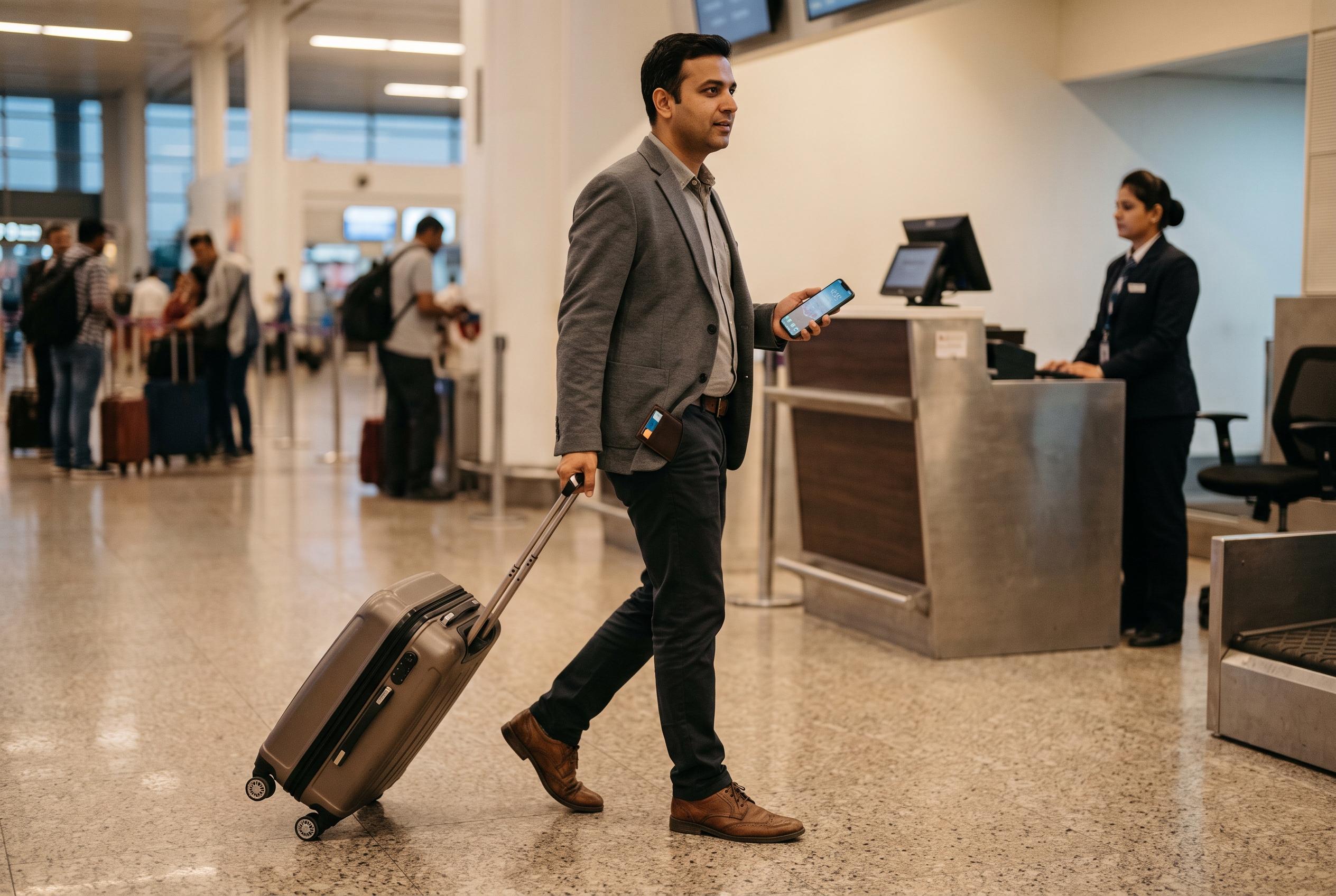

The Indian government has clarified that travellers leaving the country for short trips will not incur extra UPI costs, as new merchant discount rate regulations target merchants rather than consumers, with specific rules effective from October 2026.
The Indian government has moved to calm worries that travellers leaving the country for only a few days could be hit with extra UPI costs, after new rules on merchant charges prompted confusion about where the burden will fall. According to the clarification reported by ABP Live, the merchant discount rate, or MDR, will not be charged directly to ordinary users, and shopkeepers will not be allowed to recover it from customers.
From 15 October 2026, MDR will apply to certain UPI payments above ₹2,000, with a rate of 0.4% and a cap of ₹300 on eligible merchant transactions, according to the coverage. Several explainers from LiveMint and Business Standard said the levy is aimed at merchants rather than buyers, and that person-to-person UPI transfers will remain free.
For people travelling abroad, the practical point is narrower than the headlines suggest. ABP Live said the government has made clear that simply being overseas does not trigger a separate MDR on UPI purchases. The more immediate issue is availability: UPI is not accepted everywhere outside India, so travellers are being advised to check in advance whether a merchant at their destination supports it.
The clarification also matters for payments sent to family or friends back home. According to the ABP Live report, transfers from one individual to another will continue without MDR, whether the sender is in India or abroad. That leaves the new charge focused on business-facing transactions, with sector-specific details also being discussed in other reports, including reduced or flat fees for certain categories such as fuel and railway ticket payments.
Disclaimer: This article is intended to inform and educate, not to recommend or endorse any financial product, investment or strategy. Please consider your own financial circumstances and seek professional advice where appropriate before making financial decisions.



