

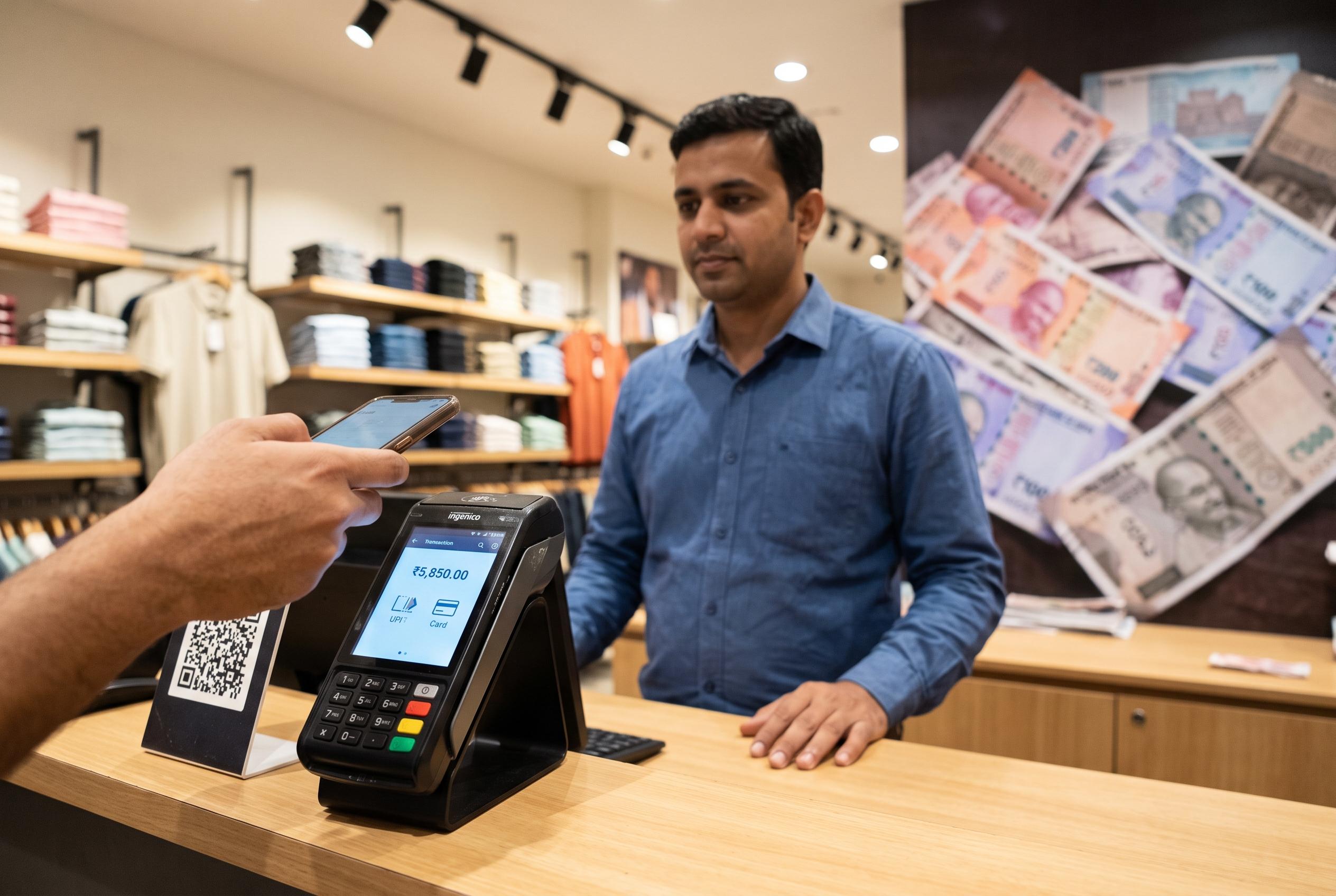

The Indian government is weighing a policy shift to reintroduce merchant fees on certain large UPI transactions, marking the biggest change since the fee was abolished in 2019. Officials emphasise safeguards for small transactions, but the move prompts concerns over potential impacts on the cashless economy.
India may be edging towards a return of merchant charges on some UPI payments, in a move that would mark the biggest policy shift in the country’s digital payments system since the fee was scrapped in 2019. According to the Deccan Chronicle editorial and later reporting in Indian financial media, the government is weighing an enabling change to the Payment and Settlement Systems Act, 2007 that could allow a service charge on selected transactions, particularly larger commercial payments.
The debate matters because UPI has become the backbone of India’s cashless economy. NPCI data cited by the Deccan Chronicle shows that in the last financial year it handled 24,162 crore transactions, accounting for about 90% of digital transactions by volume and 57% by value. The article says low-value payments dominate the system: 86% of UPI transactions are under ₹500, while only 4% are above ₹2,000, though those larger payments make up about two-thirds of total value.
Officials have tried to calm fears that ordinary users will be hit. Finance minister Nirmala Sitharaman has said person-to-person transfers will remain free, and reports in The Economic Times say the government has also dismissed rumours that GST would be imposed on UPI payments above ₹2,000. Other reports suggest any revived merchant discount rate, or MDR, would be targeted at large merchants and higher-value commercial transactions, with small businesses and consumer transfers left out.
If the plan goes ahead, the charge would likely be set well below the 1% to 3% MDR often charged by international card networks, according to the reports. Even so, the real challenge may be enforcement. The Deccan Chronicle warns that some merchants could try to pass the cost on to customers, despite that being unlawful. That risk, if not checked, could encourage cash use again and complicate India’s long push towards a less-cash economy.
Disclaimer: This article is intended to inform and educate, not to recommend or endorse any financial product, investment or strategy. Please consider your own financial circumstances and seek professional advice where appropriate before making financial decisions.



