

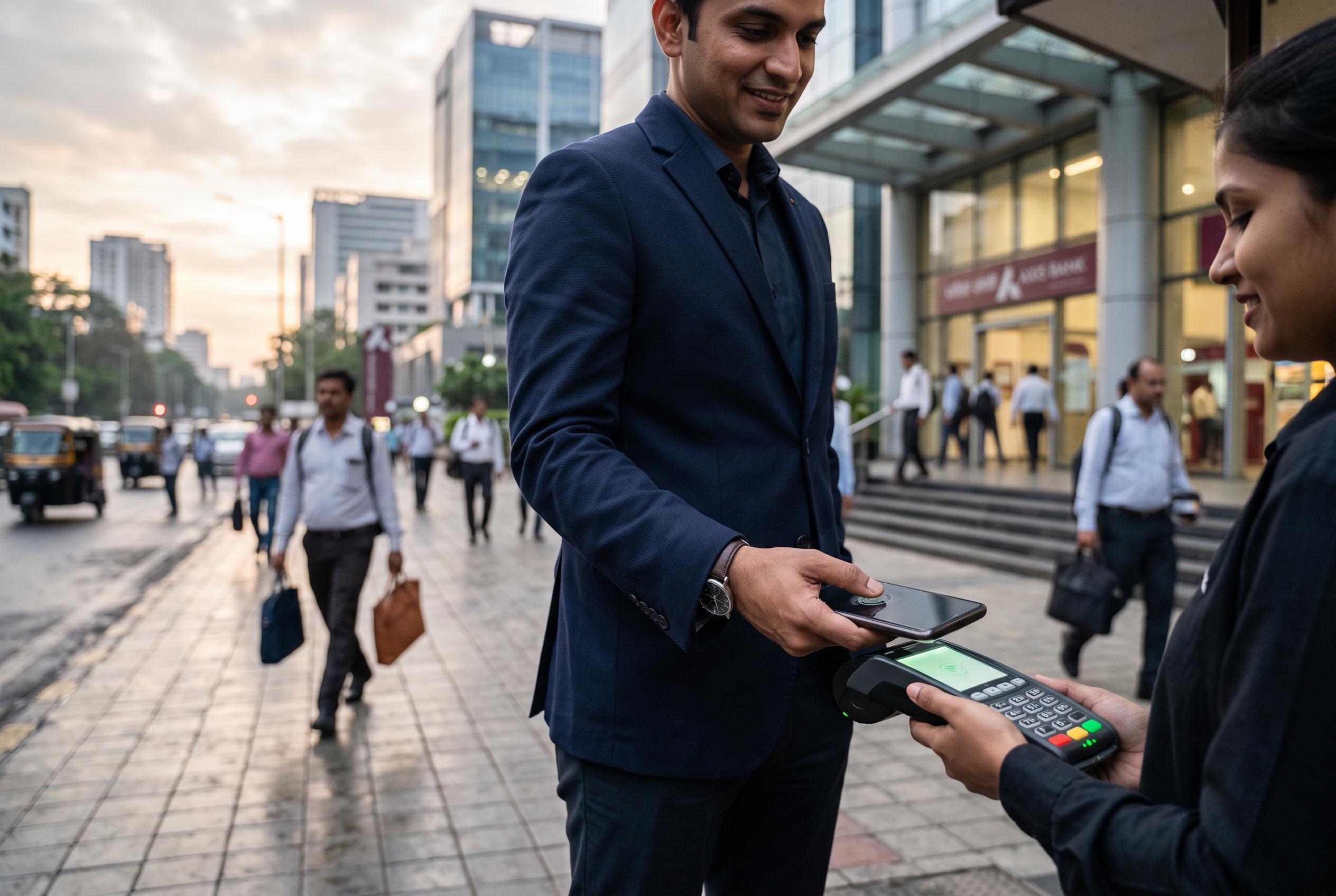

Apple prepares to launch its payment service in India through Axis Bank, capitalising on recent biometric authentication reforms, yet faces a crowded UPI-dominated market with a limited initial focus on card payments.
Apple is preparing to bring Apple Pay to India next month, starting with Axis Bank credit cards in what Reuters described as a phased, bank-by-bank rollout. The launch would mark Apple’s first formal entry into a market that has long been difficult for its payment service because of local rules and the dominance of India’s own digital payments infrastructure.
The timing matters. Reuters reported that the Reserve Bank of India changed its rules in 2025 to allow biometric authentication for card payments, removing a major obstacle to Apple’s Face ID and Touch ID model. Until then, many card transactions relied on SMS one-time passwords, a system that did not fit neatly with Apple’s tokenised payment setup. That change gives Apple a chance to introduce its existing payment technology in India without building a separate local workaround.
Apple’s first step will be limited, however. The initial rollout is expected to cover Visa and Mastercard credit cards only, not the Unified Payments Interface, or UPI, which is the backbone of Indian digital payments. UPI accounts for roughly 84% of digital-payment volume and reaches more than 550 million users, according to the summaries and Reuters’ reporting. That means Apple Pay’s early addressable market would be the smaller card segment, not the payment rail most consumers use every day.
The Axis Bank partnership gives Apple a practical starting point, but it also underlines how cautious the company is being. Axis is India’s fourth-largest credit-card issuer, with about 16.26 million active cards in July, offering Apple a meaningful base to test demand, merchant acceptance and authentication before widening access. Reuters also reported that Apple has spoken with HDFC Bank and ICICI Bank, though those talks have not yet led to commercial terms. If those discussions stall, Apple’s expansion could remain fragmented for some time.
That would leave Apple Pay entering a crowded market in which established platforms already command enormous scale. PhonePe and Google Pay together handle around 80% of UPI transaction value, and India’s payments authorities have also introduced tap-and-pay features for UPI. Those developments reduce the scope for Apple to stand out purely on convenience, especially if its service remains tied to card payments rather than the rail consumers already use most often.
For investors, the launch looks more like a long-term ecosystem play than an immediate revenue driver. It could strengthen loyalty among iPhone users in India and give Apple a foothold in a fast-growing market, but the near-term financial impact is likely to be limited unless the company secures more bank partners and eventually finds a path into UPI.
Disclaimer: This article is intended to inform and educate, not to recommend or endorse any financial product, investment or strategy. Please consider your own financial circumstances and seek professional advice where appropriate before making financial decisions.



