
Volkswagen’s Skoda Auto Volkswagen India plans significant workforce reductions and considers selling a stake as it restructures to boost competitiveness and secure future investment amid a challenging local market.
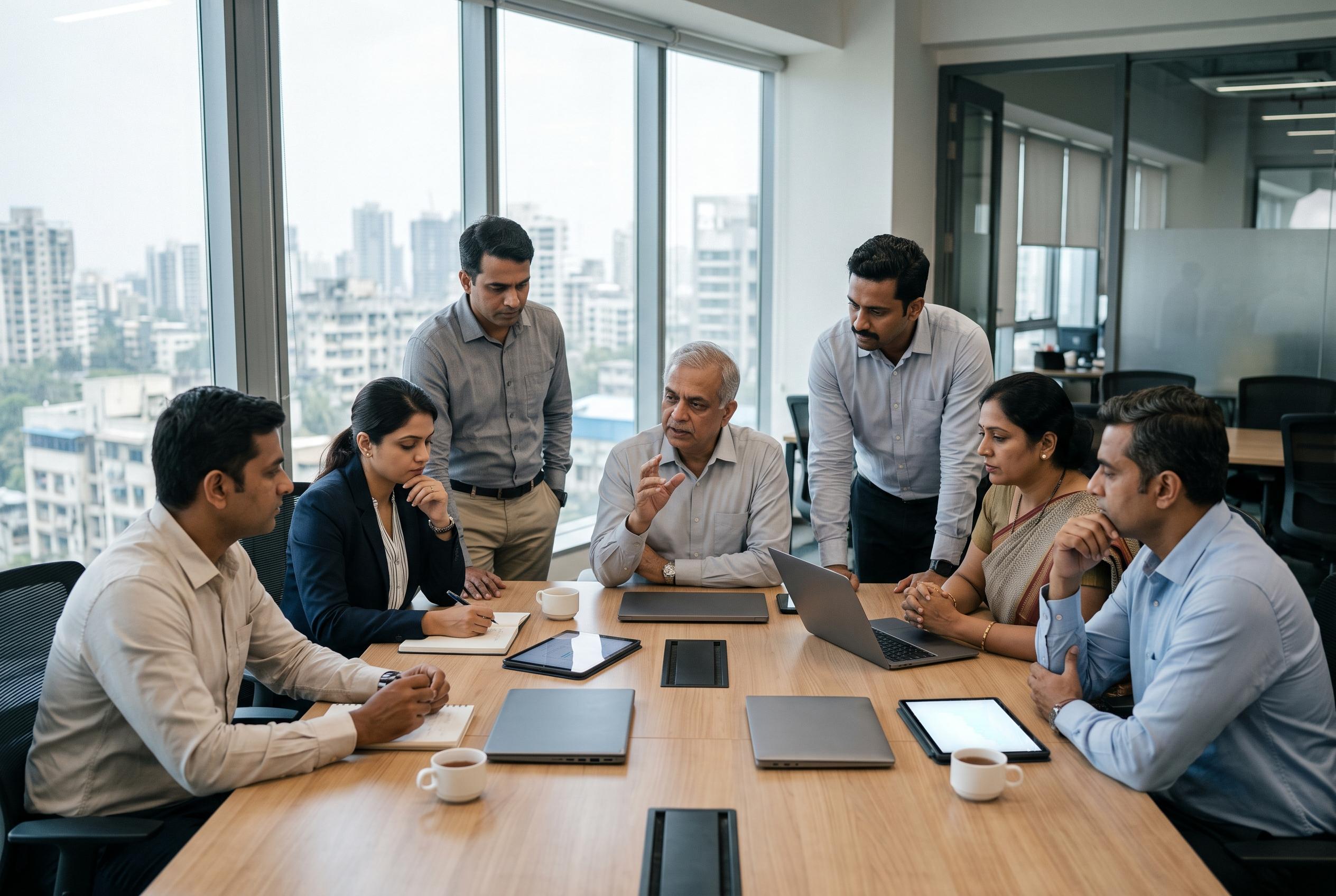
Skoda Auto Volkswagen India’s effort to cut costs has entered a more aggressive stage, with the carmaker now expected to remove about 12 per cent of its Indian workforce by 2027 as it readies its next product and investment cycle. Bloomberg reported that the overhaul began in 2025 but is now being carried out in quicker tranches, with several hundred jobs set to go across office-based roles and shop-floor operations. The savings are intended to run into tens of millions of dollars before the group starts rolling out its next generation of vehicles in India, including an electric model. (economictimes.indiatimes.com)
The company has not confirmed the reported figure, but it has acknowledged that an internal efficiency drive is under way. Piyush Arora, Skoda Auto Volkswagen India’s managing director and chief executive, said: “While we do not comment on speculative figures regarding our workforce”, adding that efforts to optimise operations in India were continuing. The local programme is distinct from the broader restructuring approved this week by Volkswagen’s supervisory board, which covers 50,000 additional job cuts worldwide, a plan to halve the model range by 2035 and a 16 per cent reduction in capital spending over 2027-2031. (economictimes.indiatimes.com)
The pressure behind the India reset is easy to trace. After more than two decades in the country, Volkswagen’s cluster of brands still accounts for only about 2.5 per cent of the passenger vehicle market, well below a long-term goal of 5 per cent by the end of the decade. Reuters and Bloomberg have both reported that the group has struggled to build scale in a market dominated by Maruti Suzuki, Hyundai Motor India, Mahindra & Mahindra and Tata Motors, where pricing, localisation and distribution breadth matter as much as engineering pedigree. (business-standard.com)
That cost-cutting is unfolding alongside talks that could reshape the ownership of Volkswagen’s Indian business. Bloomberg reported in July that JSW Group was seeking a majority stake in Skoda Auto Volkswagen India, with both sides discussing a capital injection but still haggling over valuation and how much each partner would invest. Those negotiations began nearly three years ago, according to Reuters and Bloomberg, and were initially centred on JSW gaining access to the group’s plants in Pune and Chhatrapati Sambhajinagar before broadening into a wider strategic investment in the India operation. (business-standard.com)
The idea has been evolving for some time. Autocar India reported in November 2025 that the contacts were then “very early interactions, not negotiations”, focused on the possibility of sharing platforms, powertrains and future investment. That report said one scenario under consideration was a three-way JSW-SAIC-Skoda-VW structure, reflecting JSW’s existing links with MG Motor India, while separate JSW Auto discussions with Chery had run into difficulties over data access and technology transfer. In other words, the present stake-sale talks sit on top of a longer search for a partner with both money and industrial heft. (autocarindia.com)
For Volkswagen, the attraction of a local partner is not just balance-sheet relief but a way to fund the next model cycle without repeating earlier, expensive bets. Autocar India said late last year that the group’s next India-focused platform strategy could require about 1 billion euros of investment. Bloomberg later reported that planned spending on a dedicated India electric-vehicle platform had already been cut to about $700 million from $1 billion. The company’s own rationale for the current restructuring, as described in the Bloomberg report on the job reductions, is to create a leaner base before a fresh round of launches and localisation spending. (autocarindia.com)
JSW also has clear incentives. A deal would deepen the Sajjan Jindal-led group’s automotive footprint beyond its MG partnership and its stated ambition to launch JSW-branded cars later in the decade. Bloomberg said access to Volkswagen’s platforms would offer a springboard for wider cooperation, while Reuters noted that the attraction included technology and engineering capability as well as a stronger presence in India’s fast-growing passenger vehicle market. For a conglomerate trying to assemble scale quickly, European architecture married to Indian capital could be a powerful combination. (business-standard.com)
What emerges now is a picture of a company trying to make India work on different terms. Reuters reported in July that India had become more important to Skoda as it looked for growth outside Europe after leaving Russia and retreating from China, and a Skoda spokesperson said the group was “always considering new business opportunities”. But the latest workforce cuts show that growth ambitions alone are not enough. Before Volkswagen commits more money to India, it appears determined to lower its costs, find a partner and prove that its next chapter in the country can be built on more than optimism. (marketscreener.com)
Disclaimer: This article is intended to inform and educate, not to recommend or endorse any financial product, investment or strategy. Please consider your own financial circumstances and seek professional advice where appropriate before making financial decisions.