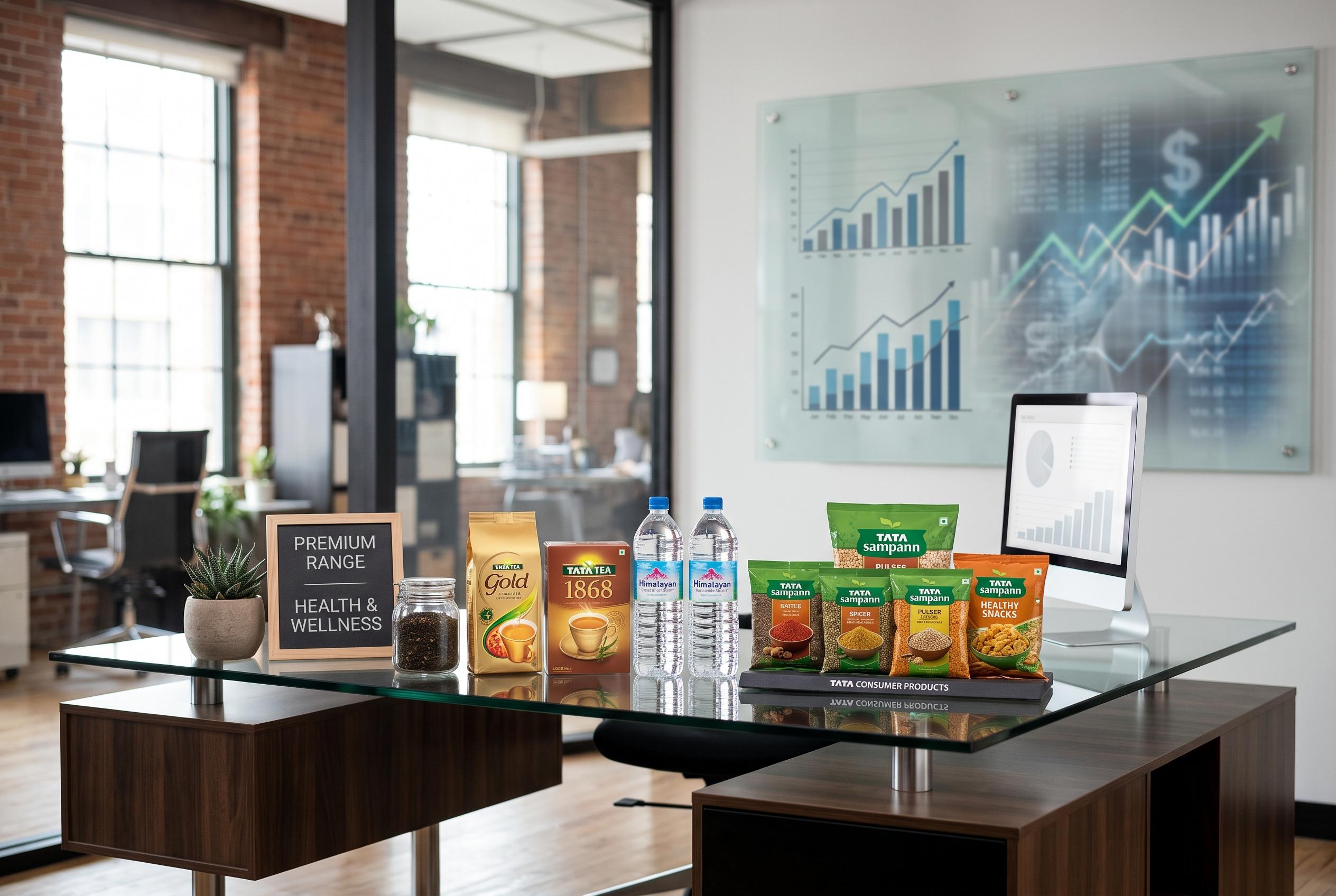

Under Natarajan Chandrasekaran’s leadership, Tata Sons has sharpened its focus on consumer-facing businesses, with Tata Consumer Products leading a rapid expansion into premium and health-oriented categories, reshaping the group’s retail and FMCG footprint.
Natarajan Chandrasekaran’s tenure as chairman of Tata Sons has helped push the group more firmly towards consumers, with Tata Consumer Products emerging as the clearest symbol of that shift. Since he took the top role in February 2017, the salt-to-software conglomerate has been building a broader presence in everyday household spending rather than relying mainly on industrial and technology businesses.
The central move came with the creation of Tata Consumer Products, formed from the merger of Tata Global Beverages and Tata Chemicals’ consumer products division. Tata said the combined company was designed to give the group a sharper focus on fast-moving consumer goods, bringing names such as Tata Tea, Tata Salt and Tetley under one roof and setting a target of reaching more than 200 million households.
That platform has since grown more ambitious. Tata Consumer Products has expanded its portfolio through acquisitions, including Soulfull in February 2021 and, in 2024, Capital Foods and Organic India. Those deals added brands such as Ching’s Secret and Smith & Jones, giving the company a wider presence across noodles, soups, cooking pastes and health-oriented products.
The broader Tata group also has other consumer-facing businesses, including Trent, Titan Company, Voltas and Infiniti Retail, which owns the Croma chain. Together, they reflect a deliberate effort to increase exposure to retail, branded goods and premium products at a time when Indian consumers are upgrading their spending.
Analysts and brand specialists say the strategy has strengthened Tata’s ability to sell across more categories, but they also see pressure to improve returns. Arvind Singhal of The Knowledge Company said the consumer businesses need better capital allocation and that “some hard decisions need to be taken to give better returns to shareholders”. Brand expert Alpana Parida said the new structure has allowed Tata to build a house of brands and benefit from premiumisation, the trend in which consumers trade up to higher-value products.
Disclaimer: This article is intended to inform and educate, not to recommend or endorse any financial product, investment or strategy. Please consider your own financial circumstances and seek professional advice where appropriate before making financial decisions.