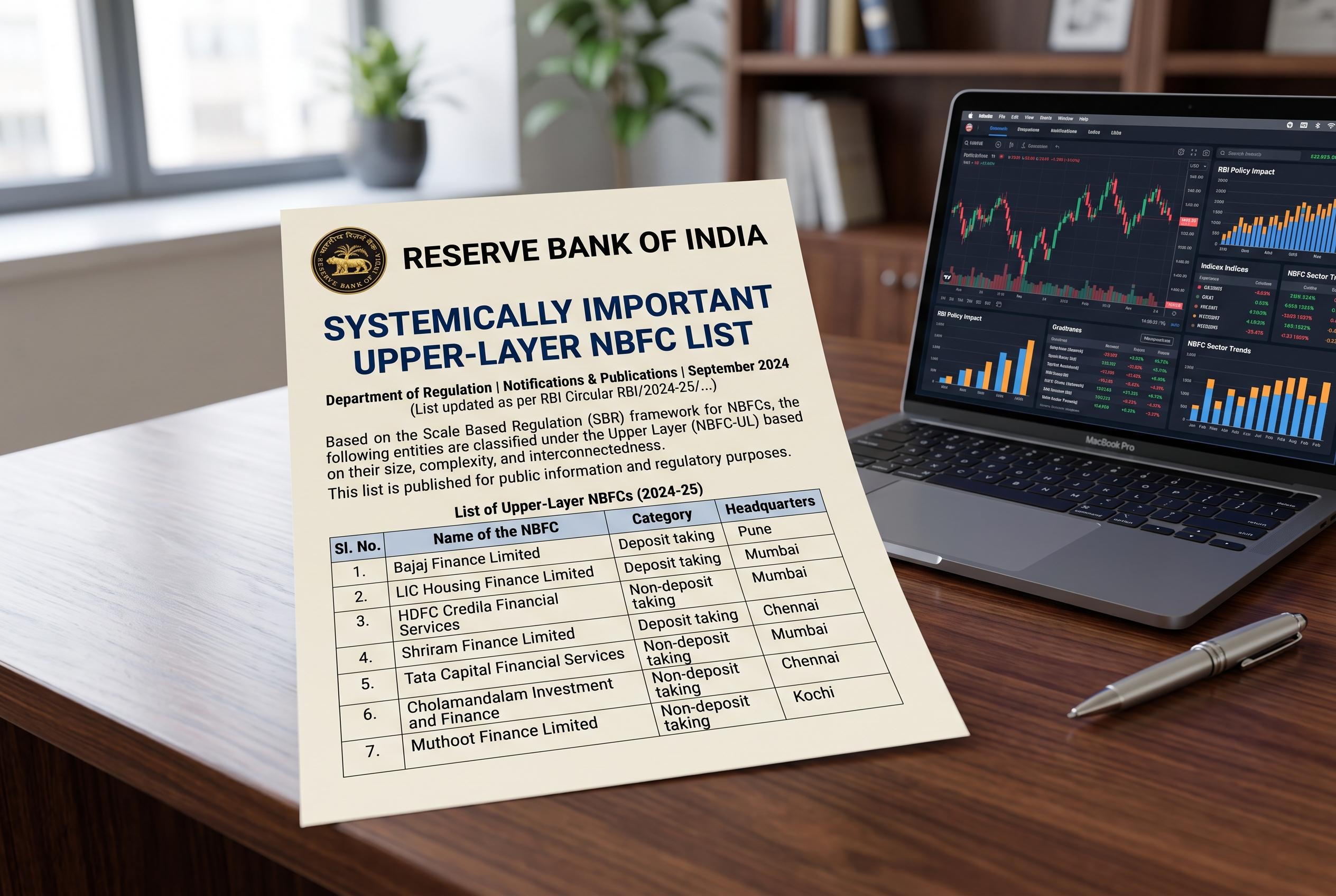

The Reserve Bank of India has retained Tata Sons in its list of systemically important upper-layer non-banking financial companies, highlighting evolving regulatory oversight of major shadow lenders amidst ongoing restructuring and proposed surrender of NBFC registration.
Tata Sons’ retention in the Reserve Bank of India’s upper-layer non-banking finance company list has put a little-known but increasingly important category of lender under the spotlight. According to the central bank, the inclusion does not affect Tata Sons’ pending request to surrender its NBFC registration, which remains under review. The latest list of upper-layer NBFCs contains 17 entities and is part of a broader framework designed to bring the most influential shadow lenders under tighter supervision.
The classification matters because the upper layer is reserved for firms the RBI regards as systemically significant. These are not ordinary finance companies. They include large lenders and core investment companies whose size, reach and interconnections can make them resemble banks in their potential effect on the wider financial system. Tata Sons, the holding company of the Tata Group, was first placed in this category in 2022, and its status has remained under scrutiny as it has reduced financial exposures and reorganised parts of its business.
Under the RBI’s scale-based regulation framework, introduced in October 2021 after the failures of large finance groups such as IL&FS and DHFL, NBFCs are split into four tiers: base, middle, upper and top. The base layer covers smaller firms, while the middle layer includes larger investment and lending companies, housing finance firms, infrastructure finance firms and smaller lenders. The upper layer is made up of the most important NBFCs, while the top layer is currently empty and would be used only if a firm’s risk profile became extreme.
The upper-layer list is not determined by size alone. The RBI uses a scoring system that also considers systemic impact, links with banks and other financial institutions, and the complexity of a company’s business model. That is why the list includes firms with very different business lines, from deposit-taking and non-deposit-taking lenders to infrastructure financiers and large holding companies. Reuters and business publications have noted that names on the list have included Tata Sons, Tata Capital, Bajaj Finance, Shriram Finance, L&T Finance, Cholamandalam Investment and Finance Company, Muthoot Finance, Aditya Birla Finance, HDB Financial Services and PNB Housing Finance, among others.
Once a company enters the upper layer, the regulatory burden rises sharply. If it is unlisted, it is generally expected to move towards a stock market listing within three years. It must also maintain stronger capital buffers, including a minimum common equity tier 1 ratio of 9%, and follow tighter governance standards, including the appointment of a chief risk officer. The RBI also imposes limits on large exposures so that no single borrower or group can jeopardise the institution’s survival. In practice, the aim is simple: to reduce the chance that a giant NBFC becomes too important to fail, and too dangerous to leave lightly regulated.
Disclaimer: This article is intended to inform and educate, not to recommend or endorse any financial product, investment or strategy. Please consider your own financial circumstances and seek professional advice where appropriate before making financial decisions.