

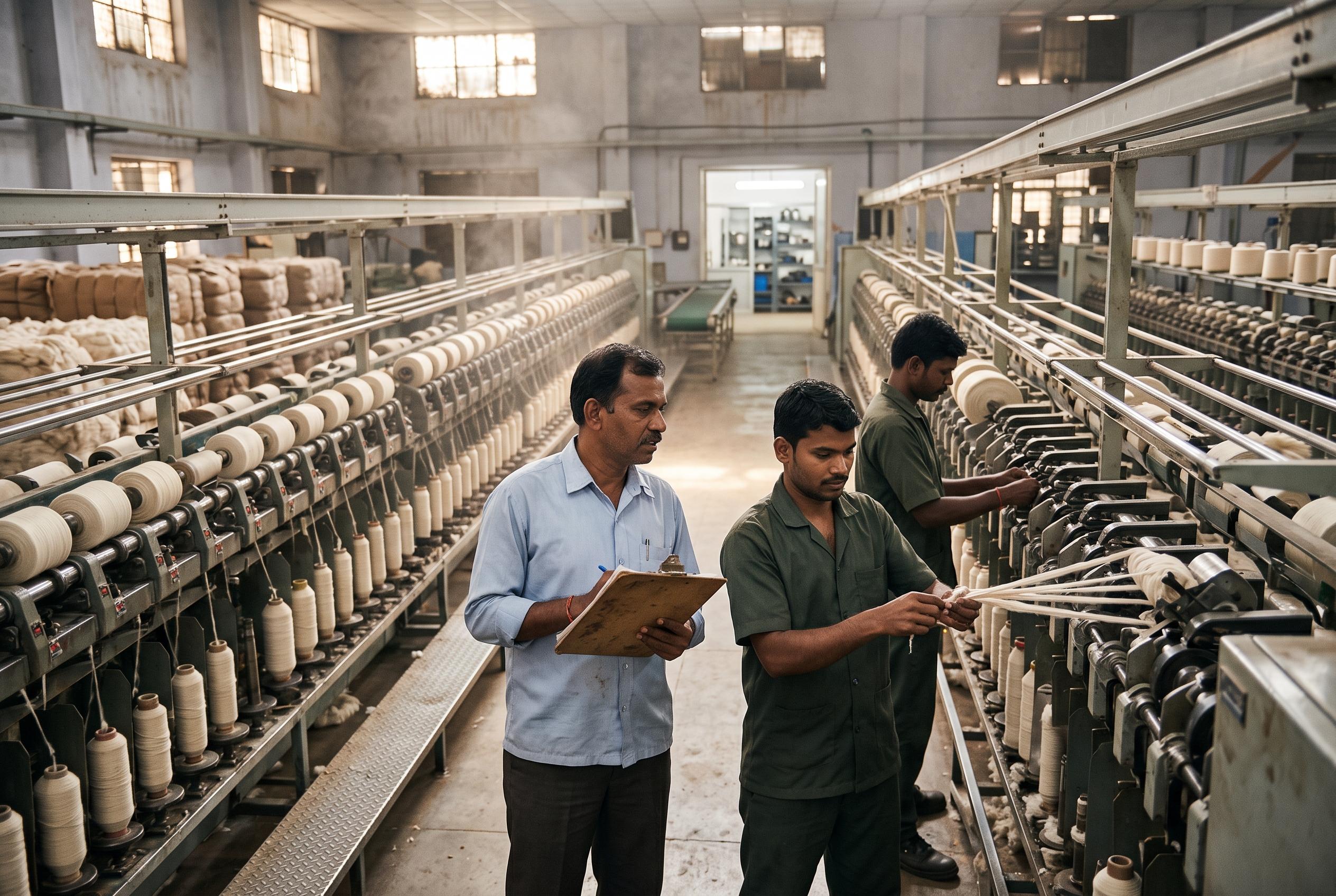

After years of decline, Tamil Nadu’s spinning sector is witnessing a resurgence with mills investing in modernisation amid improving global and domestic demand, despite ongoing challenges like rising raw material costs.
After several difficult years for Tamil Nadu’s spinning sector, mills are once again putting money into upgrades as demand for cotton and blended yarns improves. Export orders have strengthened in recent months, helped by a pickup in global yarn demand, while the domestic market has also shown signs of recovery. Industry figures say the change has encouraged mills to revive projects that were shelved during the downturn.
KPR Mill of Coimbatore is among the clearest examples. The company has told the stock market it is spending about ₹400 crore on a mix of modernisation and expansion work, including a vortex spinning unit, machinery upgrades, processing and printing capacity, and ethanol production. Separate project-tracker reports say the group expects some of these investments to be completed during the current financial year. KPR Mill reported revenue of ₹4,909 crore and net profit of ₹814 crore for the year ended March 31, 2023.
The wider picture, however, remains fragile. According to data cited by Apparel Resources from the Union Ministry of Textiles’ Annual Survey of Industries, more than 300 textile mills in Tamil Nadu stopped operating between 2021-22 and 2023-24, underscoring how severe the recent slump has been. Industry sources say many mills were forced to cut output or shut down altogether during the long downturn that began in 2022.
That is why mill owners say fresh capital spending now is less about expansion for its own sake and more about survival. Durai Palanisamy, chairman of the Southern India Mills Association, said that without reinvestment and capital expenditure, mills would lose out. He argued that modernisation brings better productivity, greater automation and lower costs. Yet even as demand improves, rising cotton prices remain a major worry, with mill owners warning that daily increases in raw material costs are squeezing margins.
Disclaimer: This article is intended to inform and educate, not to recommend or endorse any financial product, investment or strategy. Please consider your own financial circumstances and seek professional advice where appropriate before making financial decisions.



