

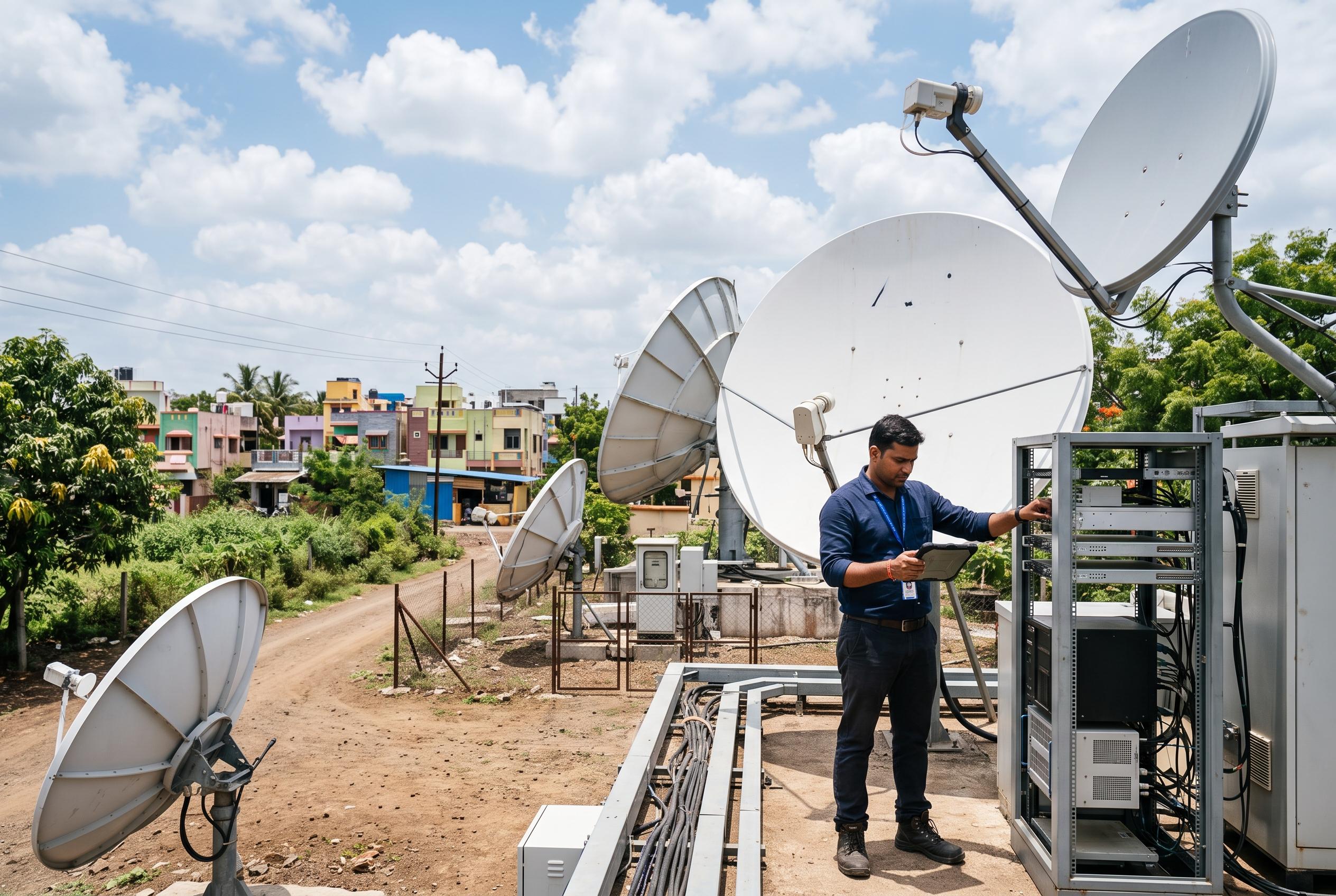

SpaceX’s Starlink says it has built approved infrastructure in India after years of regulatory work, as Reliance and rival operators press for a level playing field before commercial satellite services begin.
Starlink said on Friday that it has spent more than five years working with Indian regulators, operators and industry partners, and that it has already built dedicated in-country infrastructure with government approvals as it prepares to offer high-speed satellite internet in India. The SpaceX-owned group made the remarks on X as debate intensified over how quickly satellite broadband providers should be allowed into one of the world’s biggest telecom markets.
The statement came after Reliance Industries said it welcomed competition in satellite communications, including from Starlink, but stressed that every operator must follow Indian law and policy. In its response, Reliance argued that competition is welcome when it plays by the same rules, and pointed to Jio’s own rise since entering telecom in 2016 with no customers and building a base of more than 530 million users. The group said its experience showed that India rewards companies that invest, innovate and comply with regulation.
The exchange comes against a backdrop of mounting scrutiny over approvals, spectrum assignment and security clearances for satellite broadband. According to government sources cited earlier this week, the Centre’s position is that companies cannot operate in India unless they comply fully with domestic law. The Ministry of Communications has also dismissed claims that the rules are unfair or discriminatory, saying the same conditions apply to all applicants before commercial service can begin.
Communications Minister Jyotiraditya Scindia has said three satcom ventures have secured licences: Starlink, Jio Satcom and Bharti-backed Eutelsat OneWeb. Amazon’s Project Kuiper has expressed interest, but it too must follow the same process. Scindia has said the remaining hurdle is the sequence between licensing, security clearance and final spectrum pricing, with the Telecom Regulatory Authority of India and the Department of Telecommunications nearing a decision on how much operators will pay.
The public row has also drawn in Sunil Mittal, the chairman of Bharti Airtel, who said at the Bloomberg New Economy Forum that his company’s OneWeb venture applied years ago and is still waiting for permission to launch commercially. Mittal said OneWeb’s ground network has been ready for years and that its satellites have been over India for five years, underlining how slowly the sector has moved from paperwork to service. Musk, for his part, has criticised what he sees as resistance from powerful business interests, while Reliance has insisted that Jio’s own satellite plans are also awaiting clearances.
That contest matters because satellite broadband is expected to play a bigger role in rural and hard-to-reach areas where terrestrial networks are patchy. Reliance has been developing its own satellite plans, including a proposed constellation of around 1,600 low-earth-orbit satellites designed to extend connectivity to 600,000 villages. The company has also struck a deal with SpaceX to explore offering Starlink services through Jio’s retail network, a sign that rivalry and cooperation may coexist as India decides how quickly to open the market.
Disclaimer: This article is intended to inform and educate, not to recommend or endorse any financial product, investment or strategy. Please consider your own financial circumstances and seek professional advice where appropriate before making financial decisions.



