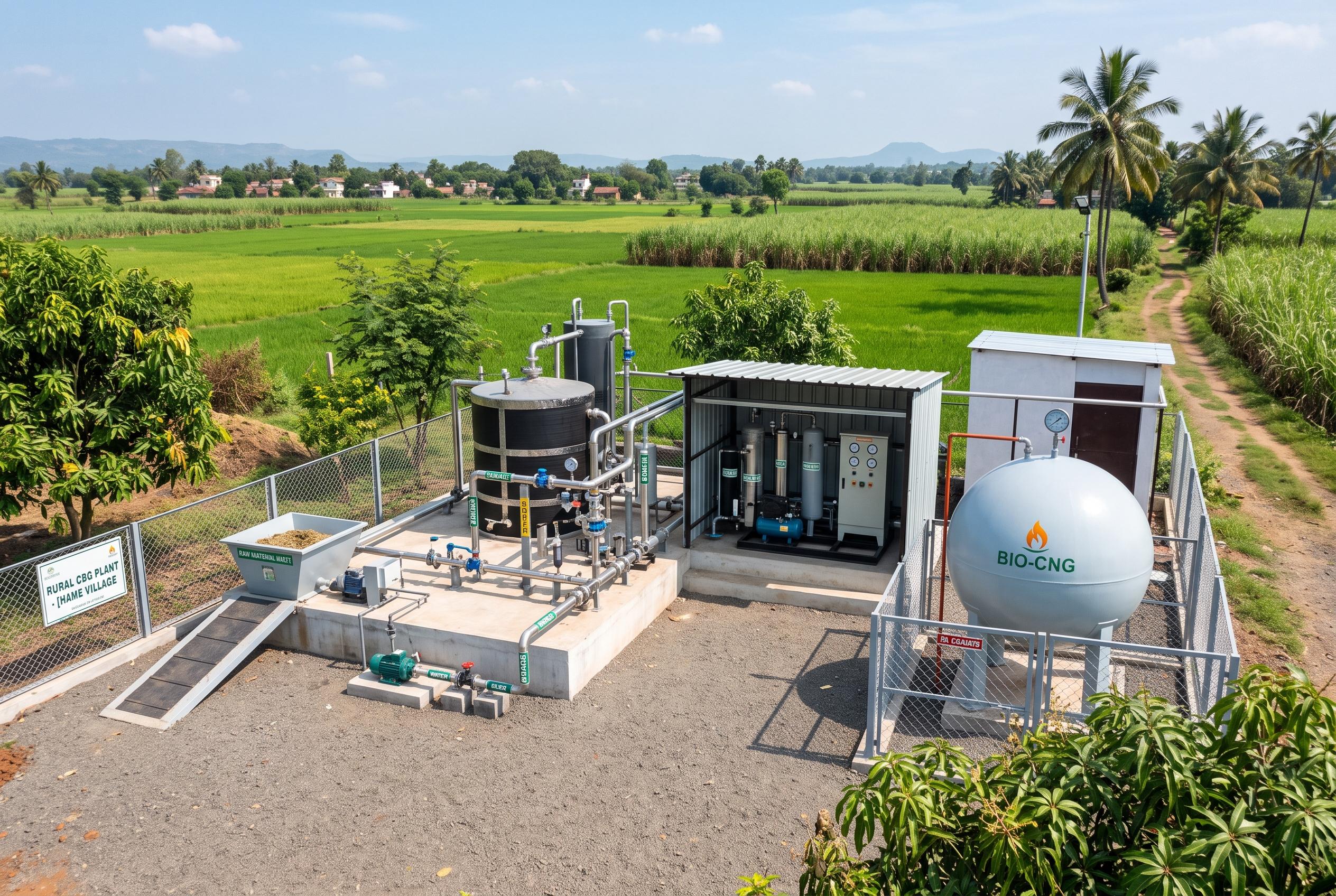

India’s compressed biogas sector is demonstrating that small, well-specified plants are more resilient and cost-effective than larger projects, highlighting a shift from policy ambition to practical, evidence-led development.
India’s compressed biogas sector is moving from policy ambition to commercial reality, and early operating experience is exposing a clear pattern: smaller, better-specified plants are often proving more resilient than larger projects built around optimistic assumptions. Industry commentary on recent operating projects suggests that 2 tonne-per-day facilities are frequently achieving steadier throughput, more reliable gas quality and tighter cost control than some 10 tonne-per-day schemes that were designed before feedstock and buyers were fully locked in.
That matters because the wider market is still developing. According to government and media reporting, India has commissioned 132 CBG plants with a combined output of 920 tonnes per day under the Sustainable Alternative Towards Affordable Transportation initiative, while other assessments show the programme remains well short of its original 5,000-plant ambition. A Financial Express report said only about 206 plants were operational against that target, underscoring how much of the sector still depends on turning policy support into functioning assets.
The mismatch is not simply about technology. Larger plants can look more attractive on paper because they promise greater absolute production and lower fixed costs per unit. In practice, however, they are more exposed when feedstock supply is seasonal, transport and aggregation costs rise or offtake agreements do not convert into firm sales on time. When a plant runs below design capacity, digesters and purification systems still carry most of their fixed costs, squeezing margins and weakening returns. Smaller plants face their own disadvantages, but they can outperform if feedstock is truly available, sales are secured and operations stay within the management team’s capabilities.
That is why advisers in the sector increasingly argue that capacity should follow evidence rather than ambition. The first test is not how large a project can be built, but how much biomass can be secured at a predictable cost throughout the year and how much gas can be sold on workable commercial terms. IMARC Engineering, which advises on CBG project planning, says the viable size can be 2 TPD, 3 TPD, 5 TPD or 10 TPD, provided the decision is based on feedstock, site conditions, capital costs and offtake rather than on an attractive headline number. As more plants move from commissioning into steady operation, the gap between right-sized projects and oversized ones is likely to widen.
Disclaimer: This article is intended to inform and educate, not to recommend or endorse any financial product, investment or strategy. Please consider your own financial circumstances and seek professional advice where appropriate before making financial decisions.