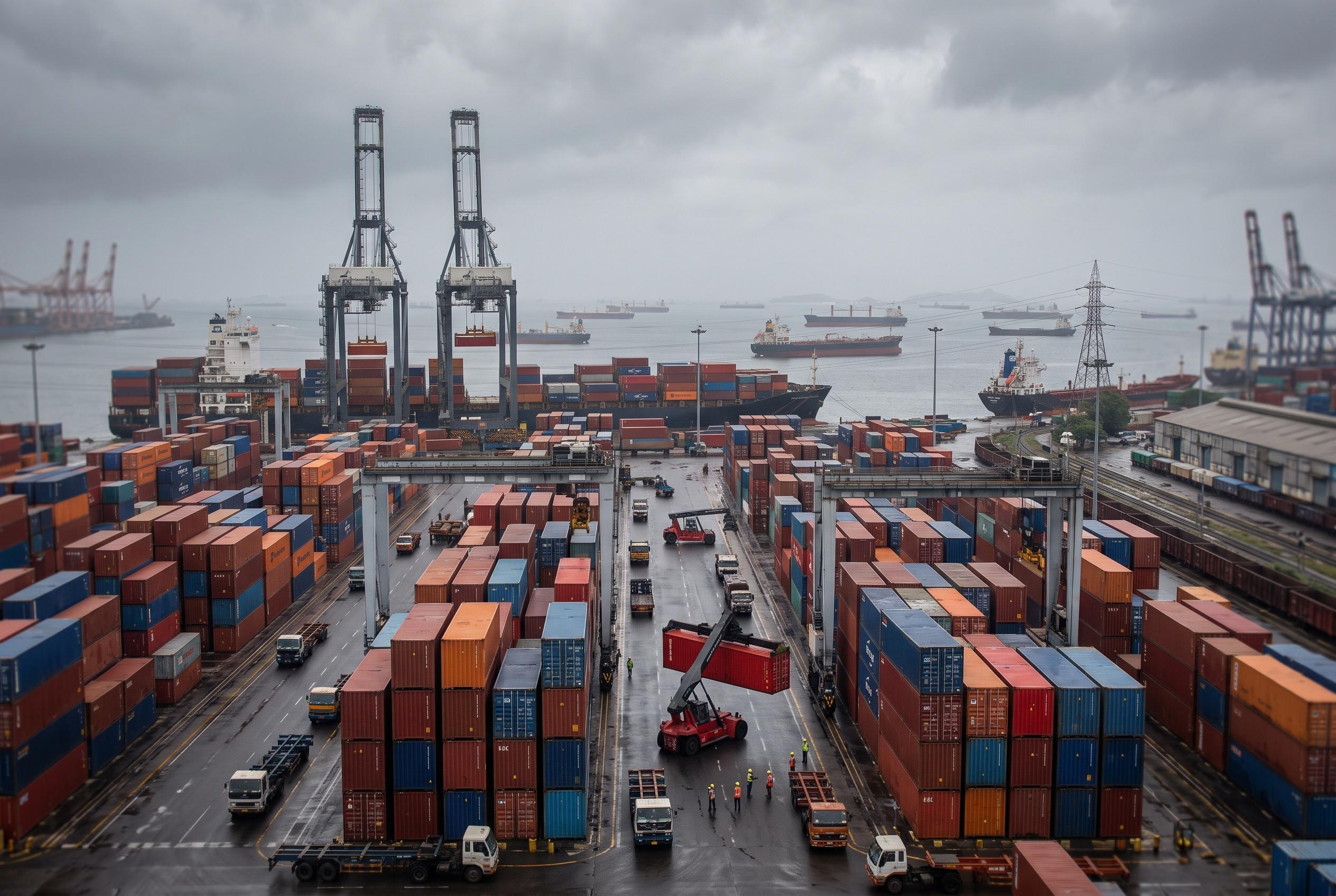

Growing congestion at Singapore and Colombo ports is causing delays, higher costs, and uncertainty for Indian exporters, exposing vulnerabilities in regional supply chains ahead of peak shipping season.
Congestion at Singapore and Colombo is tightening pressure on Indian exporters, with delays at the two transshipment hubs now affecting vessel schedules, feeder availability and the movement of containers across major trade lanes. For cargo that depends on connecting services before reaching markets in Asia, Europe and Africa, the bottleneck is adding uncertainty to transit times and delivery planning.
The strain at Colombo has become especially visible. According to shipping-industry reports, berthing delays there have stretched to 2 to 3 days as container yards and inter-terminal transfers come under pressure. Data cited by sector sources show Colombo’s container throughput rising from 636,084 TEUs in February 2026 to 761,096 TEUs in April 2026, with transshipment making up more than 80% of its volume.
Singapore is facing its own operational friction. Industry accounts describe limited berth availability, labour constraints and slower cargo turnover, with exporters of time-sensitive goods such as electronics among those feeling the impact. The result is longer queues for ships, higher logistics costs and, in some cases, delayed or partial deliveries to buyer markets.
For Indian shippers, the effects go beyond the ports themselves. Shortages of feeder vessels can disrupt connections between the transshipment hubs and Indian ports, leading to rolled cargo, missed sailings and weaker schedule reliability. As carriers and freight forwarders adjust routings, equipment positioning and service rotations, exporters may also face higher freight charges and added paperwork friction.
The episode also underlines how exposed regional supply chains remain to disruptions at a small number of critical nodes. Singapore’s Ministry of Transport said in May that additional berths at Tuas Port were due to enter service during 2026, while authorities and PSA were working to strengthen manpower and digital coordination to reduce vessel bunching. At the same time, broader 2026 market data from Xeneta pointed to congestion across several Asian hubs, including Singapore and Colombo, reinforcing concerns about the resilience of India-linked trade routes as the peak shipping season approaches.
Disclaimer: This article is intended to inform and educate, not to recommend or endorse any financial product, investment or strategy. Please consider your own financial circumstances and seek professional advice where appropriate before making financial decisions.