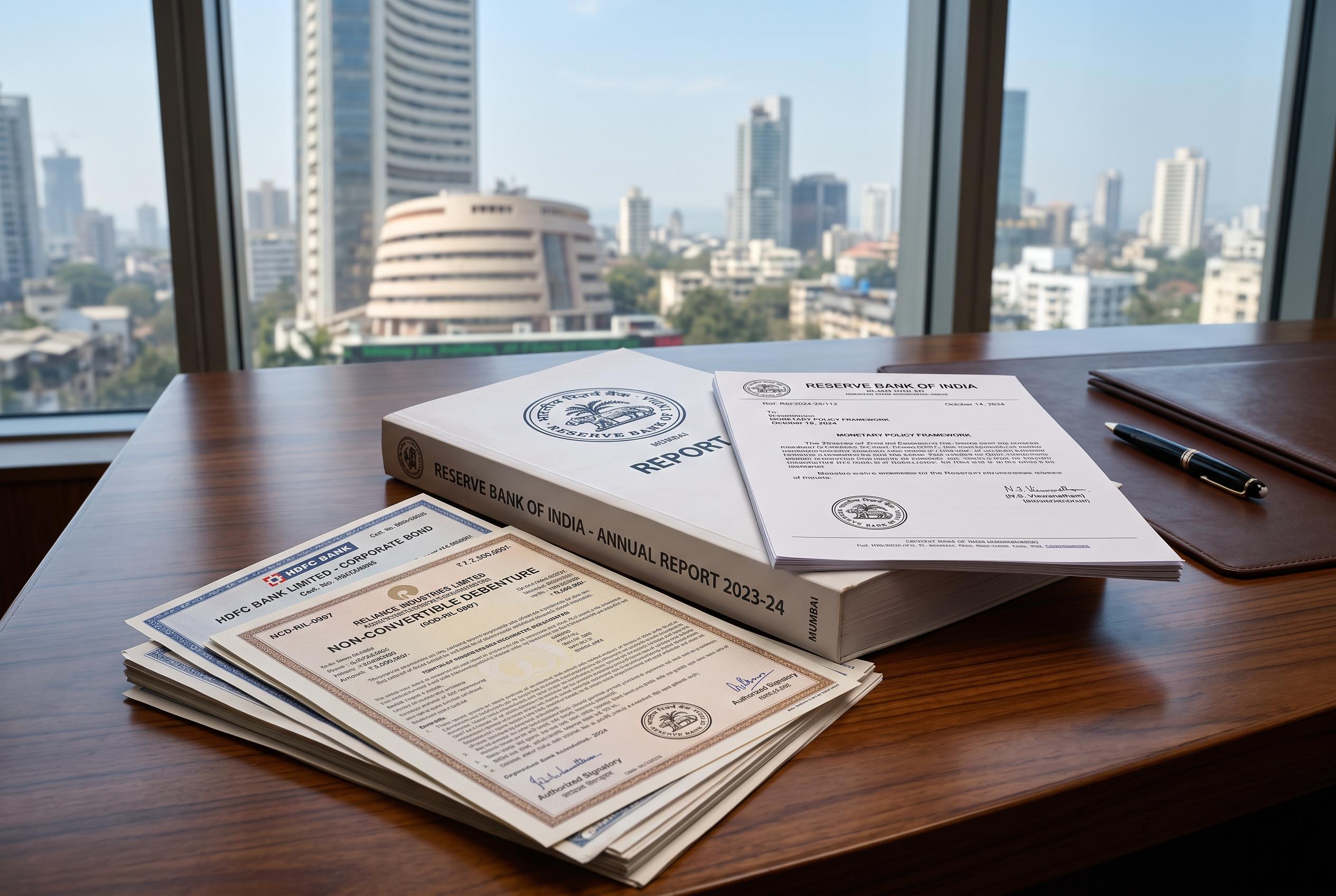

The Reserve Bank of India’s softer policy shift has infused optimism into the corporate bond market, encouraging issuers like REC and NABARD to return with fresh debt offerings after a period of cautiousness driven by higher yields and market nerves.
The Reserve Bank of India’s softer policy tone has helped revive sentiment in the corporate bond market, with issuers beginning to return after a lull in activity ahead of the central bank’s review. Market participants said lower government bond yields have encouraged fresh supply, reversing some of the caution that had built up in recent weeks.
REC is set to raise as much as ₹7,000 crore on Friday through two non-convertible debenture series on the NSE Electronic Book Provider platform. The first is a three-year-and-20-day bond with a base size of ₹500 crore and a greenshoe option of ₹2,500 crore, taking the total issue size to ₹3,000 crore and maturing on August 31, 2029. The second is a 15-year-and-20-day bond with a base size of ₹800 crore and a greenshoe of ₹3,200 crore, allowing for a total issue size of ₹4,000 crore.
Dealers said the improved tone follows a dovish shift from the RBI, which has helped bring down gilt yields and strengthened demand for corporate paper. One dealer at a state-owned bank told Business Standard that the policy outcome had improved sentiment in the bond market.
NABARD is also expected to return to the market next week after withdrawing its ₹8,000 crore five-year bond issue earlier this week when investors asked for higher yields than the issuer was willing to accept. The deal had attracted bids of about ₹7,166.5 crore across the coupon range, below the target amount, with dealers blaming both the large size of the borrowing and rising yields before the RBI decision. In May, NABARD had also pulled a planned ₹7,000 crore bond re-issuance after receiving bids worth only about ₹3,000 crore, underscoring how quickly sentiment in the debt market had weakened before the recent turn in rates.
Disclaimer: This article is intended to inform and educate, not to recommend or endorse any financial product, investment or strategy. Please consider your own financial circumstances and seek professional advice where appropriate before making financial decisions.