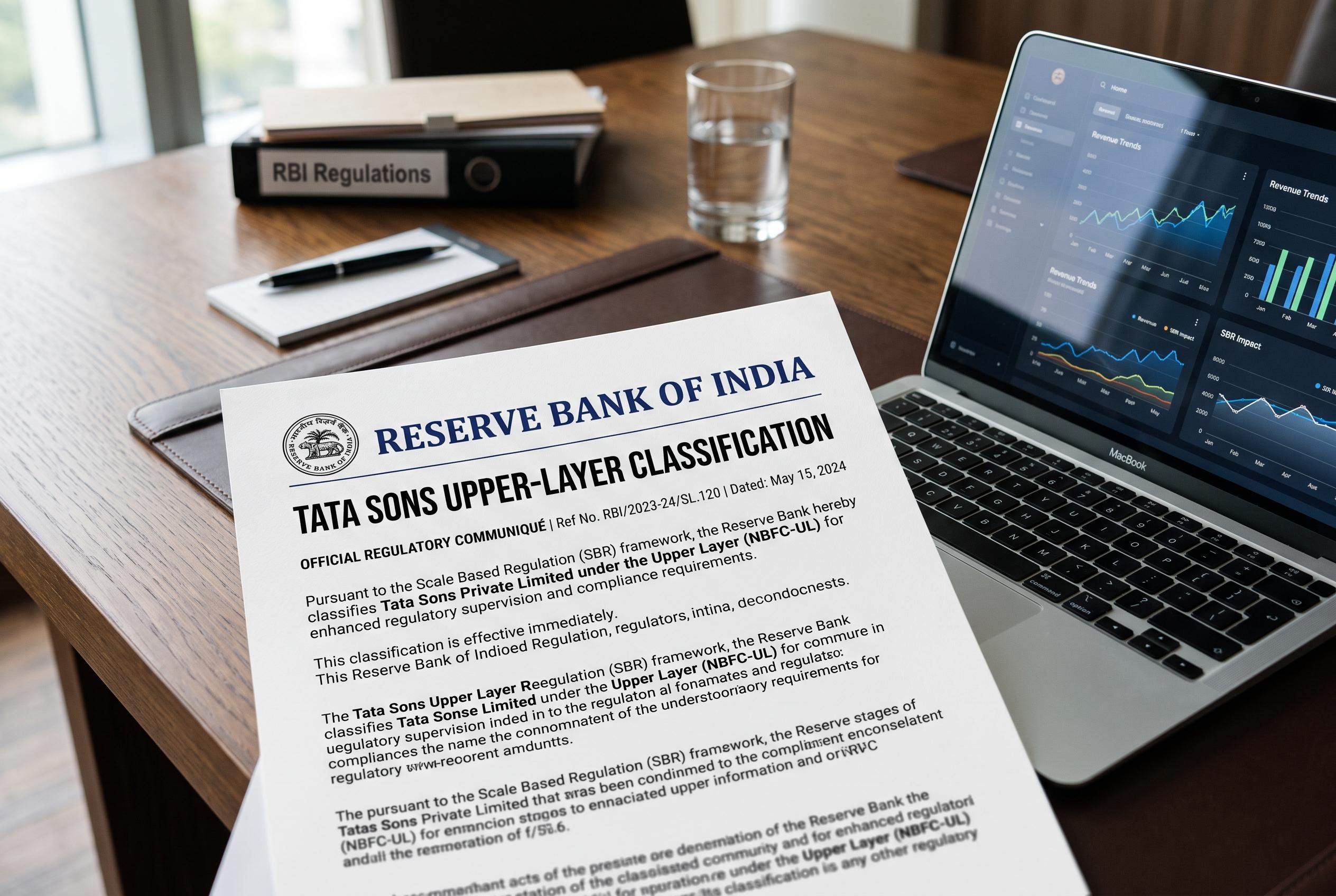

The Reserve Bank of India’s latest stance on Tata Sons’ status as an upper-layer non-banking financial company raises crucial questions about potential market listing requirements and the regulator’s flexibility amid new asset-based rules.
The Reserve Bank of India’s latest list of non-banking financial companies in the upper layer has again raised a question with major implications for Tata Sons: whether the holding company will eventually have to go public or whether it can win regulatory relief. The central bank has kept Tata Sons in the upper-layer category as a core investment company, but said that status is without prejudice to its pending de-registration request, which remains under review.
That distinction matters because upper-layer classification brings tougher oversight under the RBI’s scale-based rules, and market listing has been widely seen as one possible consequence. Analysts quoted by Business Standard and LiveMint have said the regulator’s newer asset-based framework, which places large NBFCs above a ₹1 trillion threshold, makes Tata Sons vulnerable to continued classification unless the RBI grants an exemption.
Tata Sons has argued that it should no longer sit inside the NBFC regime, saying its role is that of the Tata Group’s investment and philanthropic holding company rather than a lending business. Legal experts told The Hindu BusinessLine that the de-registration application is now the key issue, because if the RBI concludes that Tata Sons no longer needs upper-layer supervision, the listing question could fall away. If the regulator keeps the company in that category, any waiver from the normal requirements would need a firm legal basis, they said.
The RBI’s decision may also set a wider precedent for how much discretion the central bank exercises under its framework for large NBFCs. As Nazneen Ichhaporia of ANB Legal told The Hindu BusinessLine, the outcome could influence confidence in whether the regime operates as a strict rules-based system or leaves room for case-by-case flexibility. Sonam Chandwani of KS Legal & Associates said the central bank would need to explain any selective exemption carefully to avoid claims of unequal treatment.
Disclaimer: This article is intended to inform and educate, not to recommend or endorse any financial product, investment or strategy. Please consider your own financial circumstances and seek professional advice where appropriate before making financial decisions.