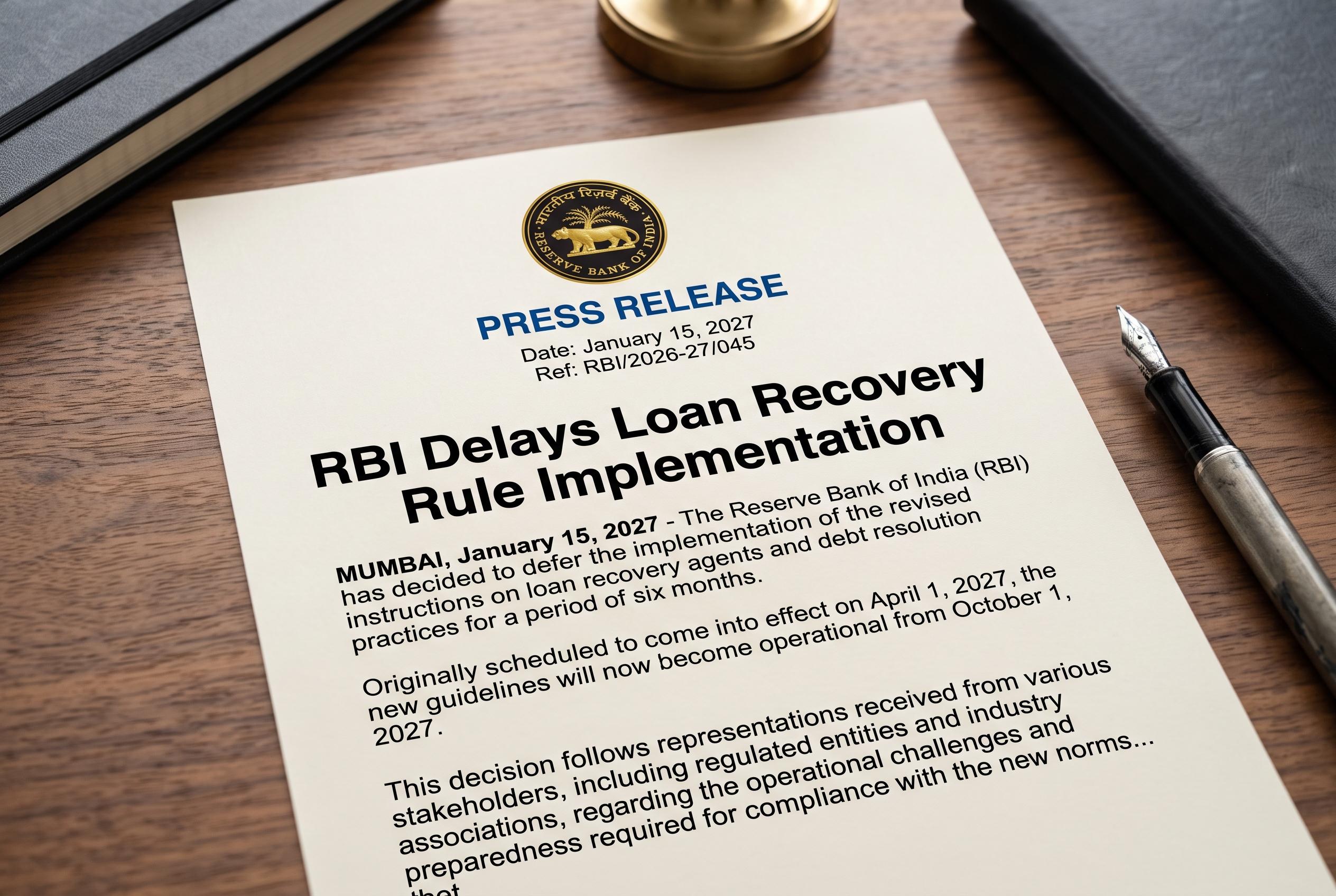

The Reserve Bank of India has extended the deadline for its revised loan recovery rules to January 2027, providing lenders additional time to adapt to stricter certification and operational standards amid industry feedback.
The Reserve Bank of India has pushed back the start date for its revised loan recovery rules to January 1, 2027, giving banks and other regulated lenders more time to prepare for stricter standards on recovery agents and borrower contact. The central bank had originally planned to bring the framework into force on October 1, 2026, but said stakeholder feedback showed institutions would need additional time to rework systems, adjust workflows and train staff. According to Business Standard, the RBI said the delay was meant to account for the technical and operational changes required for a smooth rollout.
At the centre of the revised regime is a tougher certification rule for recovery agents. The RBI said it would not allow new agents to begin borrower-facing work before obtaining certification from the Indian Institute of Banking and Finance, rejecting suggestions that the exam could be completed after engagement. The regulator said that would leave borrowers exposed to conduct risks from inadequately trained personnel. It has, however, given some regulated entities that were previously outside the certification framework a one-year window to bring their existing recovery agents into compliance.
The central bank also clarified that the new directions do not apply to a lender’s own employees carrying out recovery work, agents collecting regular instalments or law firms helping with notices and court representation, as these roles generally do not involve direct borrower contact. It also moved to soften parts of the draft rules on device-locking technology for financed mobile phones, saying any such mechanism must be certified by the original equipment manufacturer or platform provider. The RBI added that restrictions must not block essential functions such as incoming calls, text messages and emergency SOS services, and said compensation for wrongful restrictions would be capped at the amount of the loan disbursed.
Other changes accepted by the RBI include allowing antecedent checks on recovery agents to be done either by the lender or the recovery agency, and dropping a proposal to publish the names of individual recovery agents because of high turnover in the sector. Lenders will still have to publish and update details of empanelled recovery agencies within seven calendar days of any change. The RBI also rejected calls to weaken contractual possession clauses linked to secured lending, saying those provisions remain important for making the terms of possession clear to borrowers and consistent with the existing legal framework.
Disclaimer: This article is intended to inform and educate, not to recommend or endorse any financial product, investment or strategy. Please consider your own financial circumstances and seek professional advice where appropriate before making financial decisions.