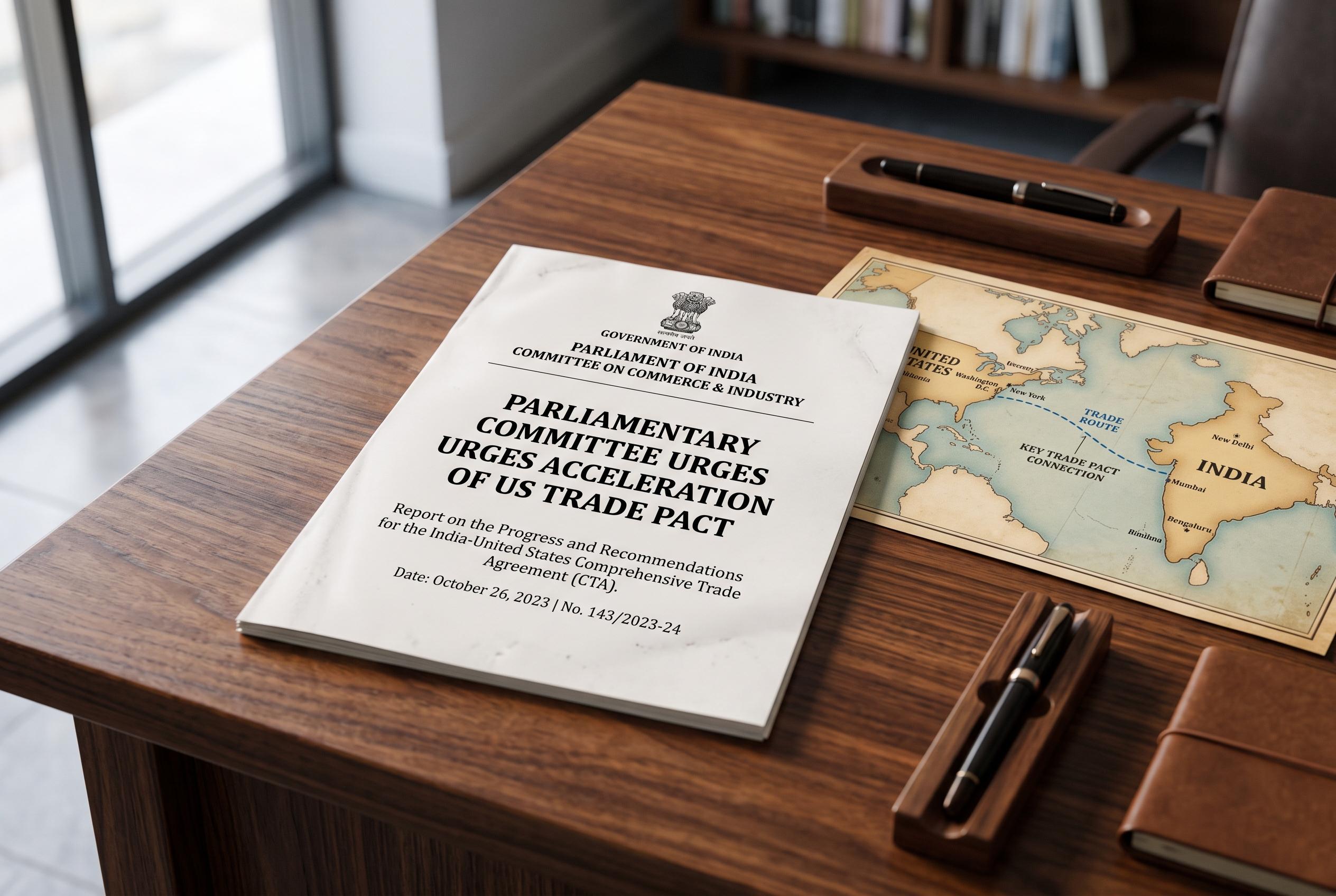

A parliamentary report calls for swift conclusion of India’s trade pact with the US, emphasising the need for protection against future tariff shocks and technical barriers to ensure stable export growth amid ongoing negotiations.
India should conclude its proposed trade pact with the United States quickly, but not at the cost of its exporters, a parliamentary committee has said in a report that presses New Delhi to lock in protections against future tariff shocks and regulatory barriers. The Parliamentary Standing Committee on Commerce said the Bilateral Trade Agreement should be completed at the earliest so businesses in both countries can operate in a more stable and predictable environment.
The panel urged India to seek full exemption for key export lines, including generic medicines, critical minerals and smartphones, from any further increases in US tariffs. It also called for the Directorate General of Foreign Trade to create a rapid-response watch desk to monitor US customs audits in real time, warning that Indian exporters need immediate alerts when import rules change.
In addition, the committee said New Delhi should move faster on mutual recognition agreements covering professional services, pharmaceuticals and agricultural standards, arguing that such arrangements could curb arbitrary technical barriers at US ports. It also proposed a dedicated bilateral mechanism with US trade authorities to identify and resolve disputes before they harden into punitive tariff measures.
The report comes against the backdrop of an interim trade framework announced by Washington and New Delhi in February, which both sides said was intended to support a broader bilateral agreement and more resilient supply chains. The White House said at the time that the framework would deepen reciprocal market access and address non-tariff barriers, while a later fact sheet said India would eliminate or reduce tariffs on a broad range of US industrial, food and agricultural goods.
The committee said exporters remain exposed to volatile exchange rates, swings in commodity prices and elevated US duties, which it said were still weighing on trade despite having eased from earlier peaks. Citing official figures, it said India’s services exports to the US reached $51.2 billion, while imports from the US stood at $47.32 billion, and noted that bilateral services trade has risen to $98.52 billion from $40.53 billion in 2014. It also urged the government to support MSMEs, diversify textile and gems-and-jewellery exports, lower tariffs on engineering goods and auto parts, and secure steady access to aluminium and copper scrap for domestic industry.
Disclaimer: This article is intended to inform and educate, not to recommend or endorse any financial product, investment or strategy. Please consider your own financial circumstances and seek professional advice where appropriate before making financial decisions.