

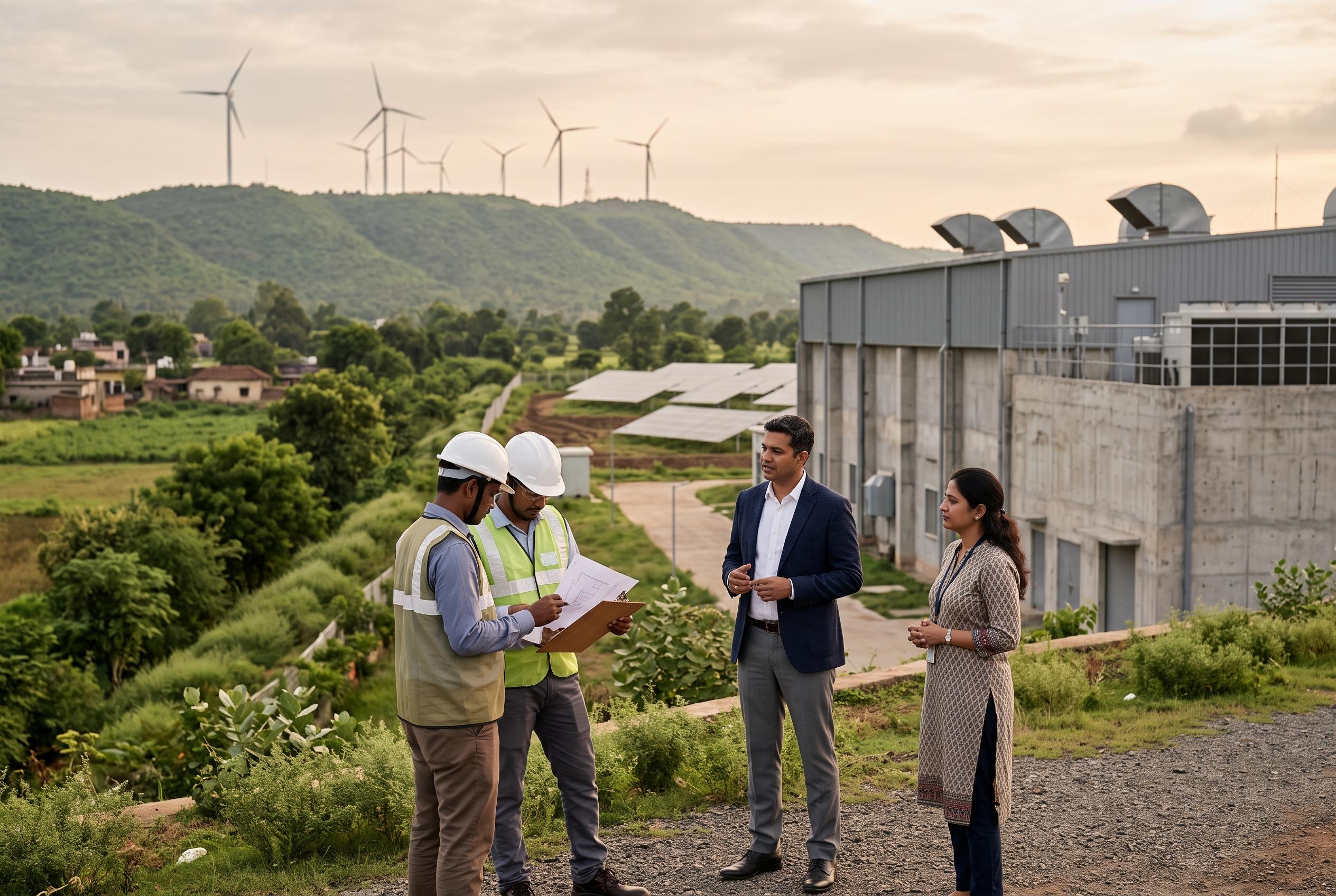

The eastern Indian state approves 27 major projects across sectors like data centres, energy, and green manufacturing, signalling a diversification of its industrial base and boosting investor confidence.
Odisha has approved 27 industrial projects worth ₹2.47 lakh crore in a major push that the state says will widen its economy beyond mining and heavy industry. The clearances, granted at the 46th meeting of the High-Level Clearance Authority chaired by Chief Minister Mohan Charan Majhi, are expected to create 50,162 jobs across 15 districts and span a wide mix of sectors, from data centres and artificial intelligence to steel, semiconductors, healthcare and green fuels.
The biggest share of the investment is concentrated in digital infrastructure. Four projects in information technology, IT-enabled services and data centres account for about ₹1.43 lakh crore, with High Density Datacentre proposing an integrated facility in Khordha worth ₹1.05 lakh crore. HCL Technologies plans an AI-optimised data centre in the same district, while Sentraforge AI has proposed an AI data centre and global capability centre in Puri. RKD Construction also won approval for a data centre in Cuttack, underscoring the state’s attempt to position itself as a destination for compute-heavy and technology-led investment.
Energy projects form the next largest block. NLC India has received approval for two thermal power plants, including a 3,200 MW unit in Debagarh and a 1,080 MW plant in Angul, together worth more than ₹46,000 crore. The package also includes pumped-storage hydro projects in Rayagada and Koraput, which are intended to strengthen grid stability and support Odisha’s longer-term energy security as industrial demand rises.
Steel remains central to the state’s industrial strategy, but the latest approvals point to a broader value chain rather than simple capacity addition. Rungta Mines plans to expand its steel plant in Sundargarh, while Shakambhari Ispat & Power will build an integrated steel complex with a cement plant and captive power unit in the same district. Tata Steel has also secured clearance for a 7 million tonne-a-year iron ore grinding unit with a slurry pipeline in Jajpur, a project designed to improve logistics and processing efficiency in the Kalinga Nagar industrial corridor.
The state is also leaning into newer manufacturing segments. Odisha approved five lab-grown diamond projects, mostly in Khordha, along with a semiconductor materials facility by SICSEM in Khordha and a large battery-energy storage assembly plant by Aare Solar in Nuapada. Larsen & Toubro won separate approvals for a green-energy equipment unit and an advanced fabrication complex in Ganjam, while Jiribam Solar Power will develop a plant in Kendrapada for green hydrogen, green ammonia, green methanol and electro sustainable aviation fuel. Other projects include a 1,000-bed hospital by the Adani Foundation in Khordha, a chemical plant by Grasim Industries in Ganjam, a textile mill in Kalahandi and a tyre manufacturing unit in Bhadrak.
Majhi said the scale and spread of the approvals reflected rising investor confidence in Odisha and the state’s effort to build what he called a future-ready industrial ecosystem. The government has cast the approvals as part of its broader push to attract domestic and global capital while balancing growth across regions, rather than concentrating investment in a handful of traditional industrial centres. Officials said the HLCA mechanism remains the state’s main clearance route for large projects, and that the latest round fits within Odisha’s ambition of becoming a more diversified, technology-driven industrial hub by 2036.
Disclaimer: This article is intended to inform and educate, not to recommend or endorse any financial product, investment or strategy. Please consider your own financial circumstances and seek professional advice where appropriate before making financial decisions.



