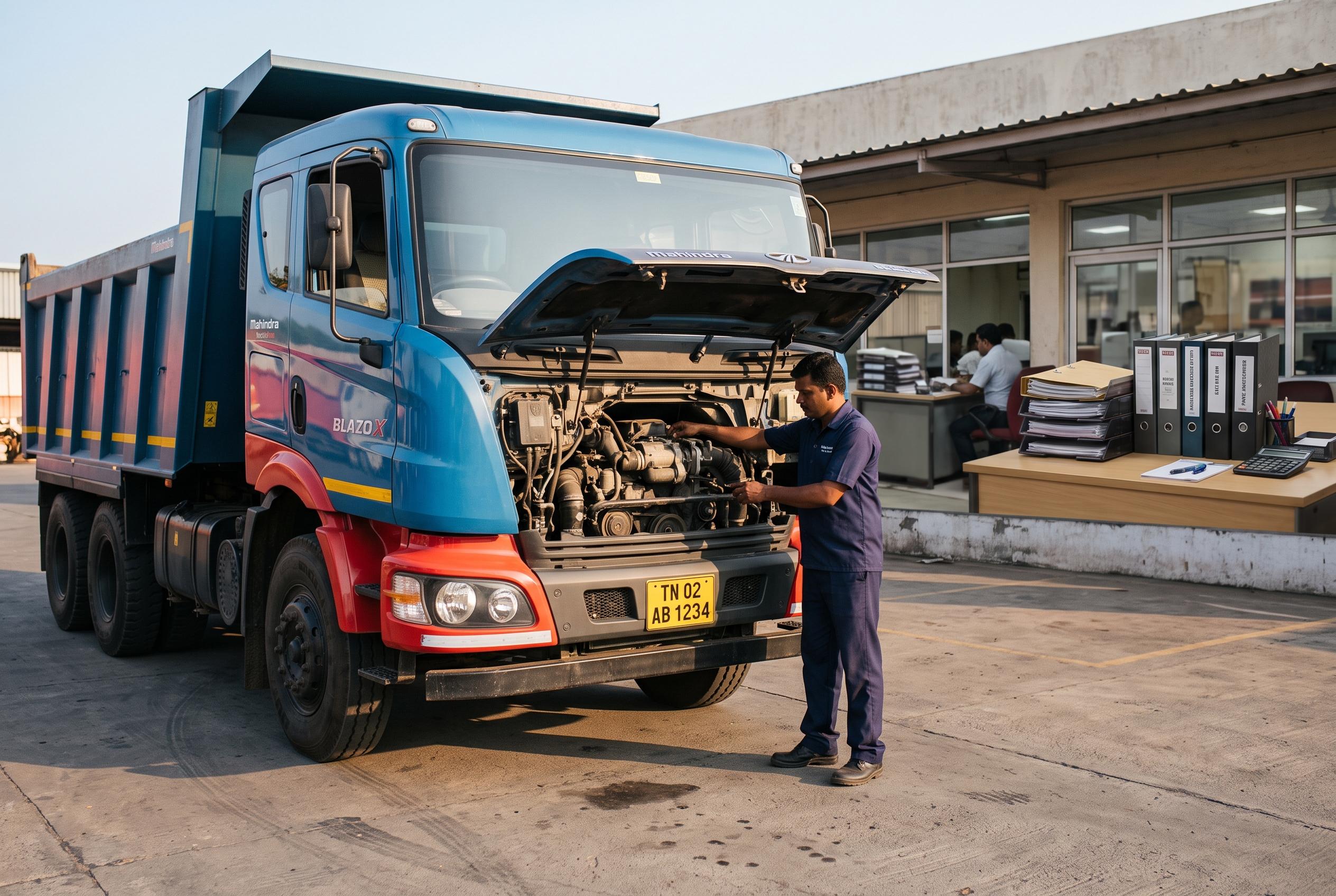

Mahindra is set to boost its presence in India’s heavy truck industry, targeting a 5 per cent market share through dealership expansion, new product launches, and enhanced focus on diesel technology amid a recovering replacement cycle.
Mahindra is sharpening its push into India’s heavy truck market, aiming to lift its share to 5 per cent from about 3 per cent to 3.5 per cent over the near term as it adds products, broadens its dealer footprint and leans on a more integrated commercial vehicle business. Vinod Sahay, president for trucks and buses at Mahindra Group and executive chairman of SML Mahindra, told Business Standard the company sees room to grow further once its latest launches gain traction.
The expansion plan includes 15 additional dealerships over the next 12 months, with a particular focus on eastern India and selected pockets in the west where Mahindra says it remains under-represented. The company already has 88 Mahindra Truck and Bus outlets and 103 SML Mahindra dealerships, and it intends to convert some SML sites into heavy truck centres while creating shared workshops for both brands. Mahindra has also been building out its network in recent years, opening new outlets in cities including Jhansi, Ghaziabad, Bharuch, Raipur, Kadapa, Bengaluru and Kolkata.
India’s commercial vehicle market sells about 500,000 trucks and buses a year, according to Sahay, with heavy commercial vehicles making up roughly 40 per cent to 45 per cent of that total. At Mahindra’s current share, that implies annual heavy truck sales of roughly 6,000 to 7,900 units; reaching 5 per cent would lift that to around 10,000 to 11,250 units. The company is also targeting double-digit share in three key segments: 55-tonne tractor trailers, 48-tonne multi-axle trucks and 28-tonne tippers.
Mahindra is betting on a stronger replacement cycle to support demand. Sahay said replacement purchases, usually about 10 per cent to 15 per cent of annual truck sales, could account for more than 20 per cent of industry demand this year because fleets delayed buying during the Covid period and then faced a series of axle-load, emissions and other regulatory changes. He also pointed to infrastructure spending, manufacturing activity and mining as additional supports, even as geopolitical tensions and commodity swings continue to cloud the near-term outlook.
The company is keeping diesel at the centre of its near-term strategy, even as rivals test hydrogen and other alternative fuels. Its new heavy trucks come with a 320 hp diesel engine, up from 280 hp, alongside cruise control, automated fuel management and connected-vehicle tools aimed at reducing running costs. Mahindra says the model can deliver up to 10 per cent better fuel efficiency and as much as ₹15 lakh in savings over five years for a fleet operator travelling about 100,000 kilometres a year. The company says it has already built a hydrogen truck prototype, but believes the market is not yet ready for broad adoption. With its Chakan plant able to produce about 35,000 trucks a year and current output near 11,000, Mahindra says capacity will not be a constraint on its plans.
Disclaimer: This article is intended to inform and educate, not to recommend or endorse any financial product, investment or strategy. Please consider your own financial circumstances and seek professional advice where appropriate before making financial decisions.