

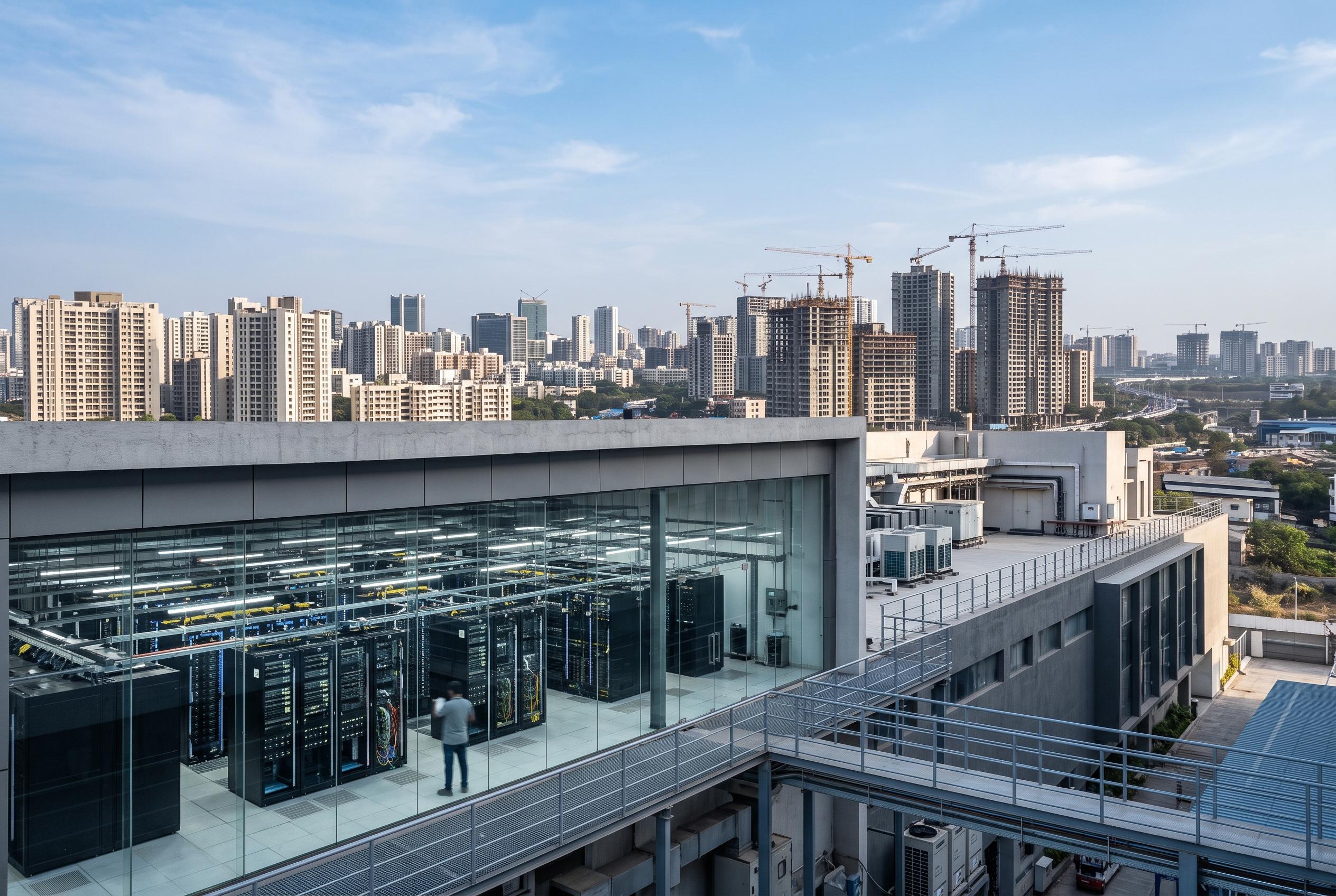

Maharashtra continues its dominance in India’s data centre sector with over $300 billion in investment interest, aiming to reach 5.7 gigawatts capacity by 2032 amid expanding digital and AI ecosystems, supported by large-scale urban and infrastructure projects.
Maharashtra has drawn more than $300 billion in investment interest for data centres and now accounts for about 66% of India’s installed capacity in the sector, according to Kaustubh Dhavse, the chief adviser on investments and strategy to the chief minister. Speaking at the Naredco Real Estate & Infrastructure Investors’ Summit 2026 in Mumbai, Dhavse cast data centres as one of the state’s strongest growth engines as India’s digital infrastructure expands. He said Maharashtra expects capacity to reach 5.7 gigawatts by 2032. Industry reports and local coverage have previously put the state’s share at roughly 65% to 66%, with Mumbai, Navi Mumbai, Pune, Thane, Nagpur, Nashik and Chhatrapati Sambhaji Nagar emerging as the main clusters.
Dhavse said the sector’s expansion hinges on two basic inputs: power and water. Maharashtra, he said, is moving to secure both as it tries to keep its lead in a market that is being lifted by cloud computing, artificial intelligence and wider digital adoption. Earlier reports also said the state has signed memorandums of understanding worth more than $300 billion for data-centre development and is targeting the same 5.7GW level by the early 2030s. That push is tied to broader infrastructure plans, including a large-scale digital ecosystem around Mumbai and Navi Mumbai and a drive to make the region a global hub for cloud and AI infrastructure.
The summit also highlighted Maharashtra’s wider development agenda. Dhavse pointed to “Mumbai 3.0”, a 336-square-kilometre project he said could support the next phase of expansion, as well as a healthcare city backed by Cleveland Clinic across 165 acres and a 210-acre university district planned for 12 foreign universities, seven of which have already signed agreements. On the real estate side, Niranjan Hiranandani, chairman of Naredco India, said the group had asked the Reserve Bank of India to classify townships larger than 25 to 50 acres as infrastructure, arguing that developers should not be forced to rely on short-term borrowing for long-term projects. He also warned that affordable housing has weakened in the past two years, while the industry faces a shortage of skilled construction workers. Dhavse said Maharashtra’s economy, estimated at $660 billion, is still aiming for $1 trillion by 2030, a goal that would require growth of about 13.8% in the coming years.
Disclaimer: This article is intended to inform and educate, not to recommend or endorse any financial product, investment or strategy. Please consider your own financial circumstances and seek professional advice where appropriate before making financial decisions.



