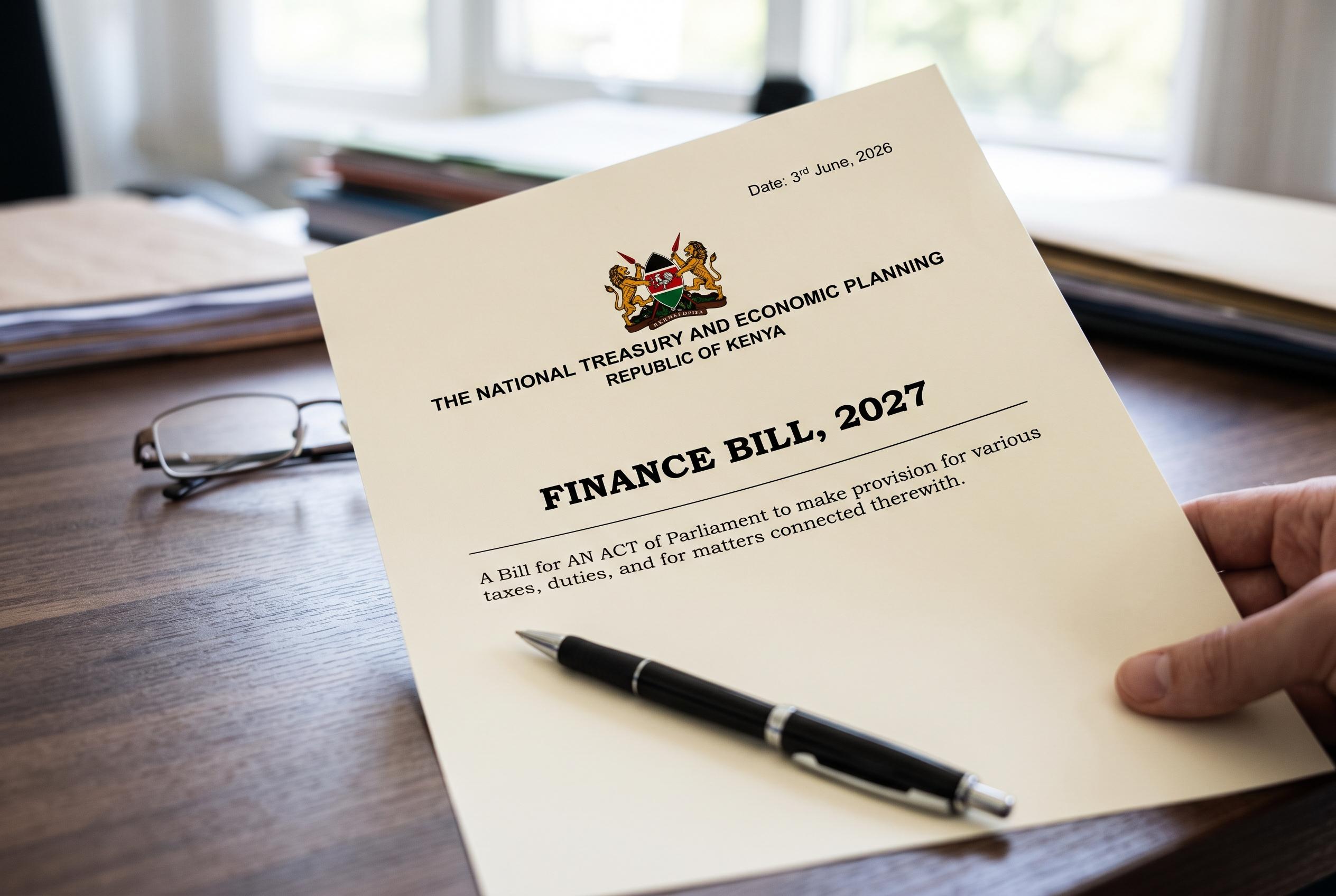

Kenya’s National Treasury has initiated early public consultations on the Finance Bill 2027, aiming to complete legislation ahead of the upcoming August election, amidst reforms focused on fiscal discipline and revenue mobilisation.
Kenya’s National Treasury has begun work on the Finance Bill 2027 far earlier than usual, opening public consultation on tax proposals as it seeks to complete the legislation before the country enters the 2027 election season.
In a notice dated July 27, the Treasury asked Kenyans and other stakeholders to submit ideas for tax policy changes, including specific amendments to tax laws and supporting evidence or economic analysis. It also invited proposals on East African Community customs measures such as tariff adjustments and duty remission schemes, while saying submissions should fit within the government’s Bottom-Up Economic Transformation Agenda, or BETA.
The move comes after the Treasury revised its budget calendar for the 2027/28 financial year. According to the updated timetable, the Finance Bill 2027 is due to reach Parliament on January 29, 2027, with approval targeted for March 31, 2027, more than three months ahead of the traditional mid-year cycle. The earlier schedule is meant to reduce the risk of budget disruption once Parliament breaks for election campaigning.
The Treasury said the accelerated process is necessary because 2027 is an election year and the general election is scheduled for August 10, 2027. In its notice, the ministry said the Finance Act 2027 must be enacted early enough to ensure government operations continue smoothly before Parliament adjourns ahead of the polls.
The consultation window remains open until August 31, giving the public and other interested parties a short period to file proposals physically or by email. The early start follows separate public participation on adjustments to PAYE bands, while the broader 2027/28 budget process is being framed around fiscal discipline, domestic revenue mobilisation and spending priorities aimed at supporting growth and debt sustainability.
Disclaimer: This article is intended to inform and educate, not to recommend or endorse any financial product, investment or strategy. Please consider your own financial circumstances and seek professional advice where appropriate before making financial decisions.