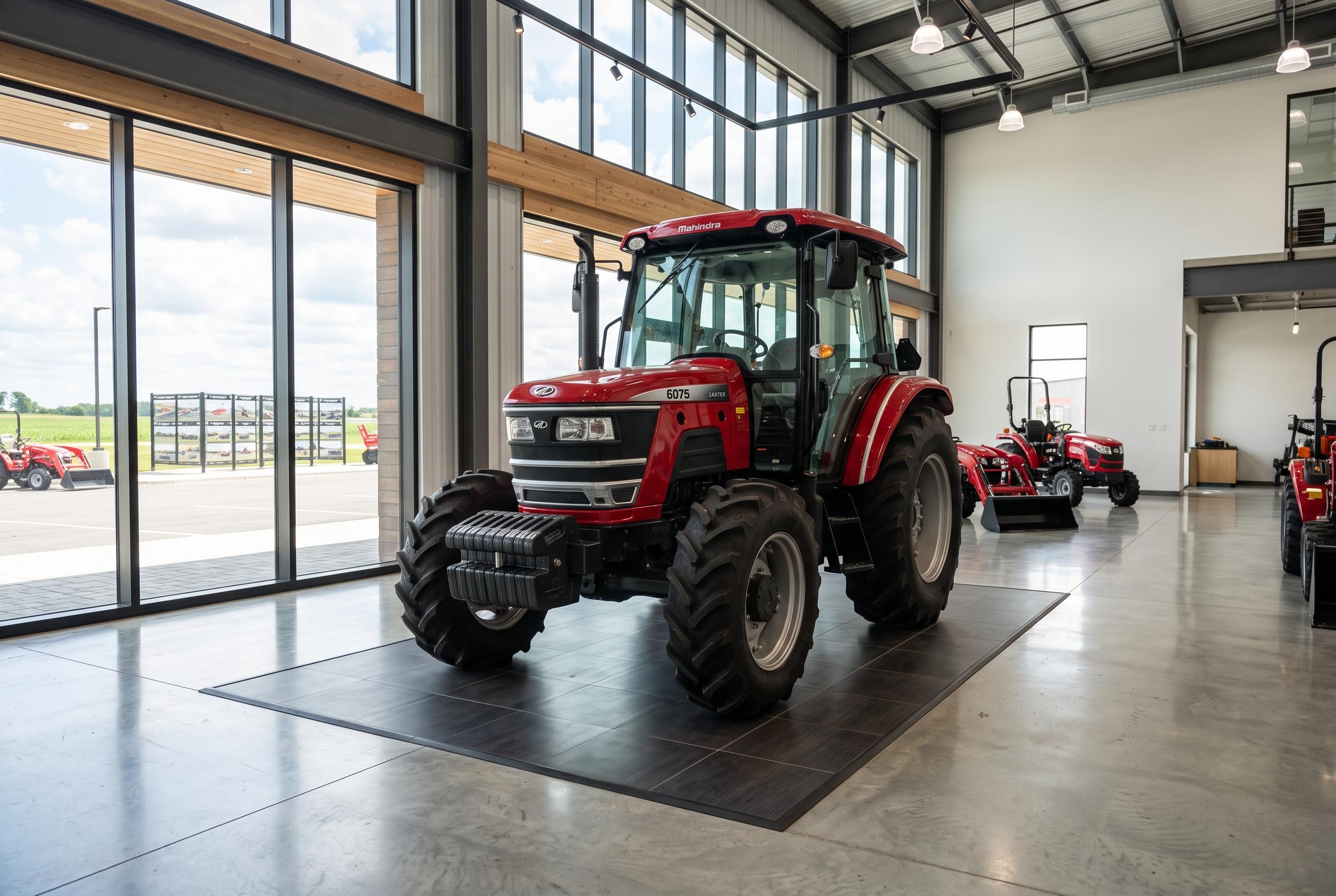

India’s tractor industry continues its growth trajectory in July 2026, with Mahindra & Mahindra solidifying its leading position as key manufacturers report strong sales and market share gains amid overall industry expansion.
India’s tractor market kept moving higher in July 2026, with Mahindra & Mahindra extending its lead as the country’s biggest player. Autopunditz data showed Mahindra’s core tractor arm recorded 26,863 registrations, up 30.3% from a year earlier, while its market share inched up to 22.89% from 22.51%.
The company’s Swaraj division also posted a strong month, with registrations rising 33.5% to 22,334 units. Together, Mahindra and Swaraj put 49,197 tractors on the road during the month, giving the group a combined share of 41.92% of the market. That meant more than two-fifths of all tractor registrations in July came from the two Mahindra businesses.
The wider industry also expanded sharply. Data cited by IndianStockAlerts put total tractor sales at 100,330 units in July, underscoring the scale of the market’s monthly pickup. Sonalika maker International Tractors remained third with 15,991 registrations, but its 24.7% growth lagged the market overall and its share slipped to 13.63%.
TAFE delivered one of the strongest gains among major brands, with registrations jumping 46.8% to 14,178 units and market share rising to 12.08%. Escorts Kubota also outpaced the market with 12,782 registrations, up 38.9% year on year, improving its share to 10.89%. By contrast, John Deere’s 15.8% increase to 8,087 units was below industry growth, which left its share lower at 6.89%, while Eicher Tractor rose 25.1% to 7,910 units and saw a slight easing in share to 6.74%.
The July figures followed a solid June for several manufacturers. Business Standard reported that Escorts Kubota’s sales rose 19.1% in June to 13,695 units, while Mahindra sold 59,935 tractors that month, including 58,177 in the domestic market. That broader strength points to a tractor market that has remained resilient through mid-2026, with demand continuing to favour the largest brands but also rewarding faster-growing challengers.
Disclaimer: This article is intended to inform and educate, not to recommend or endorse any financial product, investment or strategy. Please consider your own financial circumstances and seek professional advice where appropriate before making financial decisions.