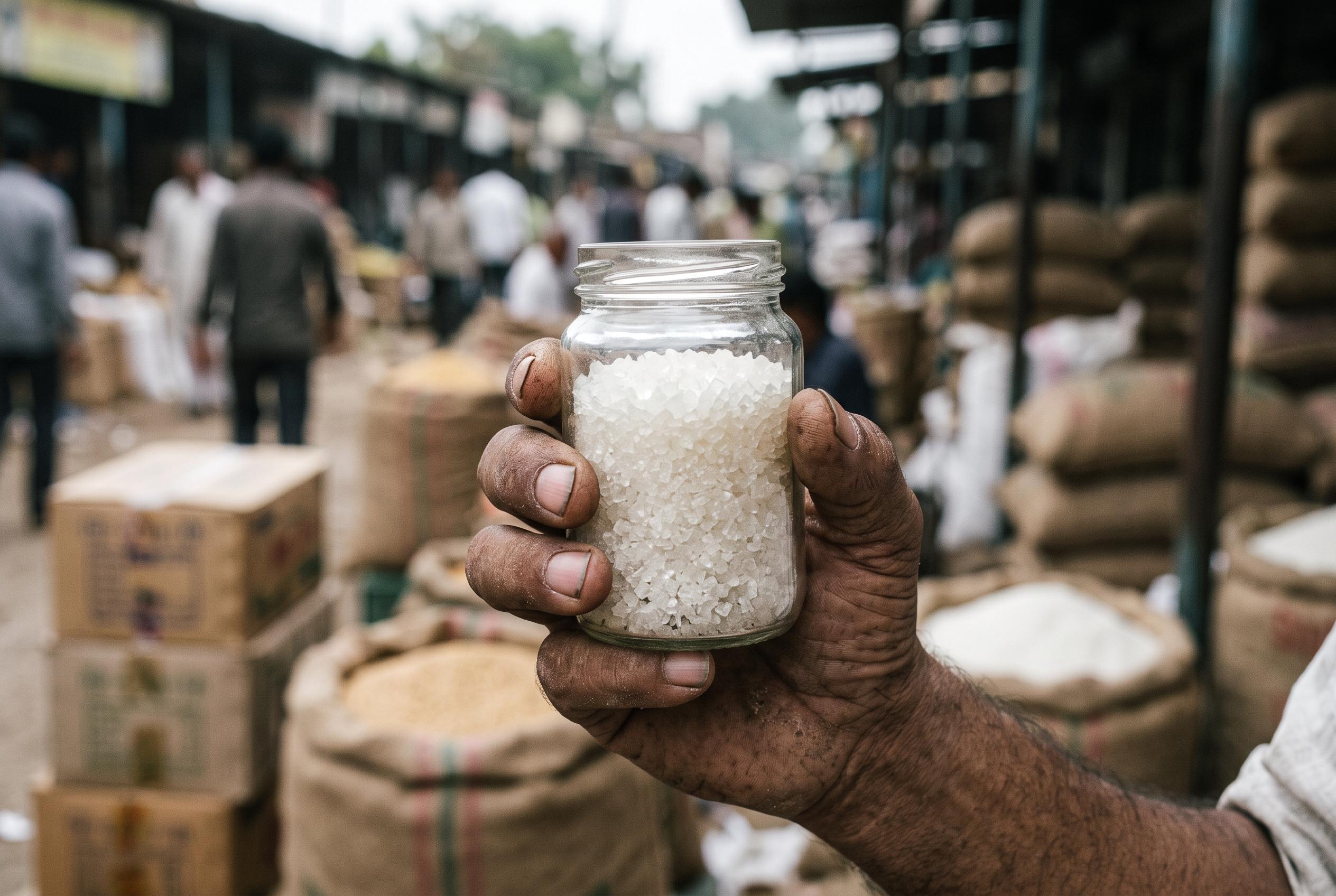

India tightens sugar stockholding limits and allows duty-free imports amid declining harvest and rising retail prices, impacting FMCG companies ahead of the festive season.
India has tightened its grip on the sugar market again as the festive season approaches, cutting the stockholding limit for dealers to 2,000 quintals from 15 September after already capping bulk users and opening a one-off duty-free import window. The tougher stance comes even though officials said ex-mill prices had started to retreat late in August: the Department of Consumer Affairs still showed an all-India average retail sugar price of Rs 60.78 a kg on 6 September and an average wholesale price of Rs 5,628.75 a quintal, levels that keep pressure on makers of biscuits, confectionery and soft drinks. (pib.gov.in)
Brokerage houses and company watchers say the squeeze is now moving from commodity markets into consumer-goods earnings. Nomura said sugar prices were up 16% month on month and 27% year on year, although recent government steps had pulled them to 1.5% below their peak, and named Britannia Industries, Nestlé India, Dabur, ITC and Hindustan Unilever among the groups most exposed. Mint, citing Samco Securities, said affected companies could face 50-80 basis points of gross margin compression and 20-50 basis points of EBITDA pressure in the September quarter, leaving them to choose between selective price rises, smaller pack sizes and lower advertising spend. (moneycontrol.com)
The immediate problem is supply. Official data cited by Mint put 2025-26 sugar output at 30.6 million tonnes, 11% below the original 34.3 million-tonne estimate, and the government has blamed Red Rot and Top Borer disease as well as waterlogging from heavy rainfall. The Times of India reported an even lower industry estimate of 296 lakh tonnes, which would make it the weakest crop since 2019-20, and said opening stocks for the new season could drop to 35-40 lakh tonnes from 50 lakh tonnes a year earlier. Annual domestic demand, according to Business Standard, is about 280-285 lakh tonnes. (livemint.com)
New Delhi’s response has been unusually interventionist. For the first time in roughly a decade, it has allowed 10 lakh tonnes of raw sugar to enter duty-free under a tariff rate quota until 31 October, while bulk consumers using more than 10 tonnes a month have been barred from holding more than 15 days of stock from 1 September to 30 November. The Indian Express said the restriction covers confectioners, soft-drink bottlers, food processors, sweetmeat sellers and other institutional buyers, with monthly sales to be checked against GST returns and HSN codes; government institutions are exempt. (indianexpress.com)
Officials have also argued that not all of the price spike was caused by a genuine shortage. The Free Press Journal reported that the food department’s 19 August order pointed to hoarding, speculative deals and even paper trades without physical movement of sugar as drivers of an artificial sense of scarcity. Dealers had already been placed under stock restrictions from 1 August and ordered to file weekly declarations, while a later government statement said some mills were found to be holding more sugar than they had reported and must dispatch sugar within seven days of sale. From September, monthly release quotas were also replaced with fortnightly allocations so the market could be monitored more closely. (freepressjournal.in)
There are signs the measures are easing conditions at the factory gate, but shoppers have seen less immediate relief. Business Standard reported that Maharashtra ex-mill prices had fallen to Rs 45-46 per kg by 1 September from a peak of Rs 67 on 18 August, while the government said on 28 August that ex-mill prices were already down by about 20% and retail rates had only just begun to edge lower. Yet the same Business Standard report said the all-India retail average was still Rs 63.28 a kg on 31 August, 37% above a year earlier, underscoring how slowly lower trade prices can reach shop shelves. (business-standard.com)
That lag matters beyond corporate margins because sugar is feeding into a broader inflation debate. Mint said the retail price had leapt from Rs 48.2 a kg on 20 July to Rs 65 by 27 August, at a time when July consumer-price inflation was 4.5% and food inflation had stayed above 5% for a second straight month. Madan Sabnavis, chief economist at Bank of Baroda, warned that a “35% jump in retail sugar prices” alongside dearer onions could push food inflation closer to 6% in August, while Kumar Rajagopalan of the Retailers Association of India said rising sugar prices were “definitely going to dent consumer sentiments” during the festive season. (livemint.com)
For consumer-goods groups, the next few weeks will show whether the government’s market intervention arrives in time. ICRA, cited by Mint, expects inventories to fall to 4.3 million tonnes by September from 5.3 million tonnes a year earlier, leaving less than two months of cover before fresh supplies build. The food ministry says early crushing in Karnataka and Maharashtra should add about 2 lakh metric tonnes in September, more than 10 lakh metric tonnes in October and around 45 lakh metric tonnes in November. Until that new sugar reaches the market, however, companies from beverage bottlers to biscuit makers are likely to keep testing how much of the cost shock Indian shoppers will absorb, and how much must be hidden in smaller packs. (livemint.com)
Disclaimer: This article is intended to inform and educate, not to recommend or endorse any financial product, investment or strategy. Please consider your own financial circumstances and seek professional advice where appropriate before making financial decisions.