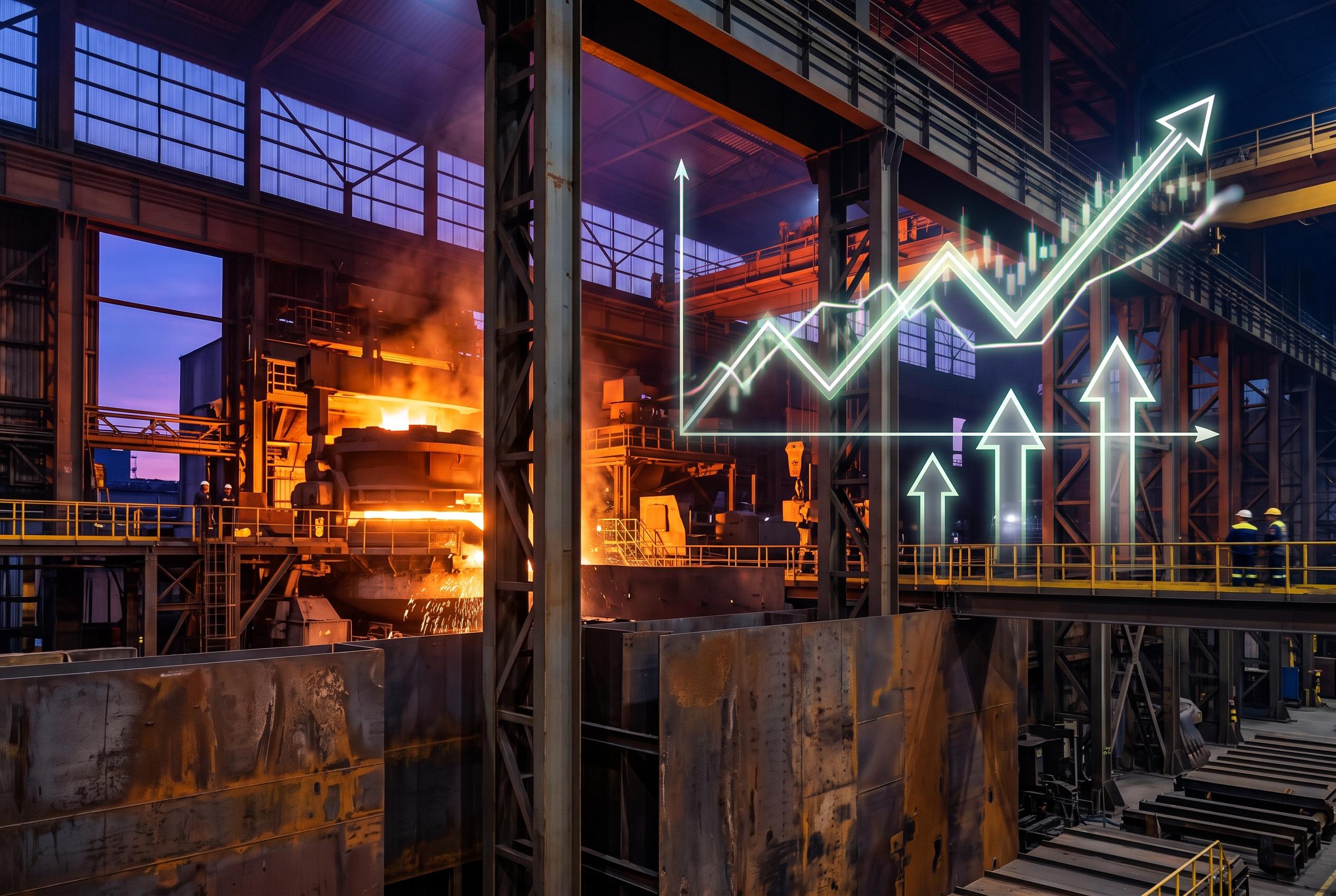

India’s steel industry is poised for rapid expansion, with capacity expected to reach 300 million tonnes by 2030-31, driven by infrastructure investment, new technology adoption, and regional growth hubs.
India’s steel market is set for another strong expansion, with Mordor Intelligence projecting output will rise from 177.03 million tonnes in 2026 to 273.88 million tonnes by 2031, a compound annual growth rate of 9.12%. The forecast points to a sector being pulled higher by infrastructure spending, fresh capital investment and growing demand for higher-grade products used in vehicles, electrical equipment and energy systems.
The main engine remains construction. Mordor Intelligence says building and infrastructure will stay the largest end-use segment, supported by highways, metro networks, housing and freight corridors. It also expects specialty steel to gain ground as India’s Production Linked Incentive scheme encourages output of coated, electrical and alloy steel, while automakers increasingly specify advanced high-strength steel and EV-grade material for lighter, stronger vehicles.
Official and industry estimates suggest the broader capacity build-out is already under way. The Indian Brand Equity Foundation says capacity could reach 300 million tonnes by 2030-31, requiring investment of about ₹10 lakh crore ($156.08 billion), while finished steel production stood at 146.8 million tonnes in FY26 through February. The OECD’s Steel Outlook 2026 says India has become the fastest-growing steel-producing nation, adding more than 10 million tonnes of crude steel capacity a year between 2021 and 2025, and expects capacity to climb further by 2028.
That growth is also reshaping the industry’s technology mix. Mordor Intelligence expects blast furnace-basic oxygen furnace production to remain dominant, but says electric arc furnace output should gain as scrap availability improves and lower-emission steelmaking attracts interest. The report also highlights a geographic split, with Odisha, Jharkhand and Chhattisgarh remaining key production hubs, while western and southern India drive much of the consumption. According to a recent report in The Economic Times, top listed steelmakers are preparing for a multi-year capital spending cycle, underscoring how deeply the sector’s expansion plans are now tied to domestic demand and trade protection.
Disclaimer: This article is intended to inform and educate, not to recommend or endorse any financial product, investment or strategy. Please consider your own financial circumstances and seek professional advice where appropriate before making financial decisions.