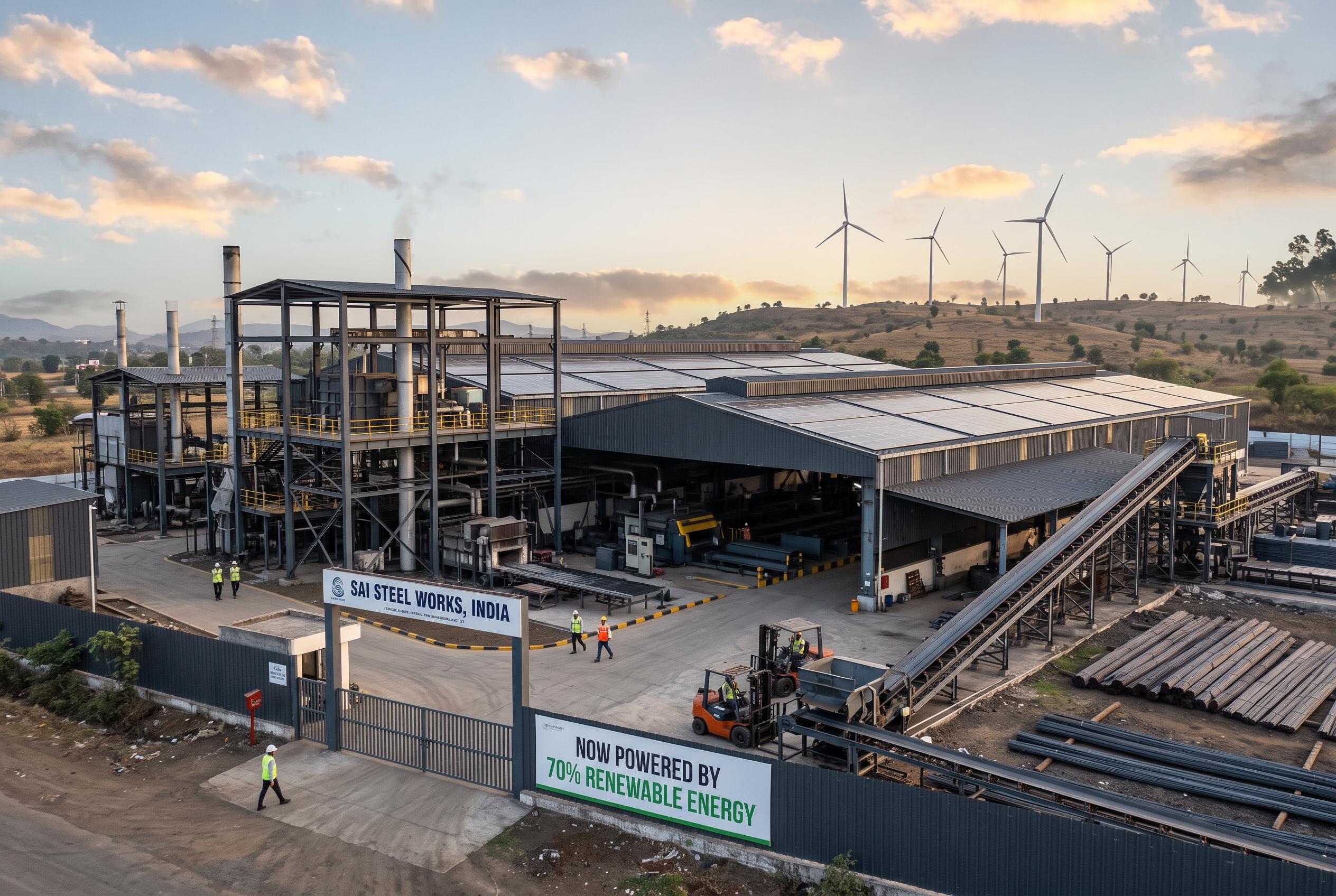

Small steel producers in India have the potential to cut electricity bills by up to 34% and sharply reduce emissions by transitioning to renewable power, boosted by the country’s expanding clean-energy infrastructure.
Smaller steelmakers in India could trim electricity bills by about a third while cutting emissions sharply if they shift to renewable power, according to a report released on Wednesday that argues the country’s clean-energy build-out has made the move increasingly practical. The study said firms in the sector, which account for nearly 40% of India’s crude steel output, could lower annual power costs by roughly ₹22 million to ₹24 million per unit, or as much as 34%.
The report, “Powering India’s Secondary Steel Transition”, was produced by a group that included the Confederation of Indian Industry, WWF-India, Climate Catalyst and JMK Research. It argues that steel decarbonisation is central to India’s wider climate targets, given that the sector is responsible for as much as 12% of annual emissions and the country has pledged to reach net-zero by 2070. Reuters has also reported that clean power could help Indian steelmakers limit their exposure to European carbon levies that took effect this year.
The analysis says the most workable path for smaller producers is to pool capital and jointly own renewable projects, drawing electricity in line with their stakes and demand. That model, the report says, would reduce upfront costs for individual firms while creating projects large enough to attract financing. Separate industry commentary cited by TransitionZero suggests the broader steel transition is likely to be gradual, with early gains coming mainly from greater renewable use and efficiency improvements rather than a rapid overhaul of production methods.
Even so, obstacles remain. The AP report said only about 11% of smaller steelmakers currently use renewable power, well below the roughly 22% share of electricity India gets from renewables overall. Owners interviewed for the report pointed to high borrowing costs, patchy regulation, weak grid infrastructure in some regions and limited awareness of the benefits. In Gujarat, steelmakers said transmission constraints can force them to curb solar output, even after investing in new plants.
Prabhakar, one of the JMK Research authors, said shifting to renewable electricity was “low-hanging fruit” for reducing pollution at the lowest possible cost. Vinoth Balakumar of the Confederation of Indian Industry said many companies now recognise the commercial case for the change. Steel owner Dhirubhai Patel said firms want the government to improve infrastructure and make it easier to operate, while Sanjay Tripathi said high capital costs make the shift harder for smaller businesses.
Disclaimer: This article is intended to inform and educate, not to recommend or endorse any financial product, investment or strategy. Please consider your own financial circumstances and seek professional advice where appropriate before making financial decisions.