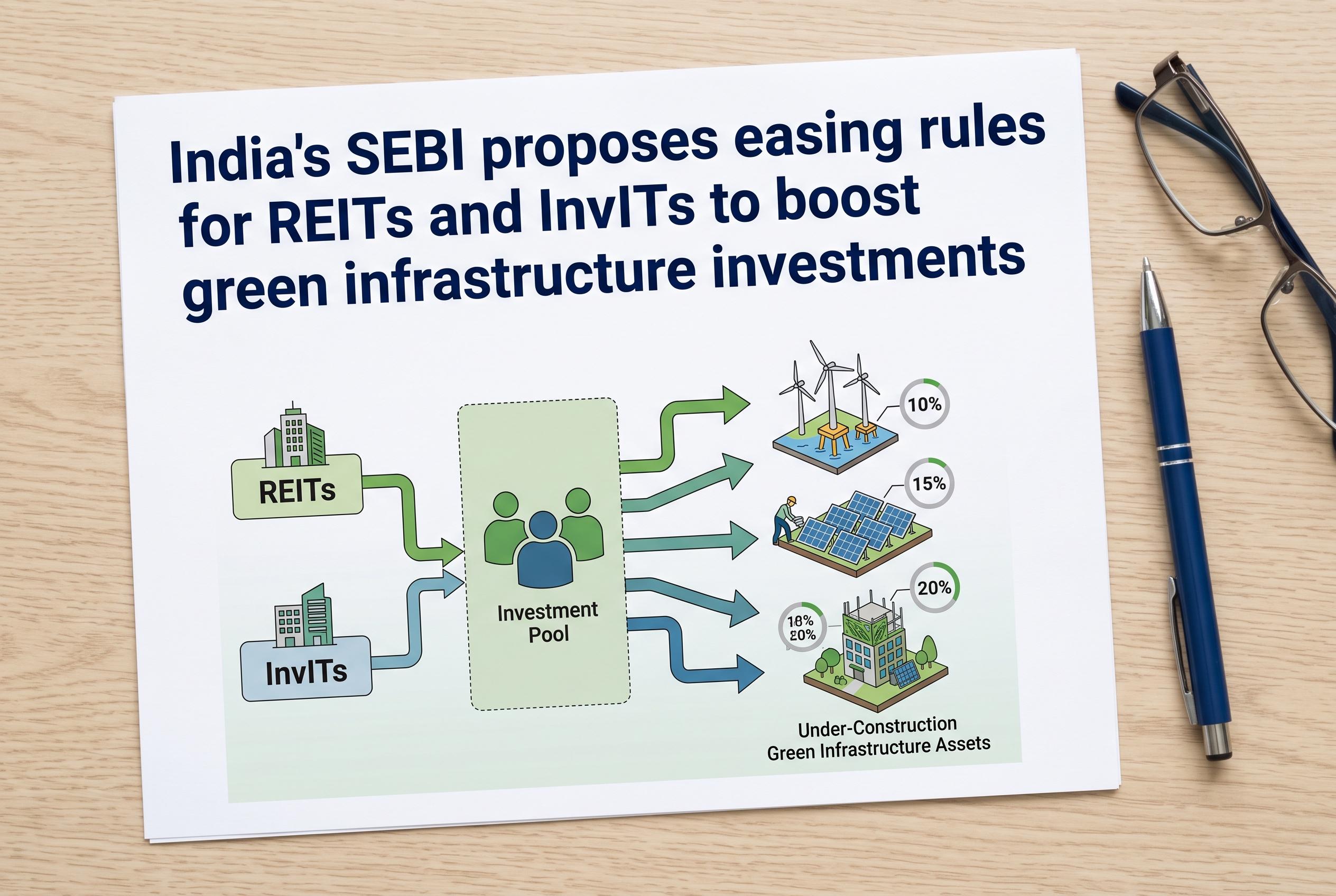

India’s markets regulator, SEBI, has outlined a series of reforms allowing Real Estate Investment Trusts and Infrastructure Investment Trusts to take minority stakes in under-construction assets, aiming to stabilise income streams and promote sustainable infrastructure projects.
India’s markets regulator has proposed letting Real Estate Investment Trusts and Infrastructure Investment Trusts take minority stakes in under-construction assets, a move it says could help them build a steadier pipeline of income-producing properties while limiting exposure to construction risk. The Securities and Exchange Board of India outlined the plan in a consultation paper published on Thursday, saying the trusts should be allowed to invest in projects without securing control, provided they stay within existing exposure limits.
SEBI has paired that proposal with a wider package of changes aimed at making the REIT and InvIT framework easier to use. Among the most immediate is a suggested reduction in the cooling-off period for privately placed, illiquid InvITs from 12 weeks to 8 weeks. The regulator said the present rules are difficult for these vehicles because their large trading lot size of ₹25 lakh tends to keep volumes thin and participation concentrated among institutions, corporate buyers and high-net-worth investors.
The consultation paper also seeks to address a long-running inconsistency in the treatment of remote common infrastructure, including captive renewable energy facilities. At present, REIT rules allow investment in such infrastructure even when it is not next to the main project, but the definition of real estate is narrower. SEBI wants to expand that definition so remote common infrastructure can be recognised as real estate, a change it says would better support green energy and sustainability-linked assets.
The regulator has also proposed adjustments to exit offers tied to changes in REIT and InvIT sponsors, including a narrower definition of dissenting unitholders and clearer rules on who must provide the exit option when a trust has more than one sponsor. It further wants public unitholding to be restored within a year if an exit offer pushes it below the minimum threshold, and it is seeking to change the basis for certain unitholder approvals so that 75% of votes cast, rather than unit value, would be enough to pass a resolution. SEBI is inviting public comments on the package until August 27.
Disclaimer: This article is intended to inform and educate, not to recommend or endorse any financial product, investment or strategy. Please consider your own financial circumstances and seek professional advice where appropriate before making financial decisions.