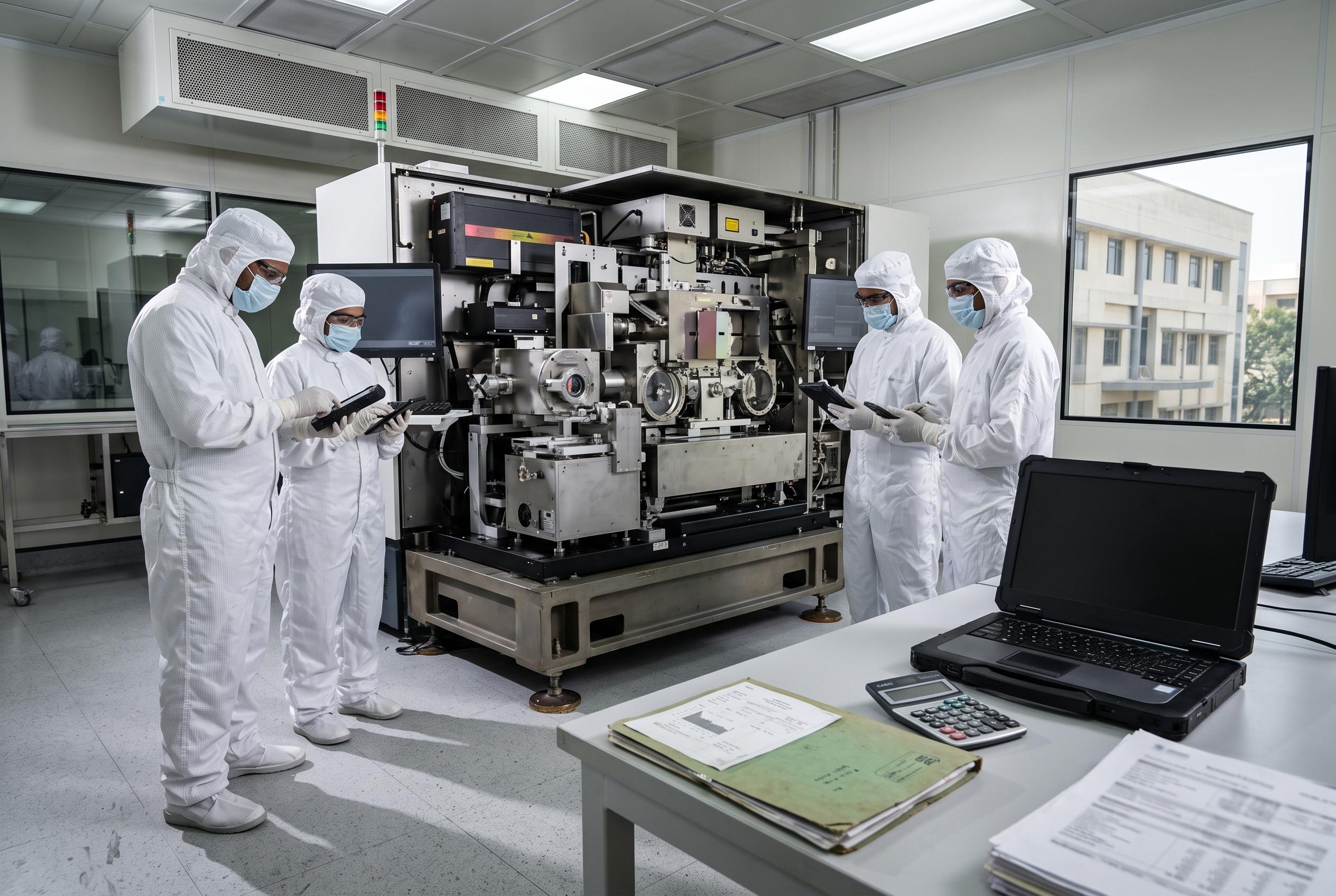

India’s weakening rupee is threatening to erode the value of incentives under the India Semiconductor Mission, as the fall in currency increases machinery costs for large investments, posing challenges for the country’s chipmaking ambitions.
India’s weakening currency is threatening to erode the real value of incentives offered under the India Semiconductor Mission, at a time when the programme is trying to draw in large, long-term investments for chipmaking. Business Standard reported that almost two-thirds of a semiconductor project’s spending goes on machinery, much of it imported and paid for in dollars, which means the cost of equipment rises in rupee terms as the currency falls.
That matters because the central government’s support is denominated in rupees, not dollars. An official quoted by Business Standard said the burden of rupee depreciation must be carried by companies, adding that the incentives were always tied to Indian currency and that no complaints had been raised. The official also argued that even if the effective support level fell, it would still remain generous.
The scale of the exchange-rate move is significant. Business Standard said the rupee has dropped by more than 26 per cent against the dollar since the scheme was announced in December 2021, and by more than 9 per cent over the past year. It noted that the heaviest machinery spending usually comes in the third and fourth years of a project, when equipment installation gathers pace, so currency weakness can bite precisely when capital outlays peak.
Under the original mission, the government set aside Rs 76,000 crore, then roughly $10 billion, for eligible semiconductor plants, excluding land costs, technology transfer fees and payments linked to foreign patents. The Centre offers an upfront subsidy of about 50 per cent during construction, while state governments add roughly 20 per cent more, taking total support to around 70 per cent. According to the report, most of the fund has already been allocated across 12 projects, including nine outsourced assembly and test plants, Tata Electronics’ approved silicon fabrication project and two compound semiconductor units.
The broader policy push is also widening. The government’s design-linked incentive scheme is aimed at strengthening India’s chip-design base, while recent budget measures have pointed towards a second semiconductor programme that would extend support into materials, equipment, research and talent. Industry commentary has also suggested that the next phase of policy is meant to build out the full ecosystem rather than focus only on fabrication, with wider support for manufacturing inputs and skilled labour.
Disclaimer: This article is intended to inform and educate, not to recommend or endorse any financial product, investment or strategy. Please consider your own financial circumstances and seek professional advice where appropriate before making financial decisions.