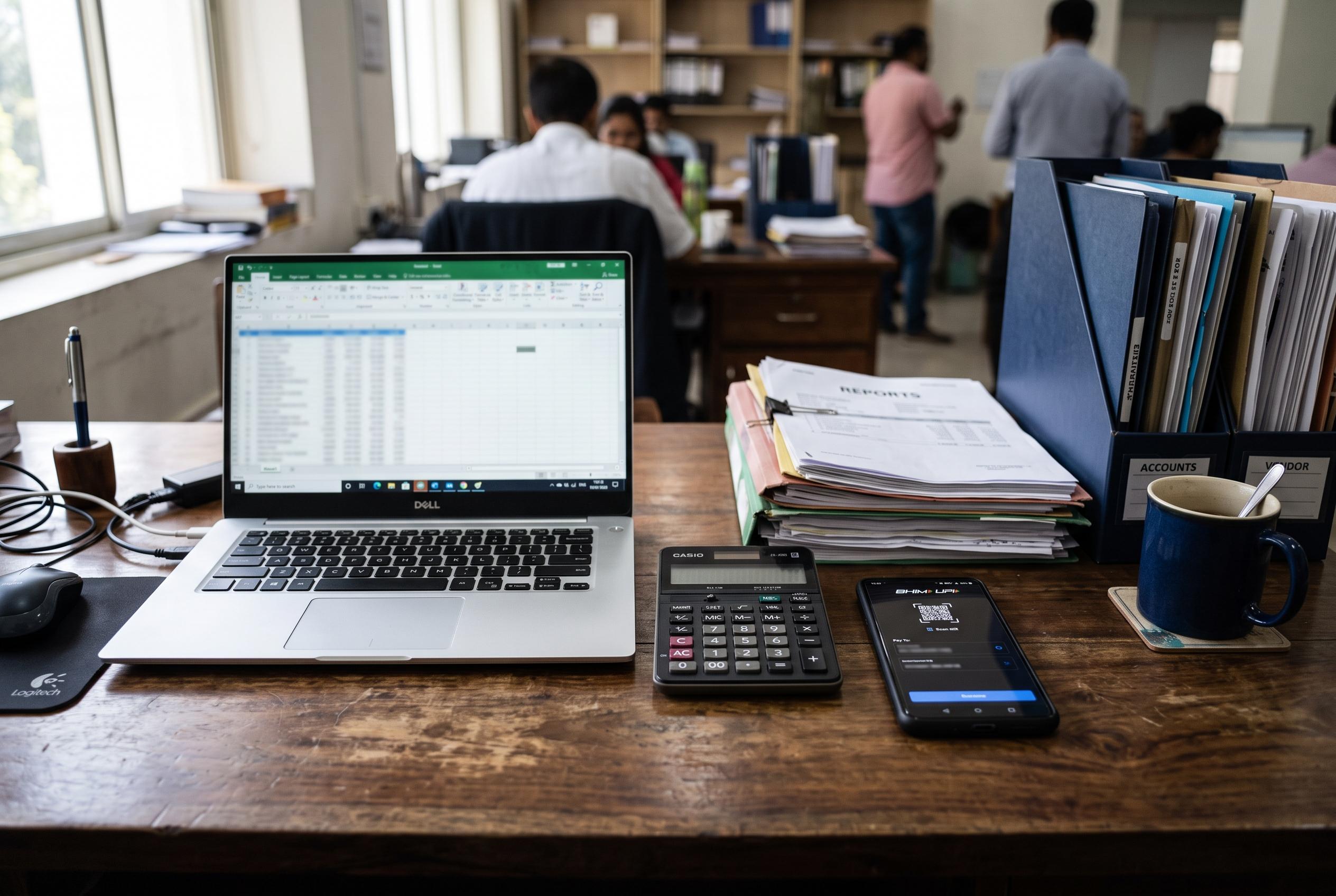

Following a period of slowdown, India’s retail industry shows signs of recovery in July, driven by increased adoption of UPI payments and regional demand shifts, according to the latest RAI-Innoviti SANKET report.
India’s retail sector slowed through the spring before regaining some momentum in July, according to the latest RAI-Innoviti SANKET report, which uses same-store sales data to track like-for-like demand across categories, cities and payment methods. The study found growth easing from 9.4% in April to 7.8% in May and 4.7% in June, before improving to 6.8% in July, the first month-on-month recovery of the quarter. Retailers Association of India says the approach strips out the effect of new store openings and gives a clearer view of underlying consumer demand.
The report showed sharp differences by category. Jewellery had the biggest swings, buoyed by Akshaya Tritiya in April before settling into mid-single-digit growth in the following months. Grocery remained relatively steady, then weakened in June as food inflation hit a 16-month high before rebounding in July when supply pressures eased with better monsoon conditions. Consumer electronics and fashion stayed in positive territory throughout the period and both improved by July. The report also found all four regions weakened earlier in the quarter and recovered in July, with the South holding up best and the West showing the largest swing from slowdown to rebound.
The data also points to a structural shift in how Indians are paying. UPI grew much faster than cards across the quarter, while card use remained concentrated in higher-value purchases such as jewellery. In grocery, UPI now dominates transaction volumes. Retailers Association of India chief executive Kumar Rajagopalan said the report is designed to separate genuine demand from growth driven simply by store expansion. Innoviti chief executive Rajeev Agrawal said the findings are based on more than 50 million data points from 2,800-plus cities, combined with surveys and public data, and argued that the results show discretionary spending remains resilient, growth is spreading into smaller cities and UPI’s rise is becoming entrenched. Earlier RAI analysis cited by Fibre2Fashion said Indian retail has been moving away from impulse buying towards more purposeful consumption, while the association has separately said the industry is aiming to sustain mid- to high-single-digit growth despite higher energy, logistics and property costs.
Disclaimer: This article is intended to inform and educate, not to recommend or endorse any financial product, investment or strategy. Please consider your own financial circumstances and seek professional advice where appropriate before making financial decisions.