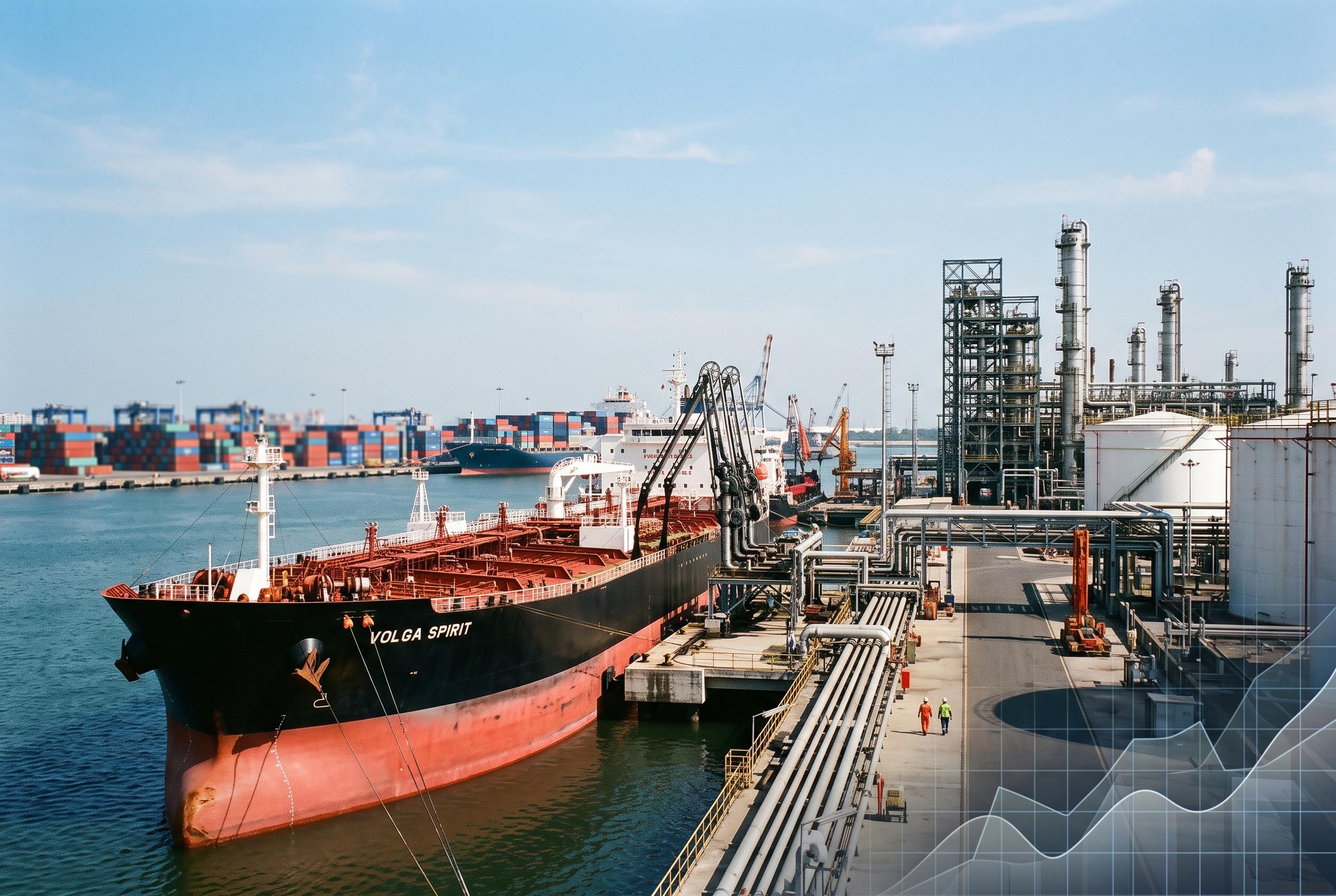

India hit a new high in Russian crude oil imports in July, reinforcing its role as Moscow’s key energy customer despite ongoing Western sanctions and falling Russian revenues, as volumes reach nearly 2.8 million barrels a day.
India’s imports of Russian crude oil rose to a fresh record in July, extending a buying surge that has made the country one of Moscow’s most important energy customers even as Western sanctions continue to squeeze Russia’s export options. Data compiled by the Centre for Research on Energy and Clean Air showed Indian buyers brought in Russian crude worth €5.5 billion last month, up 2.1% from June, when purchases had already reached a record €4.5 billion.
The latest figures underline how deeply India has become tied to discounted Russian supply since the invasion of Ukraine in February 2022 reshaped global oil trade flows. According to US Energy Information Administration data cited in the report, Russia supplied less than 100,000 barrels a day to India in 2021, or about 2.5% of imports, before volumes jumped to about 740,000 barrels a day in 2022 and nearly 1.8 million barrels a day in 2023.
By July, Indian refiners were taking a record 2.8 million barrels a day of Russian crude, equal to roughly 55.5% of the country’s total crude imports of just over 5 million barrels a day, according to CREA. That was sharply higher than the roughly 1.8 million barrels a day average seen in 2024. The group said India was the second-largest buyer of Russian fossil fuels in July, after China, with crude making up 87% of India’s Russian energy purchases that month.
The increase was not driven mainly by India’s biggest Russian-crude terminals. CREA said flows through HMEL Mundra climbed 58% from June, while volumes at Indian Oil’s Vadinar SMPL terminal rose 35% and imports through Mumbai were up 37%. By contrast, receipts at Jamnagar were unchanged and volumes at Paradip fell 22%, suggesting the record was built on gains at several smaller ports rather than a single major hub. Reuters-style reporting from the earlier June data also showed that India’s purchases had already surged to unprecedented levels before July’s further rise.
CREA said Russia’s average Urals crude price fell 3% in July to $60.22 a barrel, still well above the $44.10-a-barrel G7 and European Union price cap that took effect in February 2026. At the same time, Russia’s overall fossil fuel export revenues weakened, with crude earnings broadly flat at €392 million a day and oil product loadings dropping to their lowest level on record. The report also said Indian refineries continued to play a role in exporting refined products to countries that sanction Russia, reinforcing India’s importance not only as a buyer but also as a processing hub for Russian oil.
Disclaimer: This article is intended to inform and educate, not to recommend or endorse any financial product, investment or strategy. Please consider your own financial circumstances and seek professional advice where appropriate before making financial decisions.