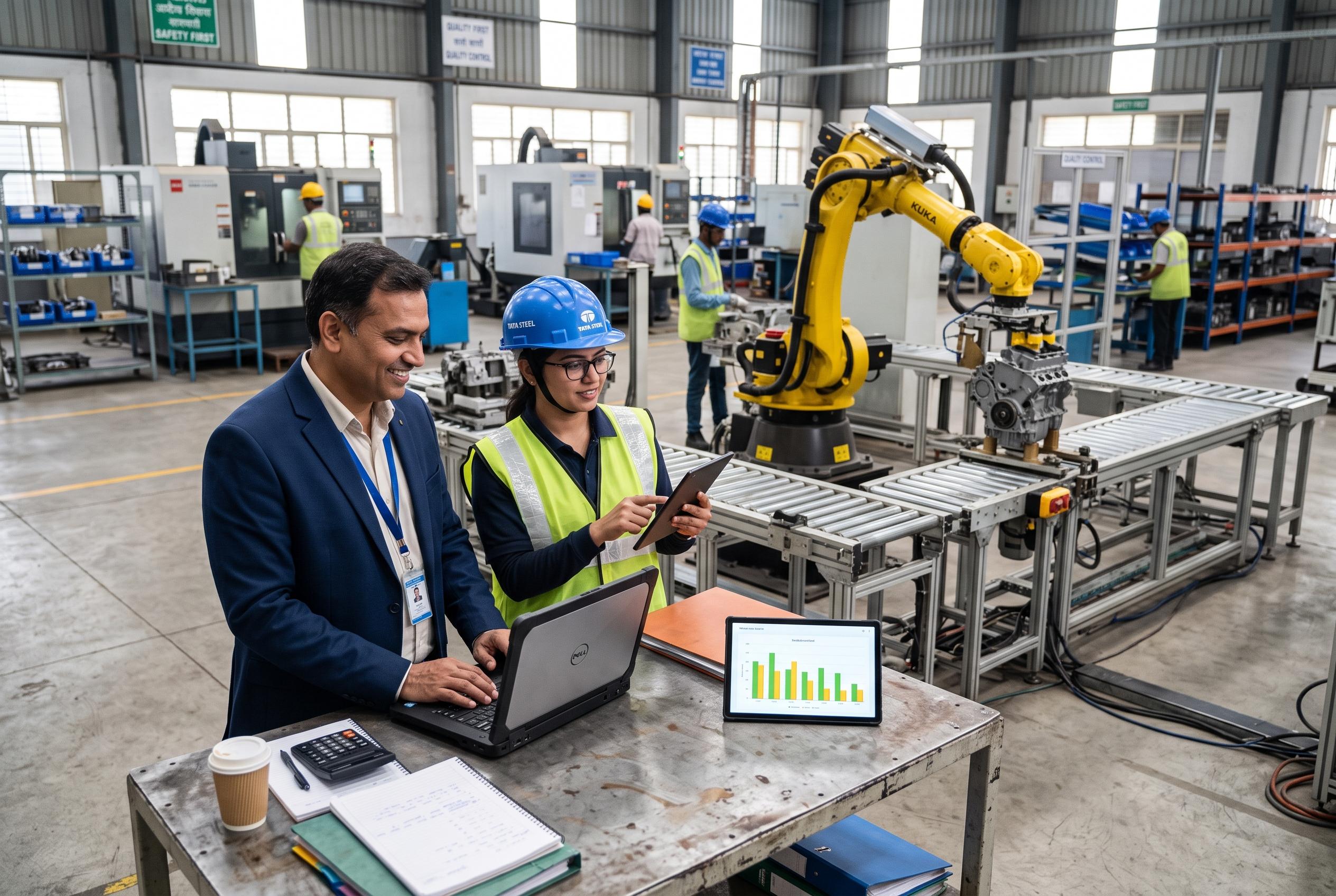

A new wave of Indian manufacturing startups is leveraging AI and SaaS to integrate fragmented systems, automate quality checks, and accelerate product development, signalling a disruptive shift in factory workflows.
India’s manufacturing sector is becoming an important testing ground for SaaS and AI startups that are no longer content to simply digitise paperwork. The newer wave of companies is using software to link fragmented factory systems, automate quality checks, improve production and inventory decisions, and even help with product design and development. Tracxn data cited in the report shows that startups in this niche raised $198.74 million between 2019 and 2026, with funding peaking in 2024.
One of the clearest examples is Enmovil, which has built an AI-native supply-chain platform that ties together planning, logistics and execution. The Hyderabad-based company says its CADDIE layer watches those workflows continuously, flags risks and suggests or triggers the next best action. Co-founded in 2015 by former NVIDIA and Oracle executives Ravi Bulusu, Nanda Kishore and Venkat Moganty, Enmovil has raised $6 million in Series A funding and works with more than 60 enterprises across sectors including automotive, FMCG, chemicals, logistics and energy.
Bulusu says manufacturers still struggle because data and decisions remain split across ERP systems, warehouse tools, transport software, spreadsheets and plant-level systems, leaving a gap between planning and what happens on the shopfloor. The company is now focused on inventory intelligence and logistics planning, including demand forecasting, capacity planning, dispatch planning and freight reconciliation. Its enterprise SaaS model charges customers for the intelligence layer and selected modules, with pricing linked to sites, users, vehicles, shipments, stock-keeping units or transaction volumes.
Quality inspection is another area drawing capital. SwitchOn, founded in 2017, uses computer vision and AI to automate checks on manufacturing lines through its Deep Inspect product. Co-founder Aniruddha Banerjee says the system reduces the risks of manual inspection, cuts defects from about 3 per cent to below 0.05 per cent and improves line productivity by about 5 per cent by reducing small stoppages. The company says it has raised close to $14 million and counts medium and large enterprises in India, Europe, the US and South-East Asia among its customers.
Jidoka takes a more integrated approach on the shopfloor, combining inspection with operator guidance during assembly. At Britannia, the company says its system checks about 12,000 biscuits a minute and automatically removes defective products. The eight-year-old startup has raised roughly $2.2 million across three rounds and says it has doubled revenue every year for the past three years. Its business combines hardware sales, software subscriptions and implementation services, and it is aiming for at least half of revenue to come from overseas markets over time.
The same shift is visible in apparel, where Groyyo is pairing an AI-led design studio with factory-level visibility down to the hour and SKU. Co-founder and chief executive Subin Mitra says the company can now deliver new collections in 10 days, compared with 30 previously, while making the supply chain 20% to 25% faster. The company has raised ₹90 crore in a Series B round, is seeking another ₹110 crore in the coming quarters and is targeting revenue of ₹800 crore to ₹850 crore in FY27 while staying profit-positive. Industry observers say this points to a broader change in manufacturing, where domain-specific software is moving beyond digitisation and into workflow redesign.
Disclaimer: This article is intended to inform and educate, not to recommend or endorse any financial product, investment or strategy. Please consider your own financial circumstances and seek professional advice where appropriate before making financial decisions.