

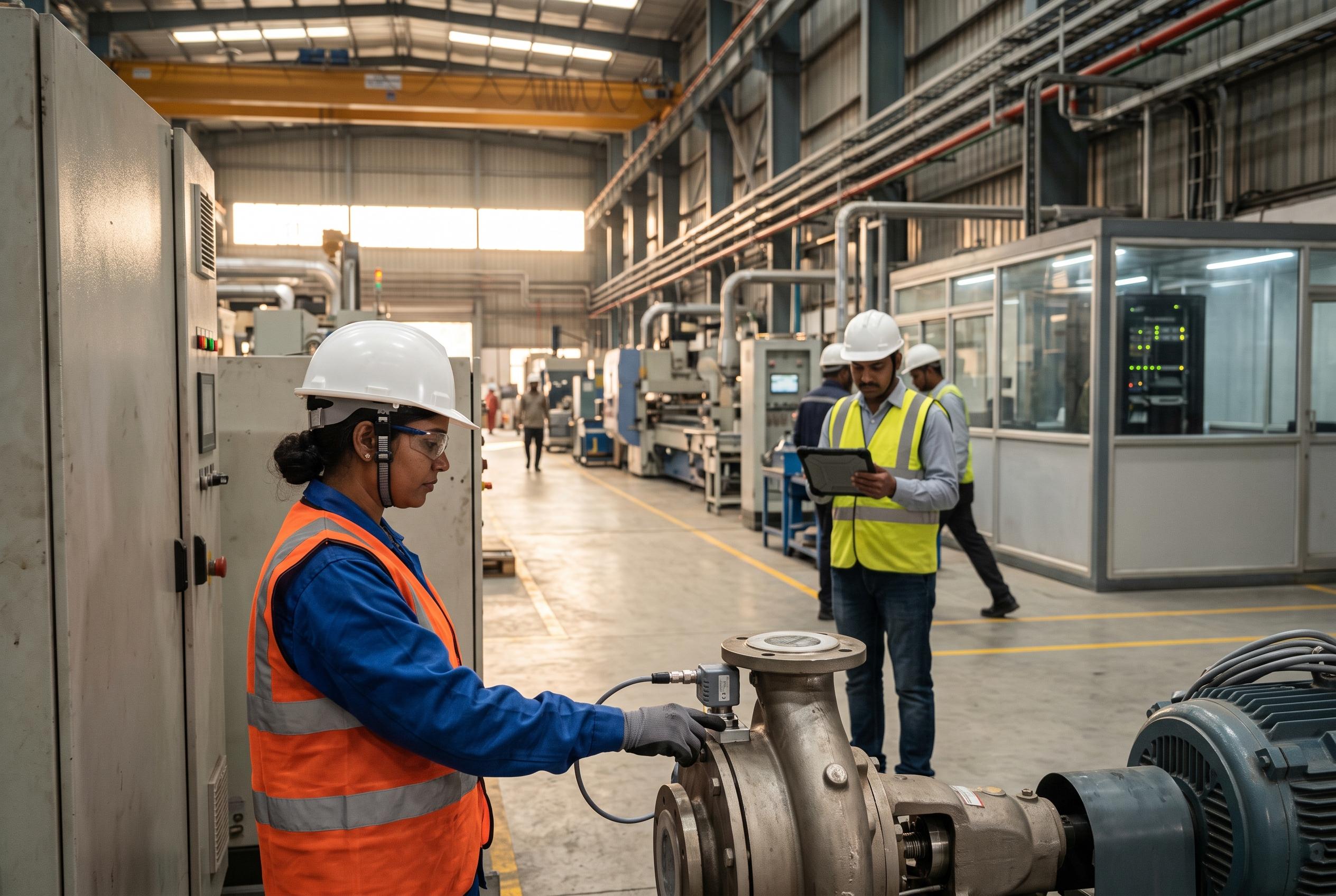

Industry leaders at MRAM 2026 highlight how widespread adoption of AI tools like digital twins and remote monitoring could unlock up to $100 billion in value for India’s manufacturing sector by reducing unplanned outages and boosting infrastructure resilience.
India could unlock a significant economic gain by cutting the losses caused by machine failures, unplanned stoppages and poor asset management, with industry leaders now urging wider use of artificial intelligence in maintenance across factories and infrastructure.
That case was set out at MRAM 2026, where speakers argued that predictive maintenance, digital twins, automated substation operations and remote monitoring could make critical systems more dependable. NITI Aayog’s report on AI for Viksit Bharat says those tools are central to building more resilient infrastructure and estimates that AI could add $85 billion to $100 billion in value to India’s manufacturing sector by 2035.
The urgency is underscored by survey data cited by ABB, which found that 88% of industrial businesses in India suffer at least one unplanned outage a month, compared with 69% globally. ABB said a typical outage can cost nearly Rs 70 lakh an hour, while 19% of respondents still rely on run-to-fail maintenance, a model in which equipment is fixed only after it breaks down. Amit Gupta, division president for motion services at ABB India, said the findings point to the need for investment in reliability, digitalisation and a more forward-looking approach to maintenance.
The argument comes at a time when India’s industrial base is still expanding. According to the Economic Survey 2025-26, gross value added in the registered manufacturing sector rose 9.59% in 2024-25, industrial output increased 7.81% and fixed capital grew 10.54%. As the country adds more plants, machines and public assets, the financial cost of poor upkeep also rises, making reliability a wider productivity issue rather than a narrow engineering concern.
Industry assessments suggest the market opportunity is already substantial. The Indian Asset Performance Management market was valued at $810.6 million in 2024 and is projected to reach $2.25 billion by 2033, implying annual growth of about 12%. Analysts and industry leaders say the appeal lies not only in reducing downtime, but also in extending equipment life, improving utilisation and lowering the need for expensive replacement spending across sectors ranging from power and transport to water systems and ports.
The broader policy message from MRAM 2026 was that India must move beyond simply building new infrastructure and place greater emphasis on maintaining and optimising what already exists. Advocates of predictive diagnostics say artificial intelligence, industrial internet of things tools and digital twins can help identify faults before they become outages, supporting productivity and competitiveness at a time when the country is betting heavily on manufacturing and infrastructure-led growth.
Disclaimer: This article is intended to inform and educate, not to recommend or endorse any financial product, investment or strategy. Please consider your own financial circumstances and seek professional advice where appropriate before making financial decisions.



