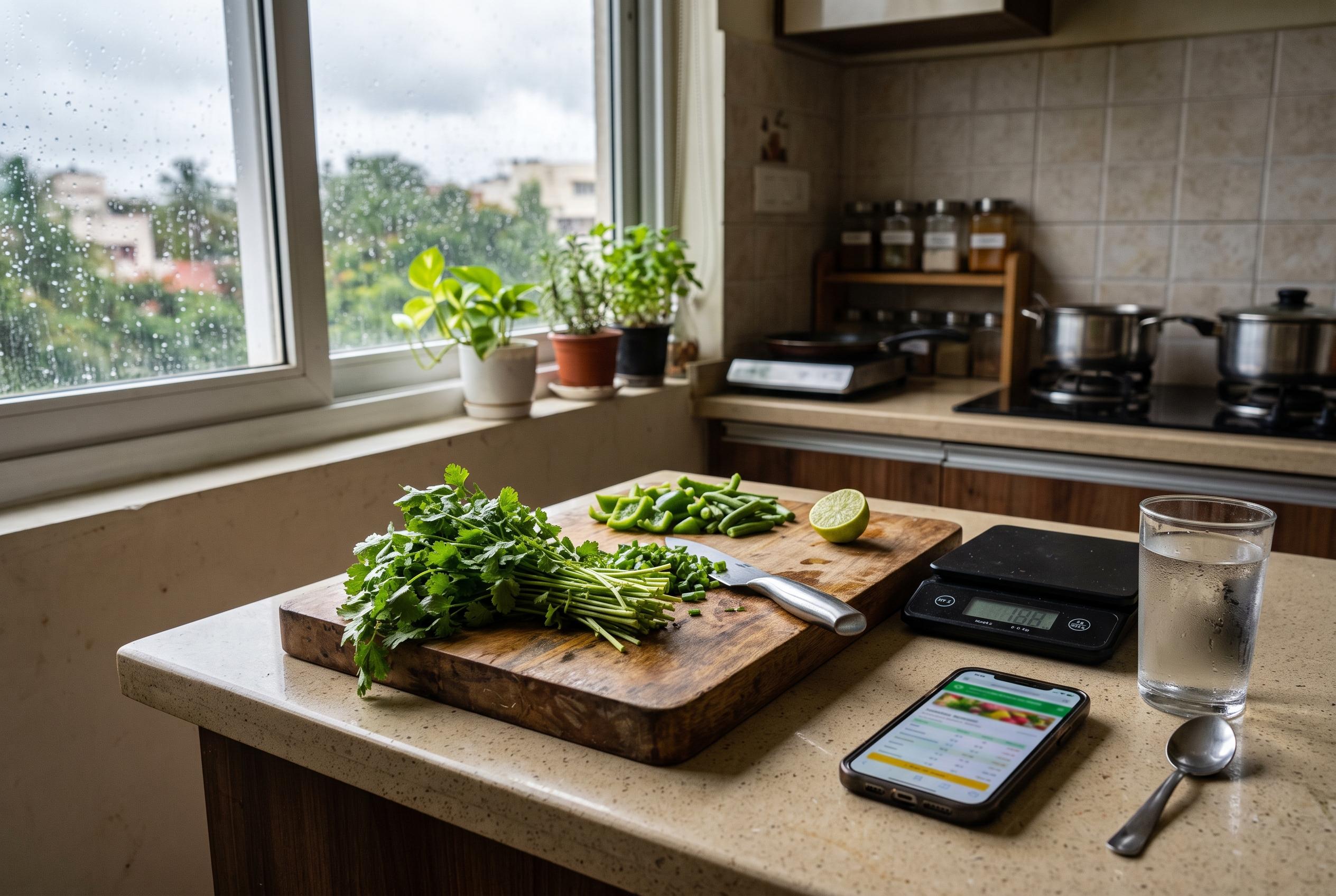

With coriander prices soaring due to heavy rains disrupting supplies, India’s kitchen faces a complex mix of rising and falling prices across vegetables and staples, highlighting weather’s uneven impact on food inflation before the festival season.
India’s kitchen is facing a more uneven squeeze than the familiar onion-tomato cycle. Coriander, or dhaniya, has become a fresh pressure point after heavy rain disrupted supplies from Nashik, pushing prices above ₹220 a kilogram in some markets, according to The Economic Times. Ginger, garlic and onions have also become markedly costlier, even as potatoes, tomatoes and peas have turned cheaper. That split has made the latest food inflation reading harder to read than a simple broad-based rise in vegetables.
Official data show that India’s consumer food inflation accelerated to 5.52% in July from 5.32% in June. The broader consumer price index rose 3.54% year on year in July 2024, the lowest in nearly five years, and food inflation was the softest since June 2023, according to a Press Information Bureau release. Wholesale price pressure also eased in July, with Reuters reporting that vegetable prices fell 8.93% year on year, but the retail experience has been more uneven for households buying fresh produce day to day.
Weather is a key reason the picture has become so patchy. The monsoon began with one of its driest Junes on record, before swinging to heavy downpours in July and then another break in the rains. The Economic Times said roughly half of India’s farmland still depends on rainfall, leaving crops and supply chains exposed when rain arrives in bursts rather than steadily. For highly perishable items such as coriander and green chillies, disruption in arrivals can quickly translate into higher market prices.
The strain is not limited to vegetables. Government data show average retail rice prices rose from ₹42.92 a kilogram in May to ₹44.35 in July, while traders in Telangana pointed to crop concerns and possible hoarding. Sugar has also emerged as a pressure point, with wholesale prices reaching record levels and the Centre imposing stock limits on private traders from August 1 to November 30 to curb speculation. Industry groups say supplies remain adequate, but the move underlines how sensitive the market has become ahead of the festival season.
For now, the food basket is being pulled in different directions. Some staples are getting cheaper, others are surging, and the outcome will depend heavily on how the monsoon behaves in the weeks ahead. The Reserve Bank of India has already flagged a below-normal and uneven rainy season as a risk to food prices, and that warning is increasingly visible in the market.
Disclaimer: This article is intended to inform and educate, not to recommend or endorse any financial product, investment or strategy. Please consider your own financial circumstances and seek professional advice where appropriate before making financial decisions.