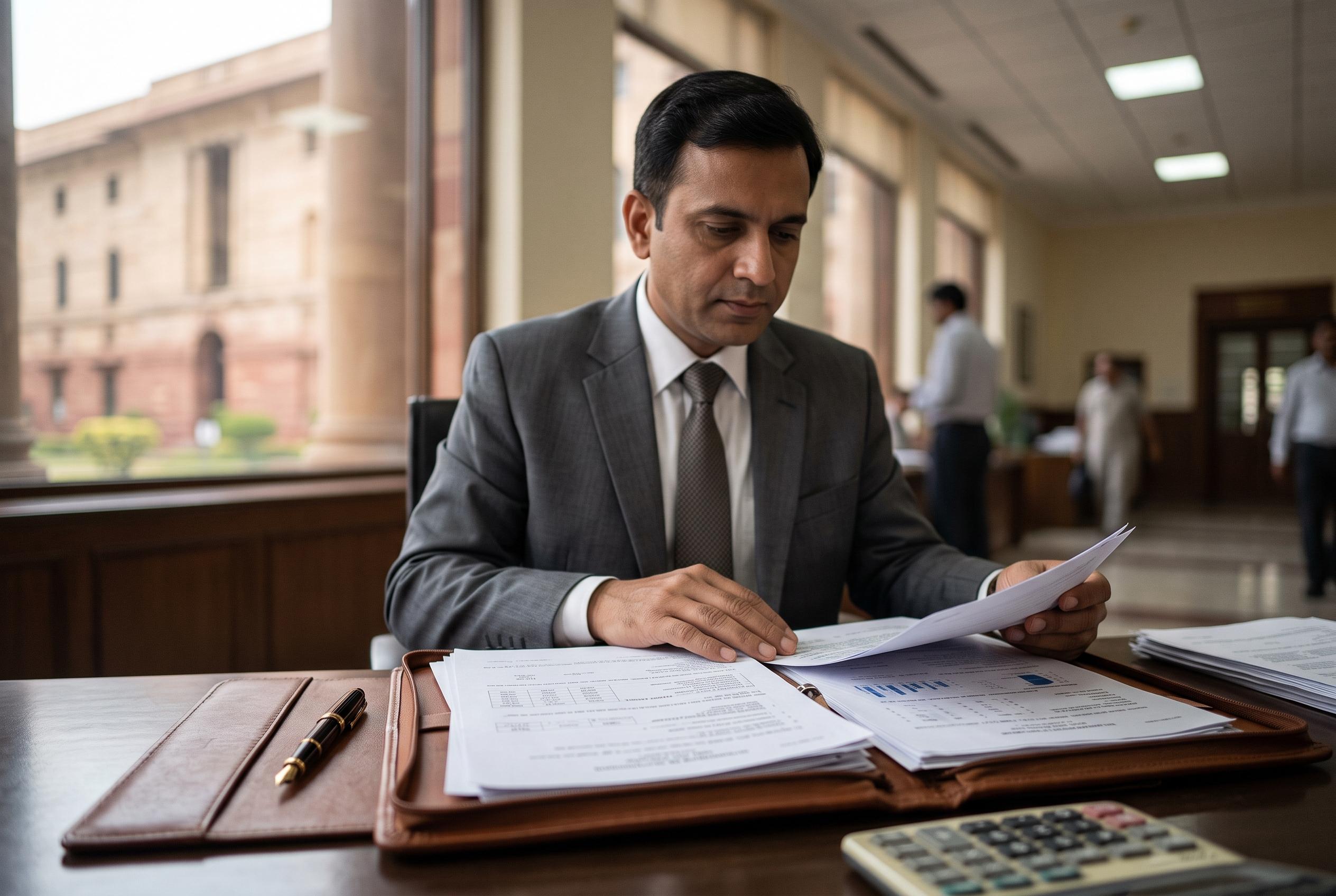

India’s central government fiscal deficit has reached Rs 7.1 lakh crore in the first five months of FY26-27, signalling mounting fiscal pressures as expenditure outpaces receipts, raising concerns of overshooting the budget estimate for the year.
India’s central government fiscal deficit widened to Rs 7.1 lakh crore in the first five months of the 2026-27 financial year, reaching 41.9% of the full-year Budget Estimate, according to data from the Controller General of Accounts. That is a larger share of the annual target than a year earlier, when the deficit had stood at Rs 6 lakh crore in the same period. The numbers point to mounting pressure on the government’s finances as the year progresses. The latest figures also show that spending has been running ahead of receipts at a time when revenue growth remains uneven.
ICRA said the gap could exceed the Budget Estimate by Rs 1.3 lakh crore to Rs 1.4 lakh crore by the end of the year, citing softer-than-expected tax revenue and extra subsidy needs for fuel and fertilisers. The agency noted that the sharp rise in the deficit in August was influenced by the release of an extra tranche of devolution to states, after a double tranche in July last year. It also said the combination of a higher revenue deficit and double-digit growth in capital spending helped push the overall deficit higher.
The tax side of the ledger has been mixed. Gross tax revenue rose 6.5% year on year in the five-month period, but excise duty collections fell 23% as earlier cuts in petrol and diesel duties continued to weigh on receipts. Other major taxes posted double-digit gains, yet ICRA said the Centre would need gross tax revenue growth of 10.9% in the remainder of the year to stay within budget assumptions. That would require a sharp rise in income tax and excise collections, which the agency said looked unlikely, although stronger customs duty collections, helped by higher duties on gold and silver imports, could provide some offset.
On the spending side, capital expenditure fell 30% in August after a strong June-July period, leaving capex growth at 18% for the five months as a whole, according to ICRA. Revenue expenditure rose 8%, driven by a 24% increase in subsidy payments, while interest costs declined 3%. Excluding interest and subsidies, revenue spending grew 12.5%, indicating that underlying day-to-day expenditure remains firm even as borrowing pressures build.
ICRA said any fiscal slippage could be partly cushioned by expenditure savings, which it estimated at Rs 1.6 lakh crore to Rs 1.7 lakh crore in FY26, and by stronger-than-budgeted small savings inflows. That could give the Centre some room to raise additional borrowing in the second half of FY27 if needed, without derailing its wider financing plans. The Budget had set the fiscal deficit at 4.3% of GDP, or Rs 16.96 lakh crore, underscoring how closely policymakers will now be watching revenue trends and subsidy outlays in the months ahead.
Disclaimer: This article is intended to inform and educate, not to recommend or endorse any financial product, investment or strategy. Please consider your own financial circumstances and seek professional advice where appropriate before making financial decisions.