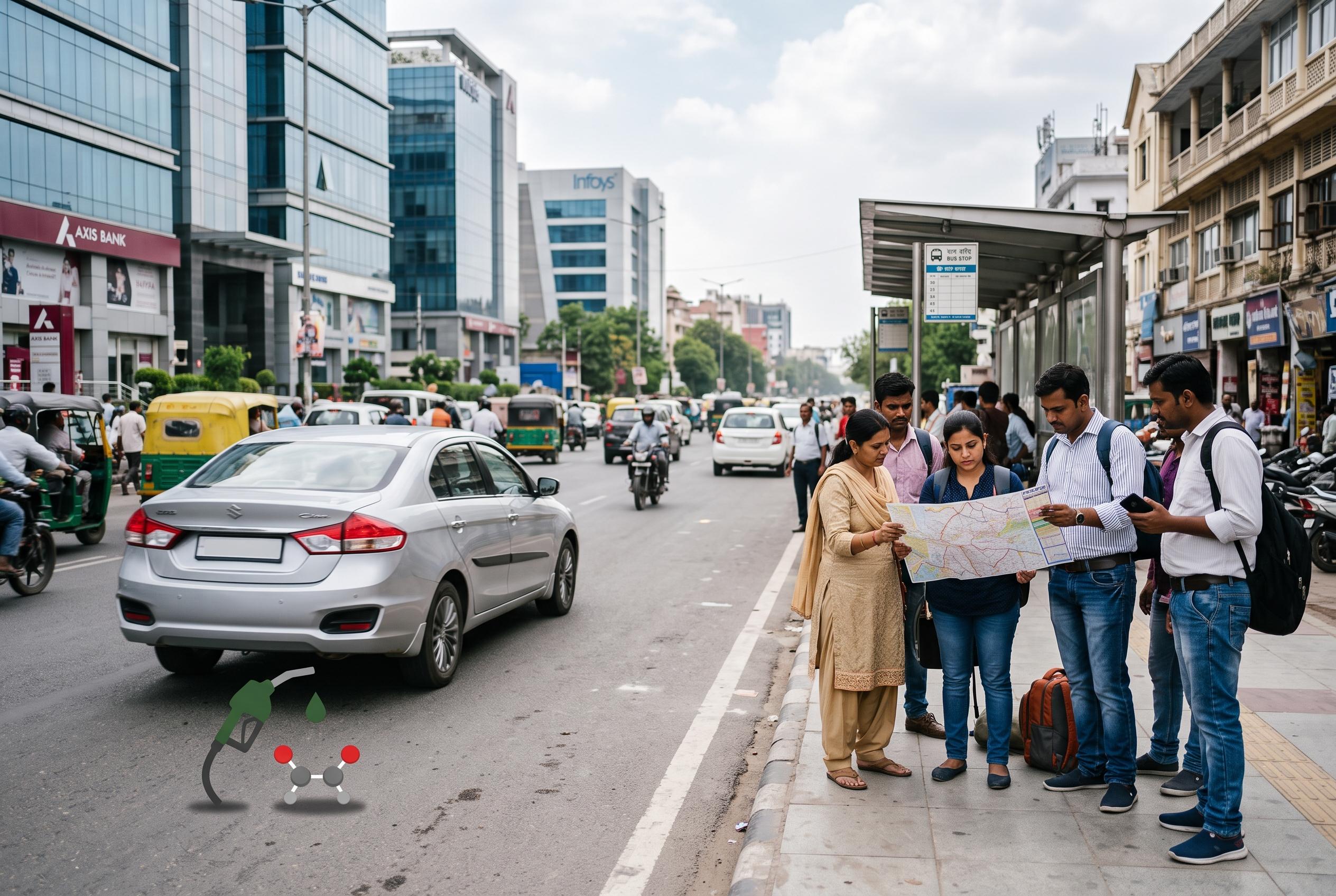

India’s move to increase ethanol-blended petrol faces public and political backlash amid concerns over vehicle wear, rising costs, and sustainability, raising questions about the policy’s future and impact.
India’s ethanol-blended petrol policy is turning into a bigger political and consumer headache than the government seems willing to admit. What began as a drive to cut oil imports and widen the use of biofuels has now become a public dispute over cost, engine wear and fuel choice, with E20, the 20 per cent ethanol blend now being pushed at pumps, drawing the sharpest criticism. The government has defended the programme as a long-term energy-security measure, but the backlash suggests many motorists see it as a policy imposed without enough regard for older vehicles or household budgets. According to Business Standard, the Oil Ministry has acknowledged that E20 can reduce fuel economy in some vehicles, even as it argues that cleaner combustion and a higher octane rating make up for the trade-off.
The most immediate complaint is simple: drivers say they are getting less distance for the same money. The article argues that this is not a matter of driving style or tyre pressure, but a basic consequence of ethanol’s lower energy content compared with petrol. Business Standard reported that a survey found 28 per cent of owners of petrol vehicles bought in 2022 or earlier had seen unusual wear or repair needs after E20’s rollout, while two-thirds said mileage had fallen. Another Business Standard report said maintenance costs in older vehicles could rise by as much as ₹10,000. The government has said some vehicles may see a 3-5 per cent hit in fuel economy, but critics say the real-world effect can be worse for vehicles not built for higher ethanol blends.
The policy’s promised benefits to farmers are also under scrutiny. The article says ethanol production does not mean the state is buying crops directly from growers; instead, sugarcane, maize and rice are purchased through existing market channels, with profits flowing mainly to mills and distillers. It says distillers have been encouraged by assured purchase arrangements, administered pricing and interest support, helping build large excess capacity. The result, it argues, is a powerful industrial constituency in favour of ever-higher blending targets. At the same time, the country has begun importing both maize and ethanol, raising awkward questions about whether a scheme meant to reduce import dependence is simply shifting dependence from oil to agricultural feedstocks.
There is, however, a genuine environmental case for ethanol blending. As the article notes, ethanol generally burns more cleanly than petrol, with lower particulate and carbon monoxide emissions and a lower lifecycle carbon footprint if crop-based emissions are handled properly. That is the government’s central defence as well: fewer tailpipe pollutants, cleaner combustion and lower long-term carbon intensity. But the gains are not without costs. More land, water and fertiliser are diverted to fuel rather than food, and the shift can distort crop patterns in ways that affect food security and nutrition.
The larger question is whether this is the right moment to press ahead so quickly with a nationwide transition that many motorists cannot easily avoid. The article points out that electric vehicles are already gaining ground, and argues that internal combustion engines are a fading technology rather than a future one. That does not make ethanol irrelevant, but it does raise doubts about the scale and urgency of the rollout, particularly when the burden falls most heavily on ordinary vehicle owners. For now, E20 has become less a technical fuel issue than a test of how far the government is prepared to push a policy once public resistance becomes impossible to ignore.
Disclaimer: This article is intended to inform and educate, not to recommend or endorse any financial product, investment or strategy. Please consider your own financial circumstances and seek professional advice where appropriate before making financial decisions.