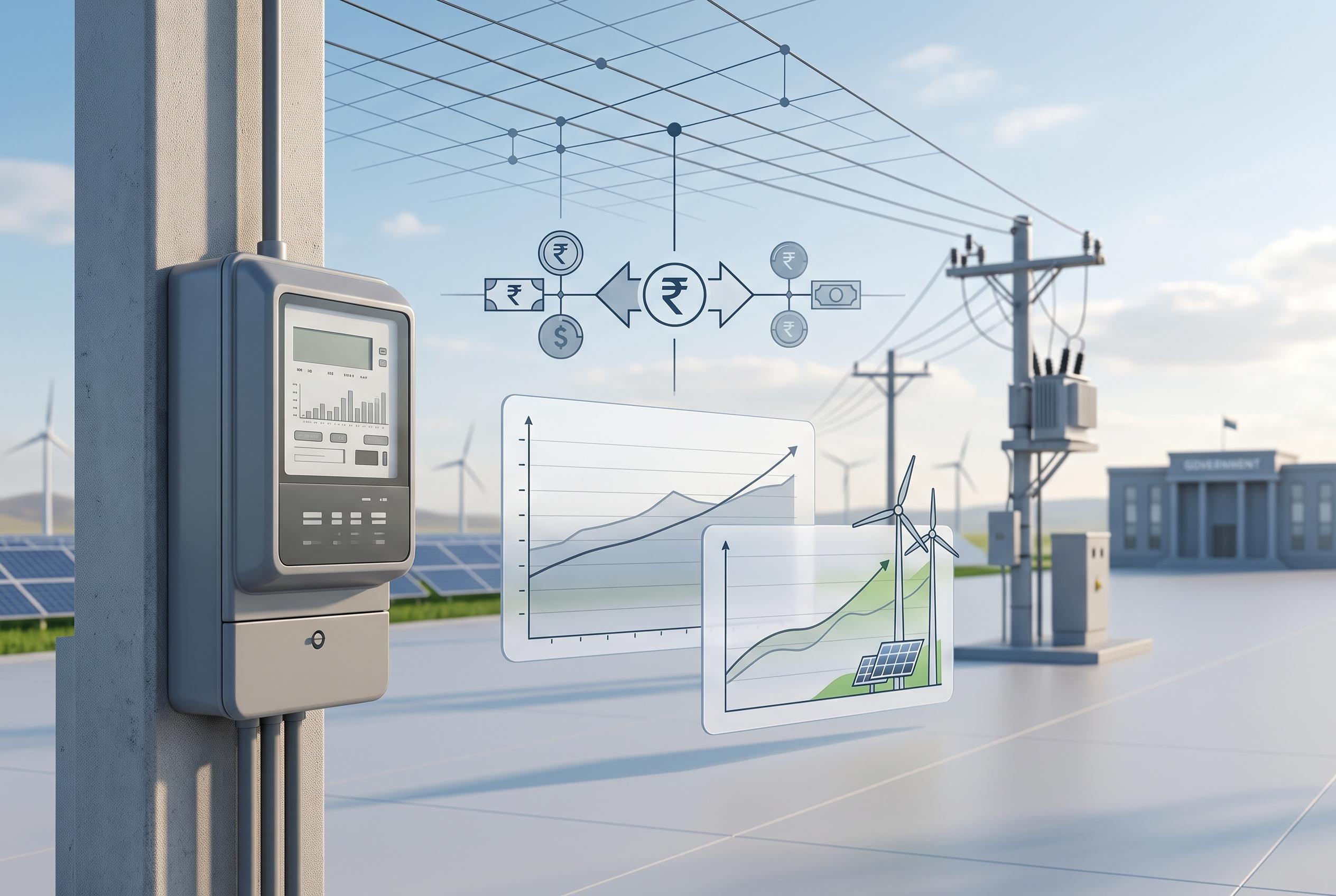

India’s proposed draft electricity policy for 2026 introduces comprehensive reforms aimed at aligning tariffs with actual costs, boosting renewable capacity, and enhancing supply reliability amid shifting demand and climate commitments.
India’s draft electricity policy for 2026 sketches one of the most far-reaching overhauls of the sector in years, with proposals that would make tariffs more closely reflect the true cost of supplying power and give regulators more tools to protect utilities from sudden swings in fuel prices. According to coverage by Zee Business, the Ministry of Power is proposing an automatic monthly fuel and power purchase cost adjustment, or FPPCA, alongside a stabilisation fund that would soften the blow of sharp cost changes for consumers. The draft is only a proposal, however, and retail tariffs would still be set by state electricity regulators under the Electricity Act 2003.
The policy is also designed to shift India’s power system towards more disciplined planning and less financial strain on distribution companies. Industry reports on the draft say utilities would be required to prepare resource adequacy plans so that generation and procurement can be matched more closely to future demand. The same reports say the government wants tariffs to recover fixed costs more systematically through demand or fixed charges, while also pushing states to issue tariff orders on time and use index-linked adjustments when they do not. That approach is meant to reduce the build-up of regulatory arrears that has long weakened state-run power distributors.
For consumers, the most immediate change would be a tariff structure that moves more quickly with changing costs. In practical terms, that could mean monthly adjustments when fuel or power purchase expenses rise or fall, but only after scrutiny by the relevant state regulator. The draft also appears to preserve room for state subsidies, including for domestic households, which means the effect on individual bills would vary widely by state and consumer category. The broader aim, according to the Ministry of Power’s outline, is to balance affordability with financial sustainability rather than freeze prices artificially.
The policy goes beyond tariffs. It places heavy emphasis on round-the-clock supply, lower distribution losses and stronger complaint handling. The government said average rural electricity supply has risen from 12.5 hours a day in financial year 2014 to 22.6 hours in financial year 2026, while urban supply has increased from 22.1 hours to 23.4 hours over the same period. The draft also calls for online complaint systems, virtual hearings for grievance forums and ombudsmen, and better consumer redressal, building on rules already in place for service quality, metering and compensation.
A major part of the plan is to clean up the economics of India’s heavily burdened distribution sector. The draft sets out a push towards single-digit aggregate technical and commercial losses through smart meters, energy audits, GIS-based asset mapping and consumer indexing. It also backs new operating models such as shared distribution networks and distribution system operators, which would help manage the rising complexity of rooftop solar, storage and vehicle-to-grid systems. The Ministry of Power says the Revamped Distribution Sector Scheme has already sanctioned projects worth Rs 1.53 lakh crore for loss-reduction infrastructure and Rs 1.31 lakh crore for smart metering.
The policy’s longer-term energy vision is equally ambitious. Reports on the draft say it aims to lift per-capita electricity consumption to 2,000 kWh by 2030 and above 4,000 kWh by 2047, reflecting the expected growth in demand as India industrialises further. It also leans heavily on renewable energy, storage and grid modernisation. The government said 1,47,720 MW of renewable capacity was under construction as of June 30, 2026, while pumped storage and battery storage projects were also advancing. Transmission planning is expected to incorporate technologies such as flexible AC transmission systems and dynamic line rating, as India prepares for an installed generation capacity of 874 GW by 2031-32, according to the National Electricity Plan.
Disclaimer: This article is intended to inform and educate, not to recommend or endorse any financial product, investment or strategy. Please consider your own financial circumstances and seek professional advice where appropriate before making financial decisions.