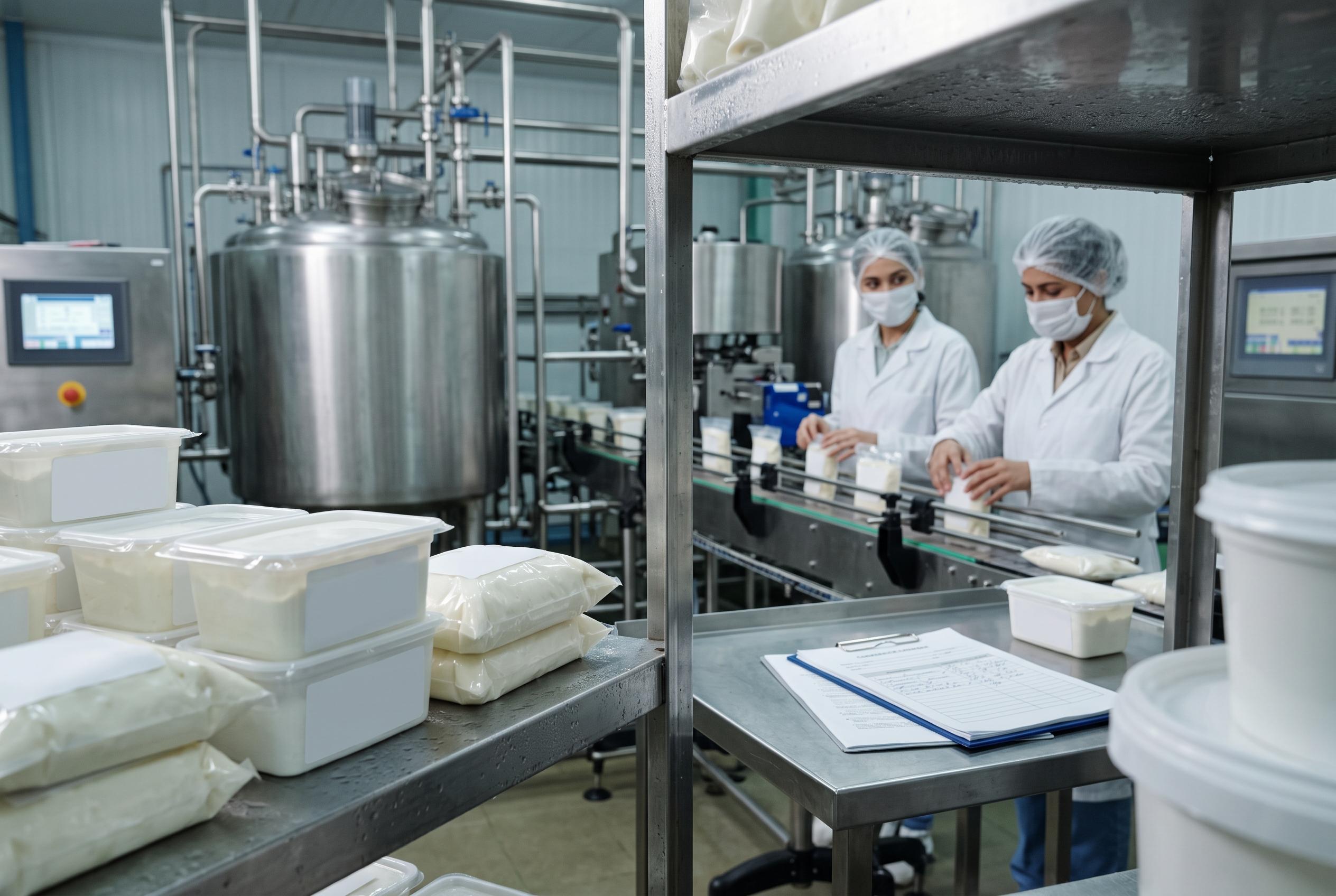

India’s move to ban analogue paneer is accelerating a market realignment, boosting demand for packaged, branded paneer and prompting industry capacity expansions amid regulatory tightening.
India’s paneer market is entering a sharper phase of formalisation as regulators move against so-called analogue products, the cheaper non-dairy alternatives that have long competed with branded paneer in retail and food-service channels. The Food Safety and Standards Authority of India has proposed a nationwide ban on selling analogue paneer under the paneer name, saying the measure is meant to prevent consumers being misled about what they are buying. Draft rules issued on 23 September give stakeholders 60 days to respond before any final change takes effect, according to reporting by Mint and Business Standard.
The crackdown is already reshaping demand patterns. Organised dairy companies say customers are shifting towards packaged paneer from trusted brands, while modern retail, quick commerce and institutional buyers are adding momentum. Mother Dairy said it has seen packaged paneer demand rise by 60% to 70% year on year in the current quarter, with growth nearly twice as fast as in the previous quarter. The company has doubled its paneer capacity over the past two years to keep pace.
Amul, which GCMMF says leads the branded paneer segment with a 30% to 35% share, produces paneer across 35 plants nationwide and says it is expanding capacity steadily to meet stronger demand. VRS Foods, which sells through both consumer and business-to-business channels, said its paneer output has doubled from 7 to 8 tonnes a day to 14 to 15 tonnes a day, and that it is preparing to add another unit. Parag Milk Foods has also announced an investment of about ₹100 crore to lift its paneer capacity by 60 tonnes a day to 80 tonnes a day, with the expansion expected to be commissioned by June 2027.
Industry executives say the change reflects a broader move away from loose and unbranded supply towards packaged dairy. K. Rathnam, chief executive and whole-time director of Milky Mist Dairy Food, said India’s paneer market is worth about ₹1 lakh crore and has been growing at 15% to 18% a year, leaving room for organised players to gain share. He said stricter oversight should accelerate the shift towards quality and compliance, while dairy veteran RS Sodhi said a large part of the market outside packaged sales is likely to migrate into branded products.
The regulatory push has also raised questions about how the category should be defined and enforced. Pranav Rungta, vice-president of the National Restaurant Association of India, said smaller operators often buy analogue paneer either unknowingly or because they are under pressure on price. He said the draft FSSAI move does not amount to a ban on all analogue products, but rather a restriction on using the paneer label, warning that the distinction could create confusion unless the rules are made clearer. Several states, including Maharashtra, Gujarat, Telangana, Uttar Pradesh, Karnataka, Uttarakhand, Himachal Pradesh and Chhattisgarh, have already introduced bans or restrictions on analogue paneer, underscoring how quickly the issue has moved from a technical labelling dispute to a nationwide industry reset.
Disclaimer: This article is intended to inform and educate, not to recommend or endorse any financial product, investment or strategy. Please consider your own financial circumstances and seek professional advice where appropriate before making financial decisions.