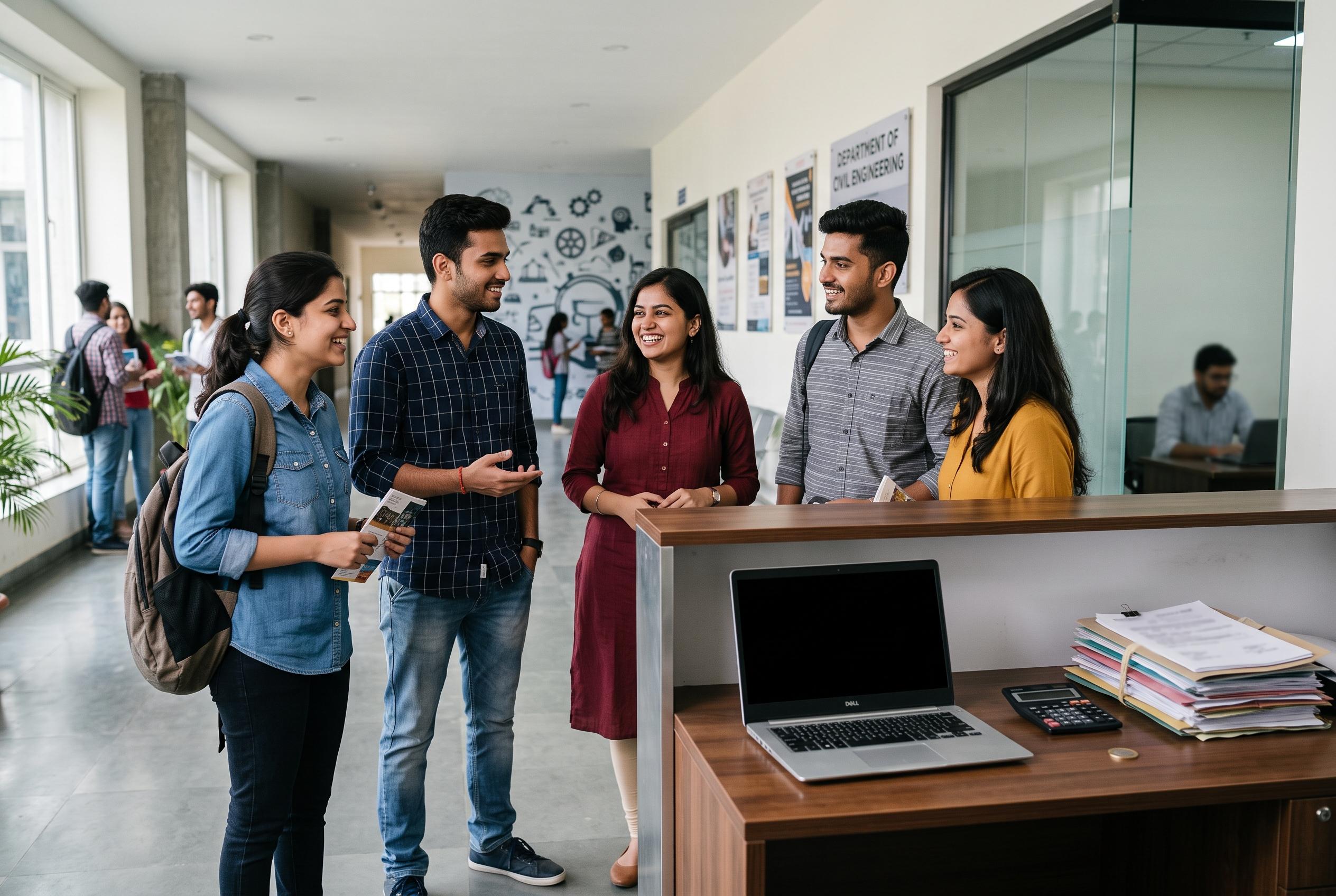

Indian engineering colleges are experiencing an earlier and broader campus recruitment surge, driven by major IT firms expanding their fresher intake and new sectors like manufacturing, aerospace, and space startups entering the hiring scene, with internships emerging as a key route to employment.
Campus hiring in India is recovering this year after a slower 2025, with engineering colleges reporting earlier recruitment activity, more offers from major IT services firms and a broader mix of employers entering placements, according to businessline and college executives. The rebound is being driven not only by the usual software recruiters but also by start-ups, global capability centres and companies in manufacturing, semiconductors, aerospace and other core sectors.
At Rajalakshmi Engineering College, chief operating officer Philip Praveen said hiring from large service companies began sooner this season than last year, when many drives were delayed. He said nearly half of the college’s placements were completed in June and July, and that a larger share of offers has come at the higher-paying Digital and Prime levels at Tata Consultancy Services, with annual packages ranging from ₹7 lakh to ₹12 lakh. The college expects a marked improvement in overall placements this year as TCS, Cognizant and Accenture prepare to step up their campus activity.
Industry watchers say the improvement reflects a better outlook at large IT firms after several years of uncertainty over revenue growth, client demand and hiring needs. Ramachandran K, a former education editor and ed-tech entrepreneur, told businessline that campus recruitment tends to move in cycles and that the current pickup looks more like a recovery from a weak period than a structural break. TCS, Infosys and Cognizant have all signalled stronger fresher intake for the coming year, with TCS reportedly making about 25,000 offers for FY27, Infosys planning to hire around 20,000 graduates and Cognizant targeting 24,000 to 25,000 freshers in 2026.
Colleges say the role mix has not changed dramatically, even though artificial intelligence skills are now expected more widely. Vikas Misra, vice-chancellor of the Hindustan Institute of Technology and Science, said demand is still concentrated in software development, data, cloud computing and cybersecurity, but recruiters are placing greater emphasis on AI tools and related capabilities. Rajesh Kumar, co-founder of Kalvium and FACE Prep, said the larger service firms are leaning towards what he called a “juniorisation” of the workforce, with more reliance on AI-enabled fresh graduates rather than experienced lateral hires.
The recruiter base is also widening beyond traditional IT. Misra said HITS expects about a third of its hiring this season to come from start-ups and is aiming for a placement rate of roughly 90 per cent, up from 80 per cent to 85 per cent last year. Praveen said semiconductor and manufacturing firms are beginning to arrive on campus, alongside companies such as Larsen & Toubro. He and Misra also pointed to strong demand in aerospace and aviation, with Boeing and Air India among the companies hiring, while space start-ups are taking on graduates in larger numbers.
Another notable trend is the stronger use of internships as a route to full-time jobs. Misra said around 30 per cent of students placed so far at HITS secured offers through internships and pre-placement offers, while Praveen said start-ups in particular are favouring that pathway. Ramachandran added that the biggest growth in core engineering hiring is likely to remain at polytechnic level, even as engineering colleges see a clear lift in demand this year.
Disclaimer: This article is intended to inform and educate, not to recommend or endorse any financial product, investment or strategy. Please consider your own financial circumstances and seek professional advice where appropriate before making financial decisions.