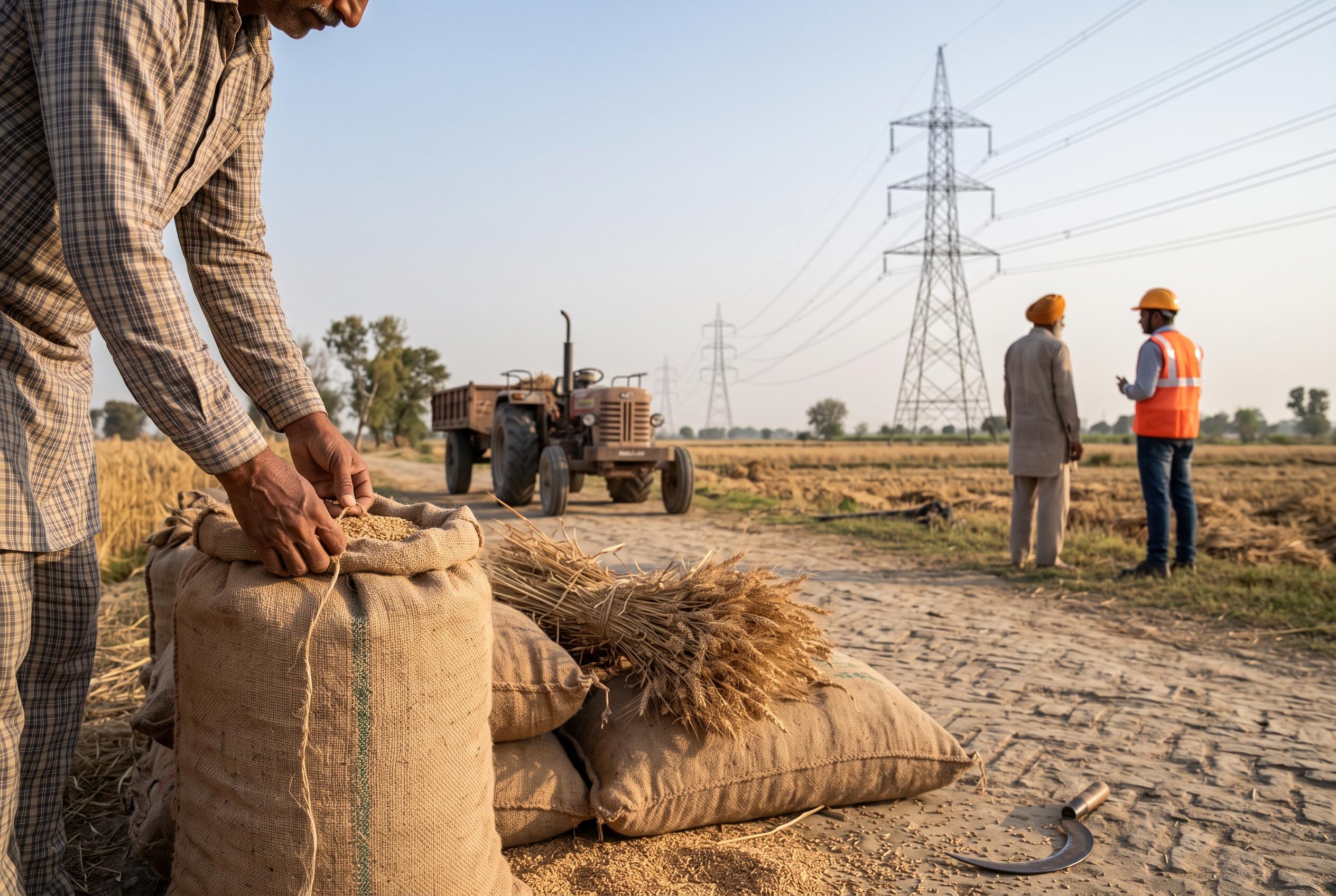

India’s Union Cabinet is set to approve increased support prices for rabi crops, a major renewable energy transmission project, and an extension of LPG subsidies under the Ujjwala scheme in a move to boost farm incomes and accelerate clean energy initiatives.
The Union Cabinet is expected to take up a fresh round of rural and energy measures this week, including a rise in the minimum support prices for rabi crops, the next phase of the Green Energy Corridor and a possible extension of the LPG subsidy under the Pradhan Mantri Ujjwala Yojana, according to Business Today.
The crop-price decision would come at the start of the sowing season, when the government typically sets support rates to give farmers a guaranteed floor under key winter crops. For the 2026-27 rabi marketing season, the approved minimum support price for wheat has been fixed at Rs 2,585 per quintal, up from the previous season, while barley is set at Rs 2,150, gram at Rs 5,875, masur at Rs 7,000, rapeseed-mustard at Rs 6,200 and safflower at Rs 6,540, according to industry summaries and reports on the Cabinet decision.
The increase in wheat’s support price is particularly significant because the grain is one of India’s most important rabi staples and a major procurement crop for the public distribution system. Reports on the Cabinet approval say the new rate represents a rise of Rs 160 per quintal for wheat, while the government has also maintained higher support prices for pulses and oilseeds in line with its broader push to encourage diversification and improve farm incomes.
Alongside agriculture, the Cabinet is also expected to consider Green Energy Corridor-III, a large transmission programme aimed at strengthening the grid for renewable power. Sources cited by Business Today said the next phase could involve an outlay of about Rs 54,000 crore for the period from financial year 2027 to financial year 2033. The plan would build on earlier phases of the corridor, which were designed to move electricity from renewable-rich regions more efficiently into load centres.
Another proposal likely to come before ministers is an extension of the targeted LPG subsidy for beneficiaries of the Ujjwala scheme for the current financial year. The subsidy is intended to ease the cost of cooking gas for lower-income households and support continued use of cleaner fuel. If approved, it would extend a welfare measure that has remained politically and socially important as households continue to face pressure from energy costs.
Disclaimer: This article is intended to inform and educate, not to recommend or endorse any financial product, investment or strategy. Please consider your own financial circumstances and seek professional advice where appropriate before making financial decisions.