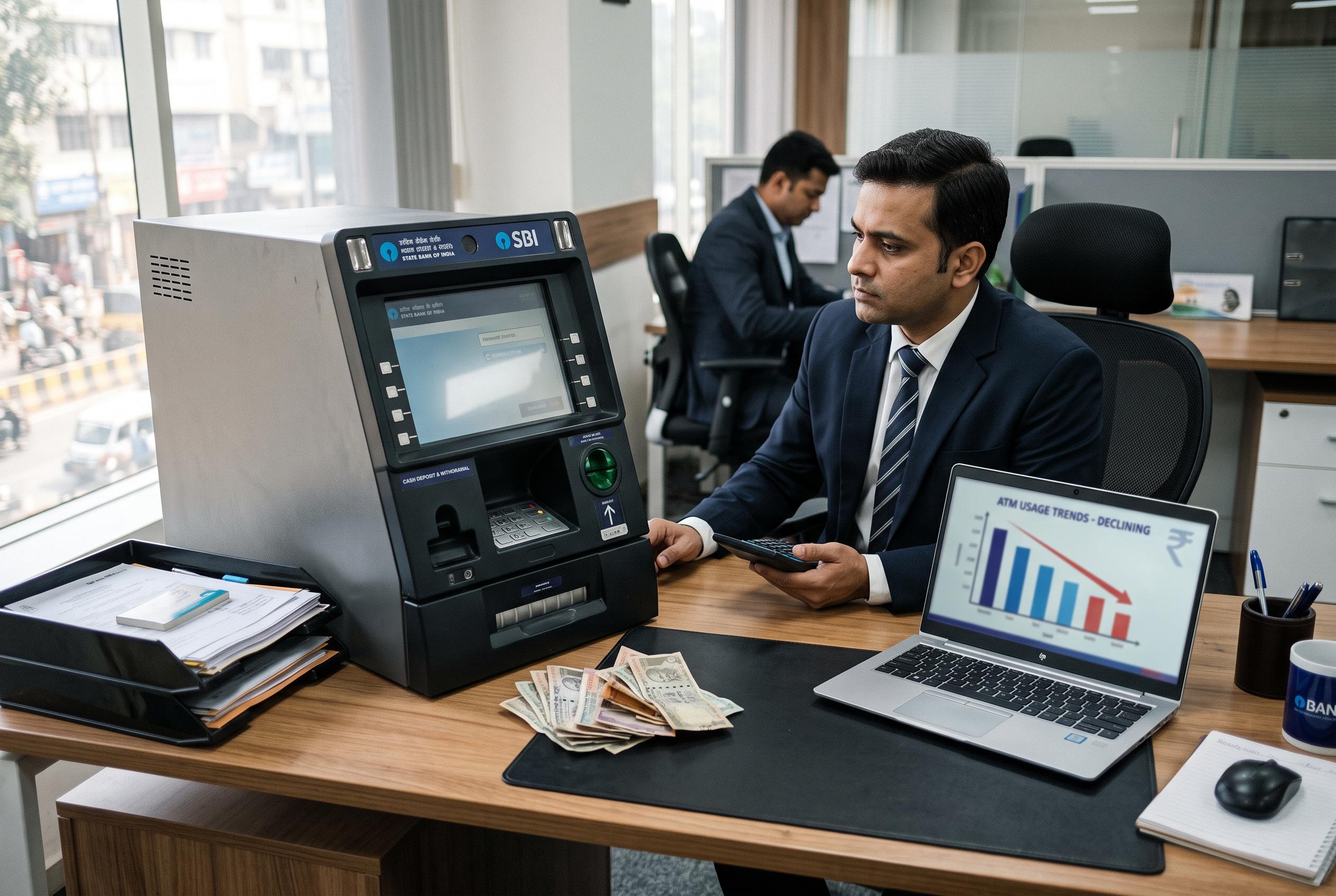

Despite digitalisation and expanding branches, India’s ATMs are underutilising non-cash features and grappling with economic and logistical issues, prompting calls for better user education and operational reforms.
ATMs in India were once sold as a way to reduce pressure on bank branches, yet many of their non-cash features remain badly underused. Beyond withdrawals and balance checks, the machines can be used for transfers, bill payments, recharges, mini-statements, PIN changes and cheque-book requests, but banks say customers often do not know these options exist.
Navroze Dastur of NCR Corporation told Business Standard that banks need to do far more to educate users, arguing that an ATM is not simply a cash point. Rohan Lakhaiyar of Grant Thornton Bharat said the picture is different by location: in smaller towns, non-financial transactions may still have scope on ATMs, but in large cities many customers now do the same tasks on their phones. That shift helps explain why the market has changed so sharply over the past decade.
The Reserve Bank of India’s latest Trend and Progress report says the country had 1.64 lakh bank branches at the end of March 2025, up 2.8 per cent from a year earlier, with almost half of new openings in urban and metropolitan areas. The central bank also noted that India has expanded branches and ATMs alongside digitalisation to support financial inclusion, even as many other countries have seen traditional channels shrink.
A bigger issue now is economics. Industry sources cited by Business Standard say about 30 per cent of the installed ATM base of roughly 2.65 lakh machines are cash recyclers, which can accept deposits as well as dispense cash, and that most new installations are of this type. But a recycler costs about Rs 6 lakh, compared with roughly Rs 5 lakh for a conventional machine, even as many functions on ordinary ATMs go unused. Rupinder Sandhu Anand of OKI India said recyclers can cut manual handling, lower transport costs and improve cash availability, yet the business case is tighter because the interchange fee on card use at another bank’s ATM remains low.
That pressure comes as other reports point to strain in India’s cash distribution network. Outlook Money reported that ATM operators have struggled to replenish machines despite high currency in circulation, while the Economic Times said the Confederation of ATM Industry has warned of shortages in smaller towns and cities. Together, those trends suggest banks are being pushed to make each ATM do more, even as cash demand, digital payments and operating costs pull the network in different directions.
Disclaimer: This article is intended to inform and educate, not to recommend or endorse any financial product, investment or strategy. Please consider your own financial circumstances and seek professional advice where appropriate before making financial decisions.