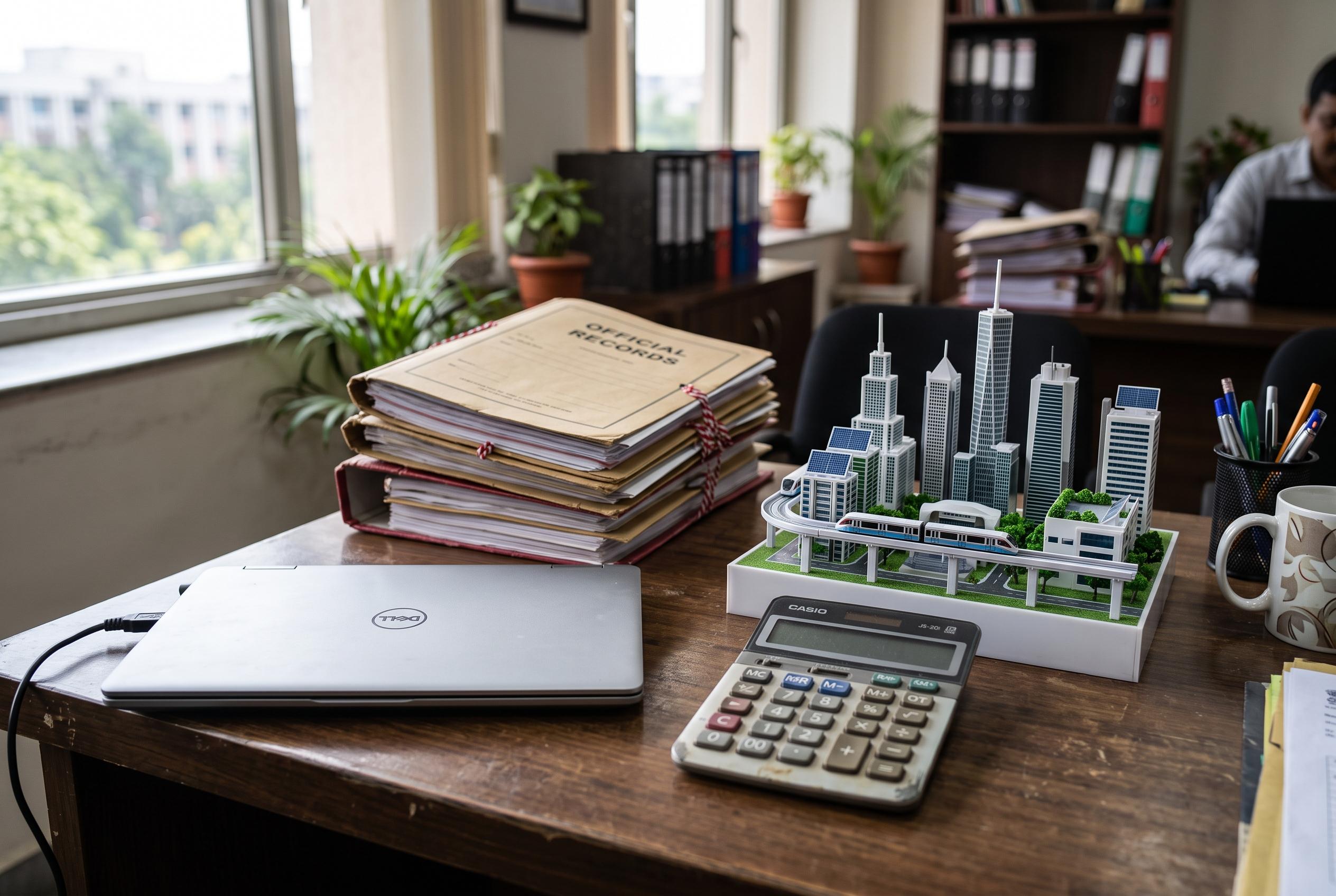

Prime Minister Narendra Modi unveils a comprehensive roadmap for India’s journey to Viksit Bharat by 2047, emphasising economic growth, technology, infrastructure, and social inclusion in his 80th Independence Day speech.
Prime Minister Narendra Modi used his 80th Independence Day address from the Red Fort to set out an expansive plan for India’s path to Viksit Bharat, or developed India, by 2047. Framed as a long-term national mission, the speech linked economic growth, self-reliance, clean energy, and social inclusion, while celebrating what the government described as a sharp improvement in India’s standing over the past decade. Modi said the country had moved beyond the old label of one of the “Fragile Five” economies and was now the world’s fastest-growing major economy, with poverty falling and social protection widening. According to the Prime Minister’s Office, this year’s address built on the broad 2047 vision Modi has reiterated in previous Independence Day speeches, which have also emphasised innovation, strategic autonomy and a larger, more competitive Indian economy.
At the centre of the speech was a framework Modi called “Sapt Dhara”, or seven streams of national strength. In manufacturing, he urged companies and small businesses to compete on quality and precision, and to use India’s trade agreements to win a bigger share of global supply chains. In agriculture, he pointed to government support for inputs and pressed for more chemical-free farming and food exports. He also placed technology high on the agenda, saying India should push ahead in 6G, semiconductor production and artificial intelligence, with a target of training 10 million young people in AI skills over the next year. The Prime Minister’s Office has separately described AI as one of the pillars of India’s 2047 ambition, saying the country should aim to become one of the world’s top three AI powers.
The address also focused on physical infrastructure and strategic capacity. Modi highlighted rail electrification, ports, waterways and logistics networks as essential to faster growth, while praising the rollout of hydrogen-powered rail technology. On defence, he said exports had surged and that India should move from being a buyer to a supplier of advanced systems, including drones, counter-drone tools and future missile technologies. He also tied the growth story to energy transition, saying nuclear power, solar generation and the blue economy would be important to the next phase of development. According to the government, solar capacity has expanded dramatically in recent years, while support schemes for household power and clean energy remain central to the energy strategy.
Modi also used the speech to connect security, social change and political representation. He said left-wing extremism had been sharply reduced and argued that young people should be drawn into mainstream nation-building rather than violent politics. He announced a stronger civil defence network to prepare citizens for modern security risks. Turning to women and youth, he said the target for creating women entrepreneurs known as Lakhpati Didis had already been surpassed and was now being raised further. He also called for greater representation for women in state assemblies and Parliament, and unveiled a nationwide talent search for children aged five to 15, aimed at strengthening India’s sporting pipeline as the country prepares for major international events, including a bid for the 2036 Olympic Games.
Disclaimer: This article is intended to inform and educate, not to recommend or endorse any financial product, investment or strategy. Please consider your own financial circumstances and seek professional advice where appropriate before making financial decisions.