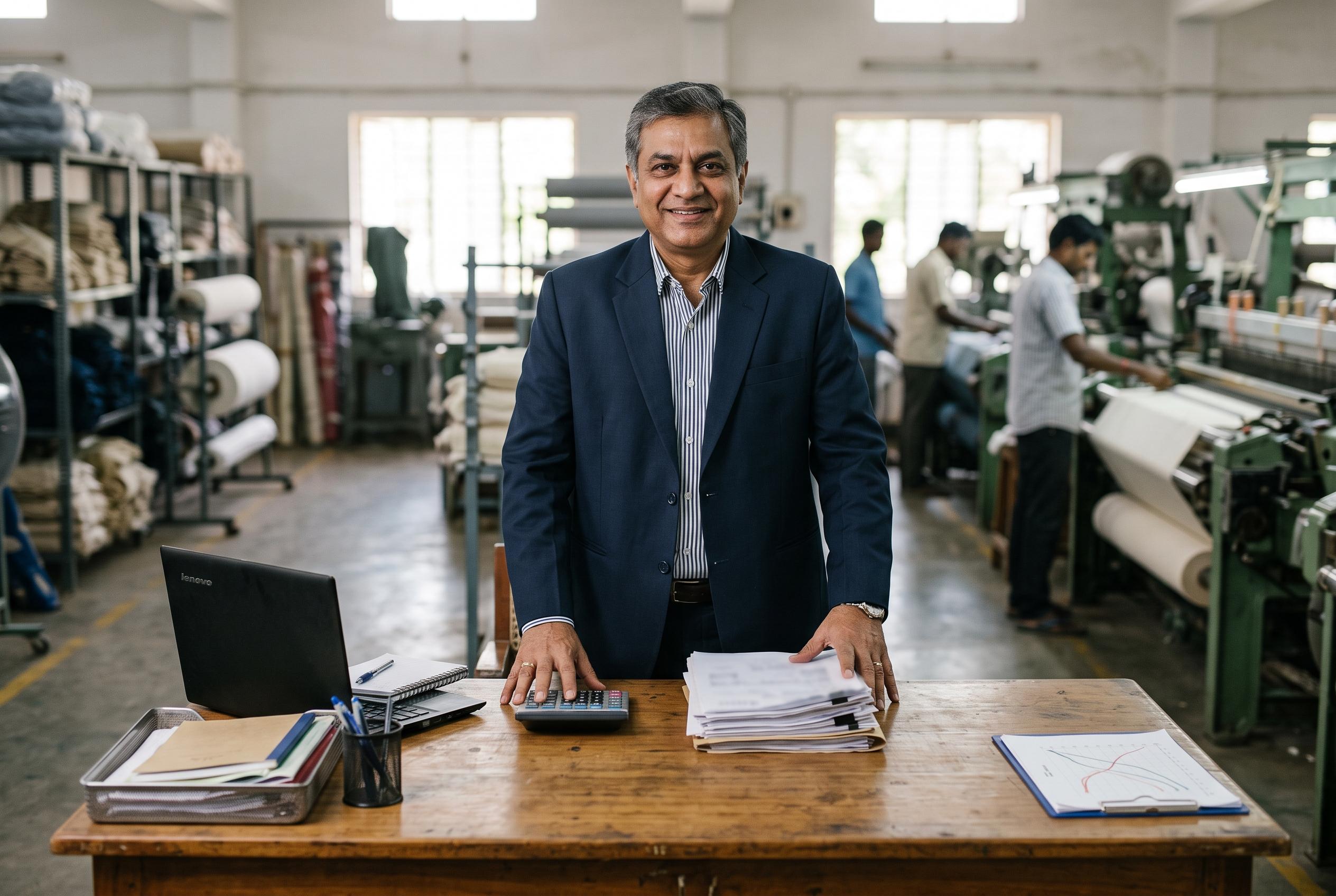

Indian textile and apparel companies are facing heightened pressure from escalating wages, volatile raw material prices, and shifting investment strategies as they strive to maintain competitiveness amidst inflation and labour shortages.
Indian textile and apparel makers are under fresh strain as wage bills rise, cotton and yarn costs climb, and petrochemical-linked inputs remain volatile, forcing companies to juggle price increases, efficiency drives and overseas expansion. The pressure is being felt across the industry, from exporters such as Pearl Global Industries and Gokaldas Exports to fabric maker Arvind, as a mix of labour shortages and inflation eats into margins.
At Pearl Global Industries, managing director Pallab Banerjee said labour availability was disrupted in the first quarter of FY27 by the harvest season, school holidays and the West Bengal elections, all of which lifted absenteeism. He also pointed to steep wage gains in key operating centres, with minimum pay in Haryana rising 38% and in Noida by 21%. Group chief financial officer Sanjay Gandhi told investors that the higher Haryana wage structure had flowed directly into the company’s profit and loss account, helping push its standalone EBITDA margin down to 6.6% in the quarter from 7.3% a year earlier, even though revenue rose 27.4% from the same period last year.
Gokaldas Exports is seeing a similar squeeze. Vice-chairman and managing director Sivaramkrishnan Ganapathi said minimum wages in Haryana rose by about 35%, while pay at the company’s facility near Gurugram increased 25% from April 2026. Karnataka saw a smaller 5% increase. Because Gokaldas already pays above the legal minimum, Ganapathi said the Haryana move translated into an overall wage rise of about 14% to 15% for the company. He added that India operations absorbed an extra ₹20 crore in wage costs in the quarter. According to the company, some of that pressure is being offset by automation and tighter operating discipline, although passing on the full increase to customers has become harder.
Raw materials are creating a separate headache for Arvind. Vice-chairman Punit Lalbhai said the company has already faced close to ₹100 crore of cost inflation this year, driven mainly by cotton and yarn, as well as higher petrochemical-related chemical costs. Industry reports echoed that pressure, saying textile input costs in India have risen sharply as crude oil has climbed above $100 a barrel, lifting the cost of synthetic fibres such as polyester and nylon. That matters for a sector where price changes often lag behind input swings. Lalbhai said Arvind’s order book is usually filled three to four months ahead, which makes sudden cost shifts difficult to pass through without risking business. He said the company has effectively accepted lower margins in exchange for growth, while beginning to push through some of the higher costs.
The widening cost gap is also changing where companies invest. Gokaldas plans to prioritise expansion in lower-cost parts of India, especially central and rural regions where incentives can help soften the burden of higher wages. Pearl Global is following a similar path, expanding in Bihar and Bangladesh and has secured land in Vietnam as it looks for additional capacity. A weaker rupee is offering some relief to exporters, but companies say that benefit only partly offsets the pressure from labour and materials. The broader industry picture remains one of selective price increases, tighter cost control and a search for production bases that can preserve competitiveness as inflation works through the value chain.
Disclaimer: This article is intended to inform and educate, not to recommend or endorse any financial product, investment or strategy. Please consider your own financial circumstances and seek professional advice where appropriate before making financial decisions.